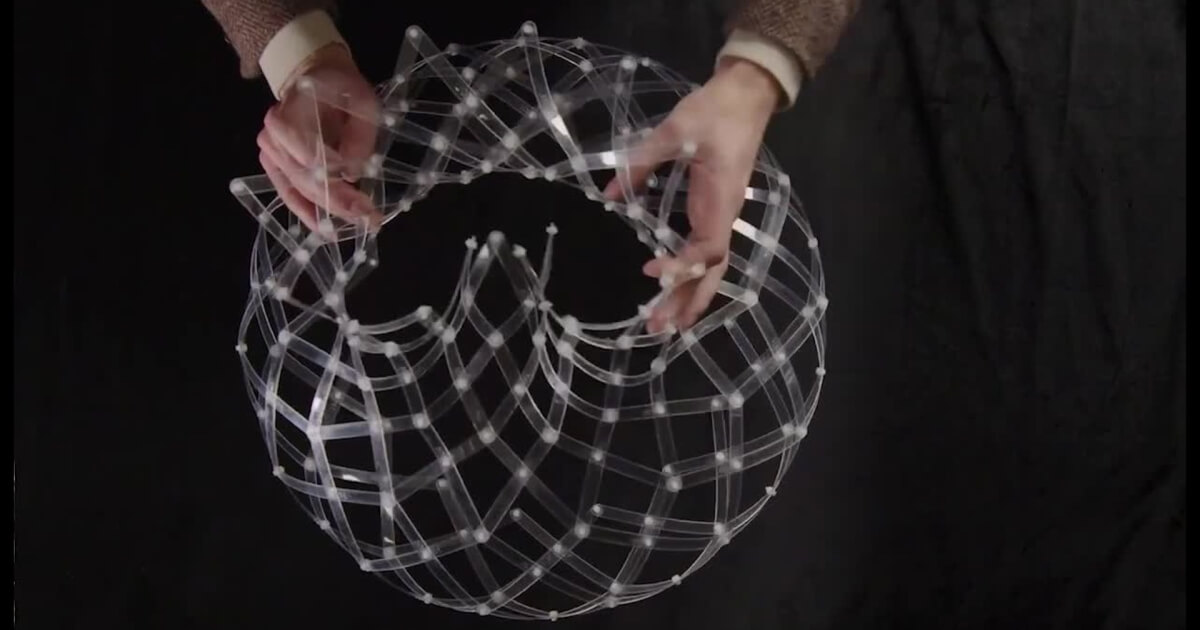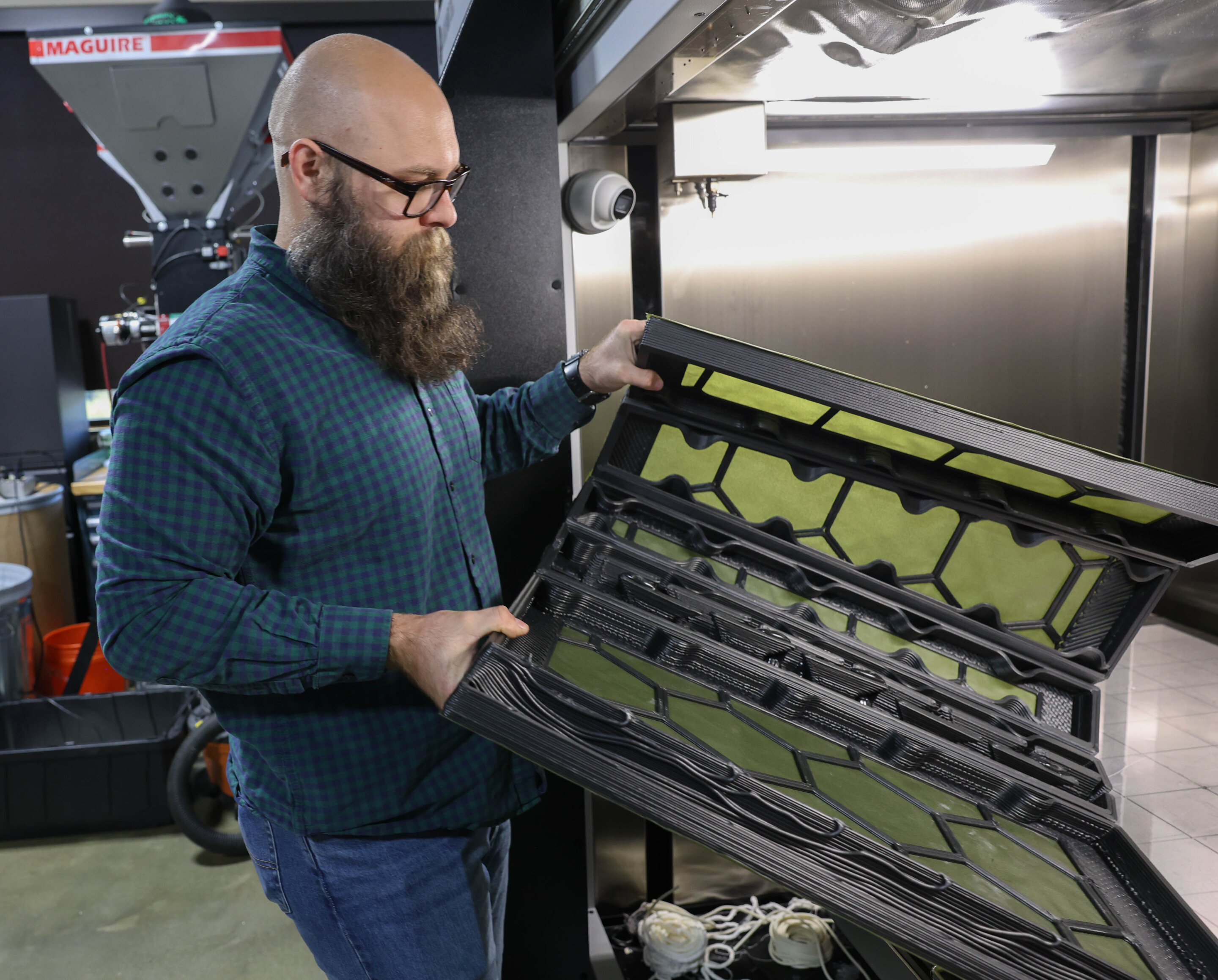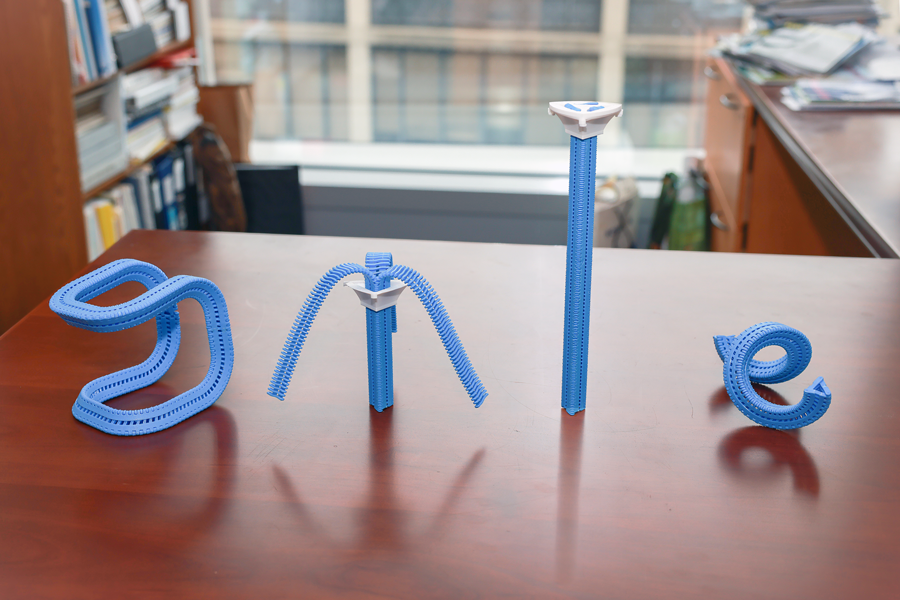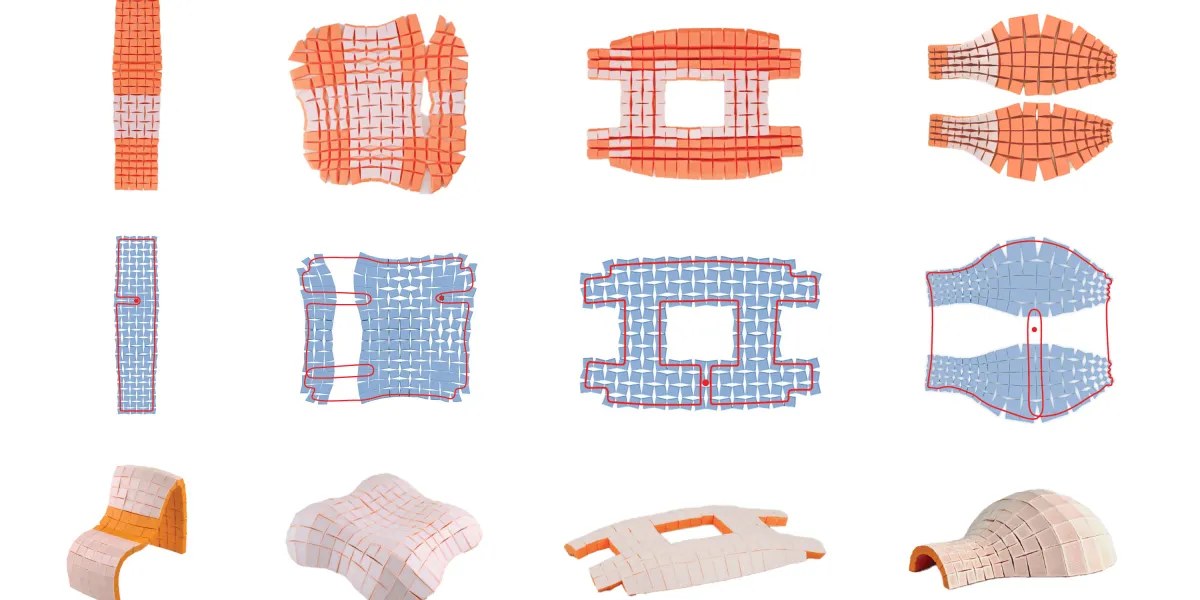
MIT researchers have developed a new method for designing 3D structures that can spring up from a flat sheet of interconnected tiles with a single pull of a string. The technique could be used to make foldable bike helmets and medical devices, emergency shelters and field hospitals for disaster zones, and much more. Mina Konaković Luković, head of the Algorithmic Design Group at the Computer Science and Artificial Intelligence Laboratory (CSAIL), and her colleagues were inspired by kirigami, the ancient Japanese art of paper cutting, to create an algorithm that converts a user-specified 3D structure into a flat shape made up of tiles connected by rotating hinges at the corners. The algorithm uses a two-step method to find the optimal path through the tile pattern for a string that can be tightened to actuate the structure. It computes the minimum number of points that the string must lift to create the desired shape and finds the shortest path that connects those lift points, while including all areas of the object’s boundary that must be connected to guide the structure into its 3D configuration. It does these calculations in such a way that the string path minimizes friction, enabling the structure to be smoothly actuated with just one pull. The actuation method is easily reversible to return the structure to its flat configuration. The patterns could be produced using 3D printing, CNC milling, molding, or other techniques.
Just pull a string to turn these tile patterns into useful 3D structures
Inspired by the Japanese art of kirigami, an MIT team has designed a technique that could transform flat panels into medical devices, habitats, and other objects without the use of tools.
483 words~2 min read