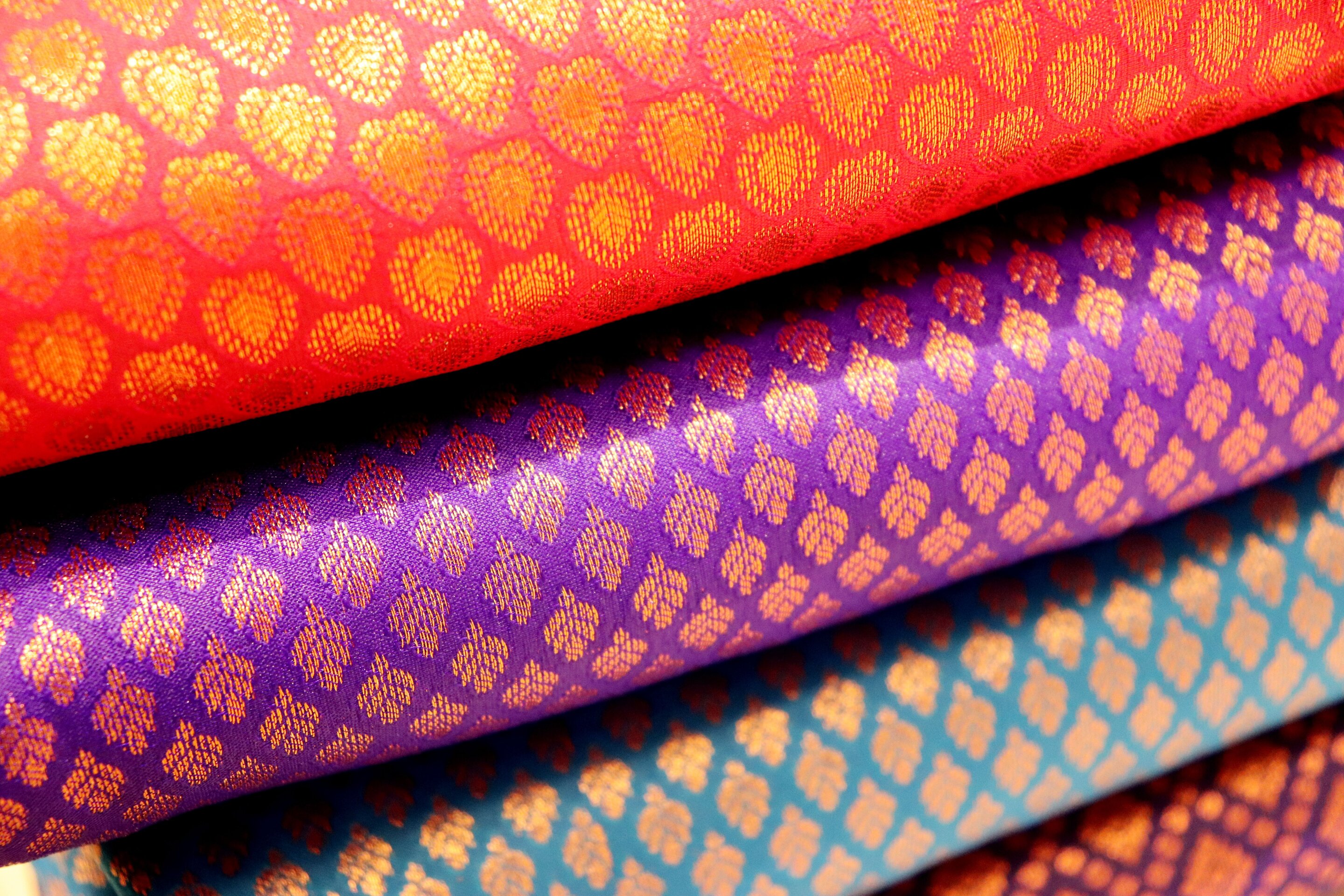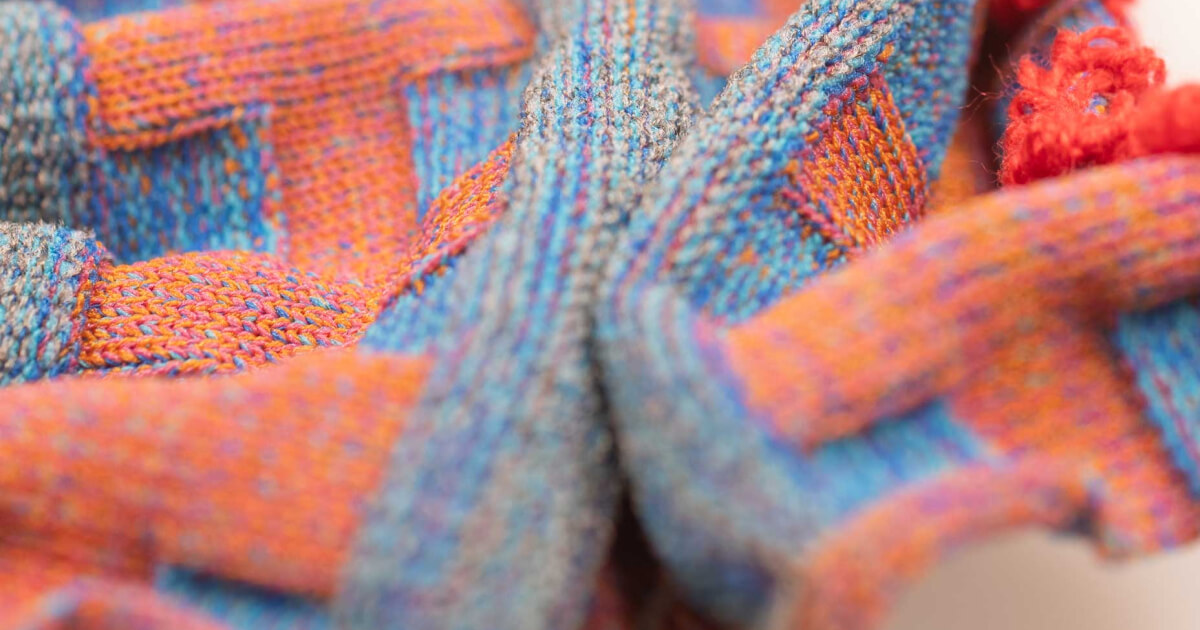
Knitting has come a long way from sweaters and blankets. Researchers at the Harvard John A. Paulson School of Engineering and Applied Sciences (SEAS) have turned everyday knitting into a powerful platform for making shape-shifting devices that can act as switches, sensors, and more — paving the way to next-generation functional, programmable textiles. The researchers created unique, machine-knitted fabrics that “snap” between multiple stable shapes, exhibiting a quality known to physicists as multistability. The work was led by recent Ph.D. graduate Kausalya Mahadevan, currently a postdoctoral associate in the lab of Katia Bertoldi, the William and Ami Kuan Danoff Professor of Applied Mechanics. The research is published in Advanced Functional Materials. “I’ve always been excited about fabrics and textiles, and what we can engineer and build with them,” said Mahadevan, who began working in Bertoldi’s lab as an undergraduate. “Our ideas around multistability in textiles arose from being inspired by textile artists and how they approach structures, combined with how [Bertoldi’s] lab has traditionally thought about nonlinear mechanics in solids. We tried to approach thinking about textiles in that context.” Structures that curve and retain their shape are more typically molded from polymers and created by carefully programming residual stress within the material. In the new study, the researchers show that weft knitting – the same industrial process used for making hats and gloves – can generate more complex curvatures with nothing but yarn. They chose highly elastic yarns and employed a technique called plating, which exposes different yarns on each face of the fabric. They were able to produce dense, thick textiles that naturally curl into three-dimensional shapes, exploiting the same basic mechanism of when a cut T-shirt curls up from the bottom.
Oh, Snap: Fabrics With Multiple Stable Shapes
Researchers create knit textiles for switches, step counting
653 words~3 min read