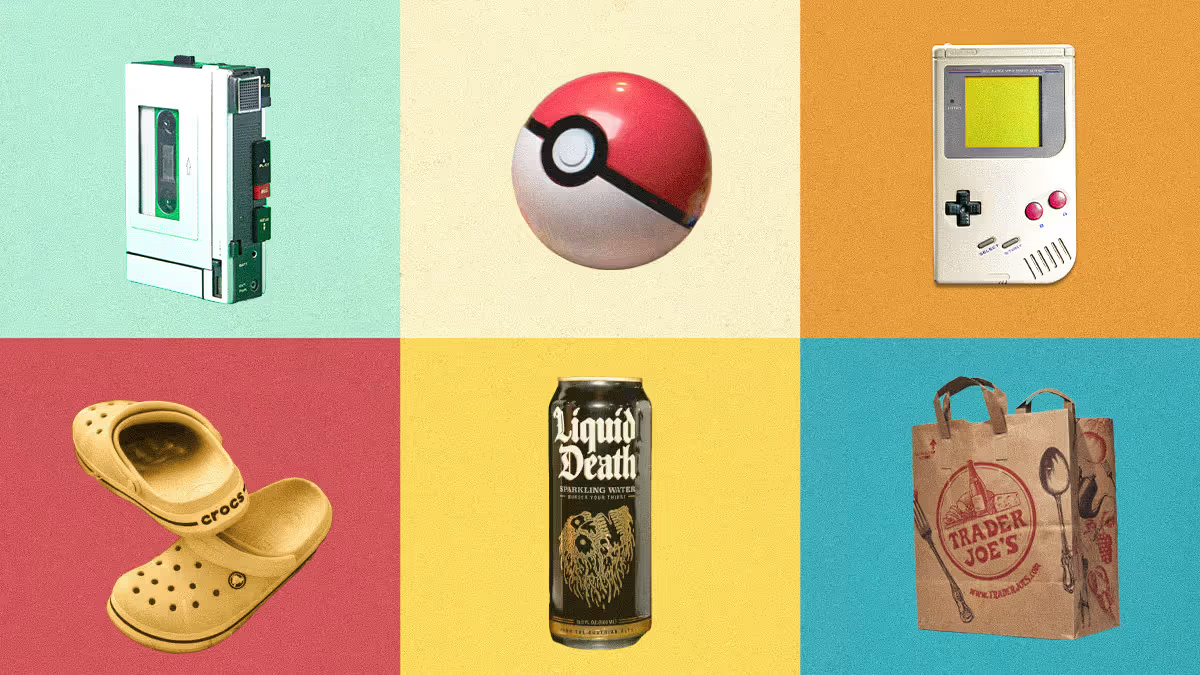
April 27, 2026Hbr Staff; Cebas/Penske Media/Gabe Ginsberg/Getty Images; PexelsPostBuy CopiesPostBuy CopiesIn 1979, an unknown Sony engineer by the name of Kozo Ohsone unveiled a miniaturized stereo cassette deck with headphones that let anyone listen to music anywhere, without bothering anyone. Nobody had asked him to make it. His colleagues told him it was ridiculous—no one would be caught dead wearing headphones in public. His boss told him no one would buy a tape deck that couldn’t record.PostBuy Copies
How the Walkman, Game Boy, Liquid Death, and Pokémon Became Surprise Hits
Global innovators can learn from Japan’s pop-culture playbook, which shows that breakthrough products succeed by reducing friction rather than adding features. Examples like the Walkman, Game Boy, and emoji reveal five principles: Prioritize convenience over cutting edge technology; watch how users repurpose products; treat constraints as creative fuel; build for latent needs; and balance data with intuition. Companies that follow these ideas often unlock unexpected growth, as seen with Crocs, TikTok, and Slack. The core takeaway is simple: Customers often value ease, identity, and usefulness more than technical superiority.
78 words~1 min read