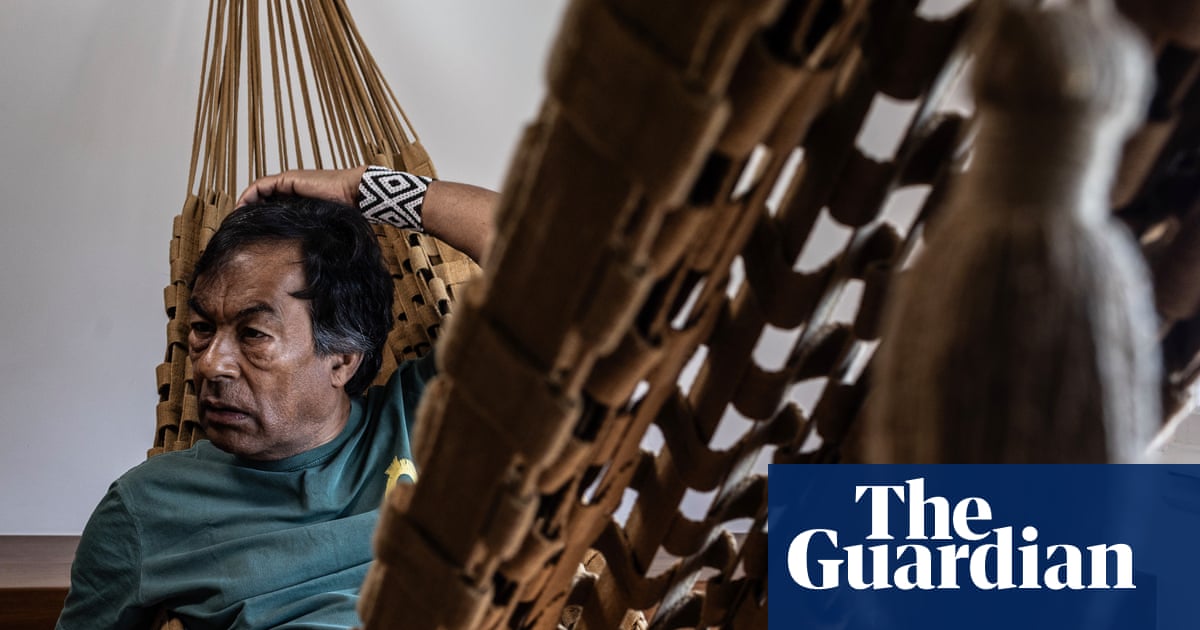
Since his groundbreaking address to the Brazilian congress in 1987, the 72-year-old Indigenous leader has challenged assumptions and championed rights, urging us to ‘have the courage to change’
A
fter 21 years of military dictatorship in Brazil, it was a pivotal moment. Wearing a suit and tie, Ailton Krenak, then an Indigenous leader in his 30s, stepped on to the rostrum in congress. It was 1987, a new constitution was being drafted for the re-established democracy – and Indigenous people were finally being heard in Brasília.
“I hope that my statement does not violate the protocol of this house,” he began, firmly but politely. As he spoke, he smeared his face with jenipapo, a fruit used for Indigenous bodypainting, until it was covered in black. “Indigenous blood has been spilt over every hectare of Brazil’s 8m square kilometres,” he told the constituent assembly. “You are witnesses of this.”
Krenak’s gesture helped enshrine Indigenous land and identity rights in the 1988 constitution. “There, the young Ailton understood the meaning of parliament,” he reminisces. “The place to speak, the power of the word. Only those with a mandate speak on a pulpit.”