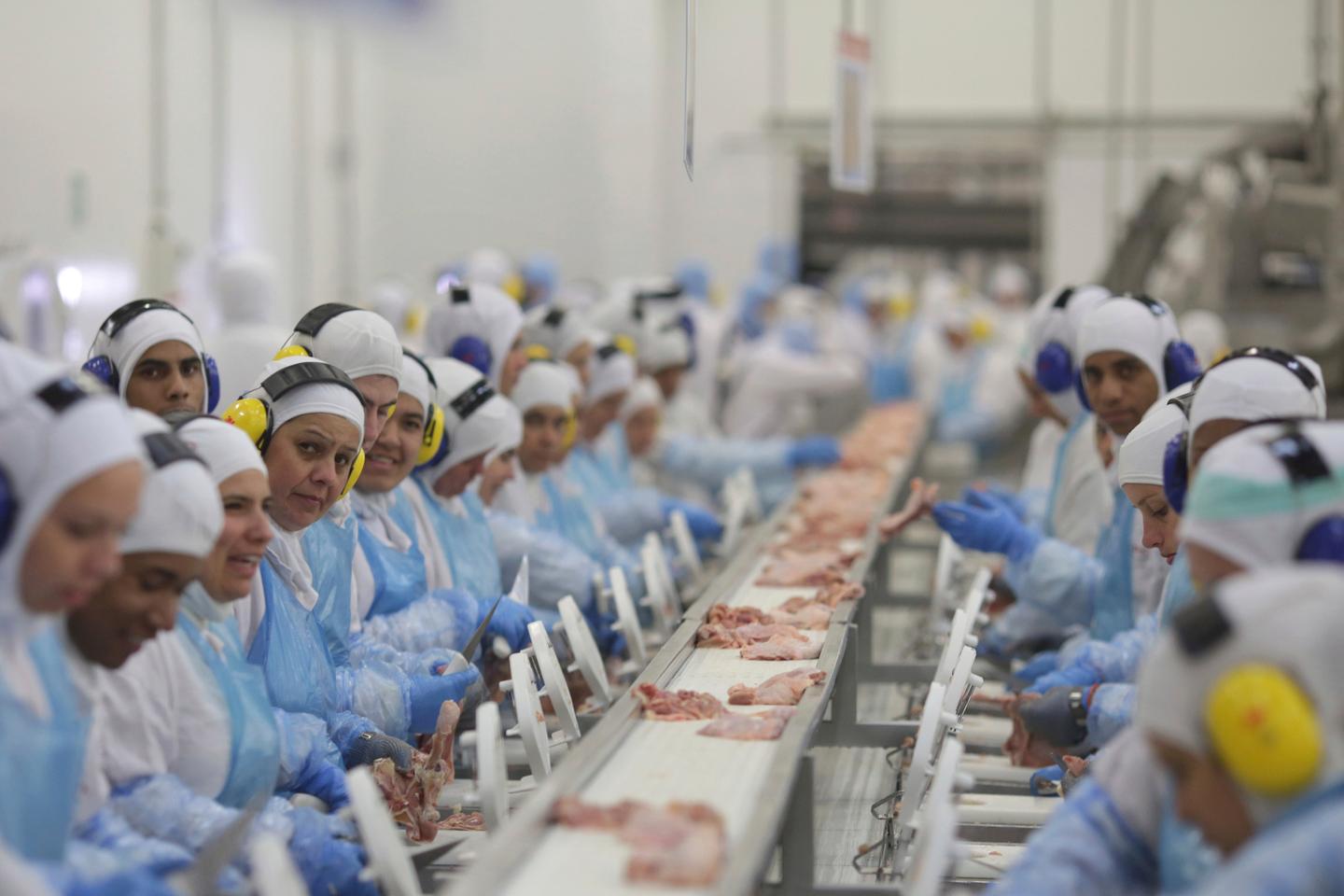
A JBS meat processing plant in Lapa, Brazil, on March 21, 2017. ERALDO PERES/AP
In Chapeco, a concrete, built-up city of just under 300,000 people located in Brazil's southern Santa Catarina region, there is no shortage of work. On the walls of buildings and bridges, advertising billboards invite people to join the factories of the agri-food giants MBRF, Aurora, JBS, and Ecofrigo. With 588,000 metric tons of meat produced in 2025 – representing 2% of the country's total beef production, 7.3% of pork production, and 54.4% of turkey production – Chapeco, nicknamed the "capital of slaughterhouses," has established itself as one of the world's leading meat production hubs.
The provisional entry into force, starting Friday, May 1, of the free trade agreement between the four founding countries (Argentina, Brazil, Uruguay, Paraguay) of the Southern Common Market (Mercosur) and the European Union (EU) – Brazil's second-largest trading partner after China – should further strengthen this status. Brazilian exports of pork and poultry are expected to increase by 19.7% by 2040, according to the Institute of Applied Economic Research.
Faced with these growth prospects, and further strengthened by rising global demand for meat, the approximately 19,500 workers employed in the sector may soon no longer be able to keep up with the pace of production, about half of which is destined for export (63% of poultry and 47% of pork), according to the Center for Socioeconomics and Agricultural Planning. As a result, slaughterhouses are opening up new positions every day, attracting Indigenous people from remote villages as well as immigrants from Haiti, Venezuela, and even some Arab countries seeking employment.