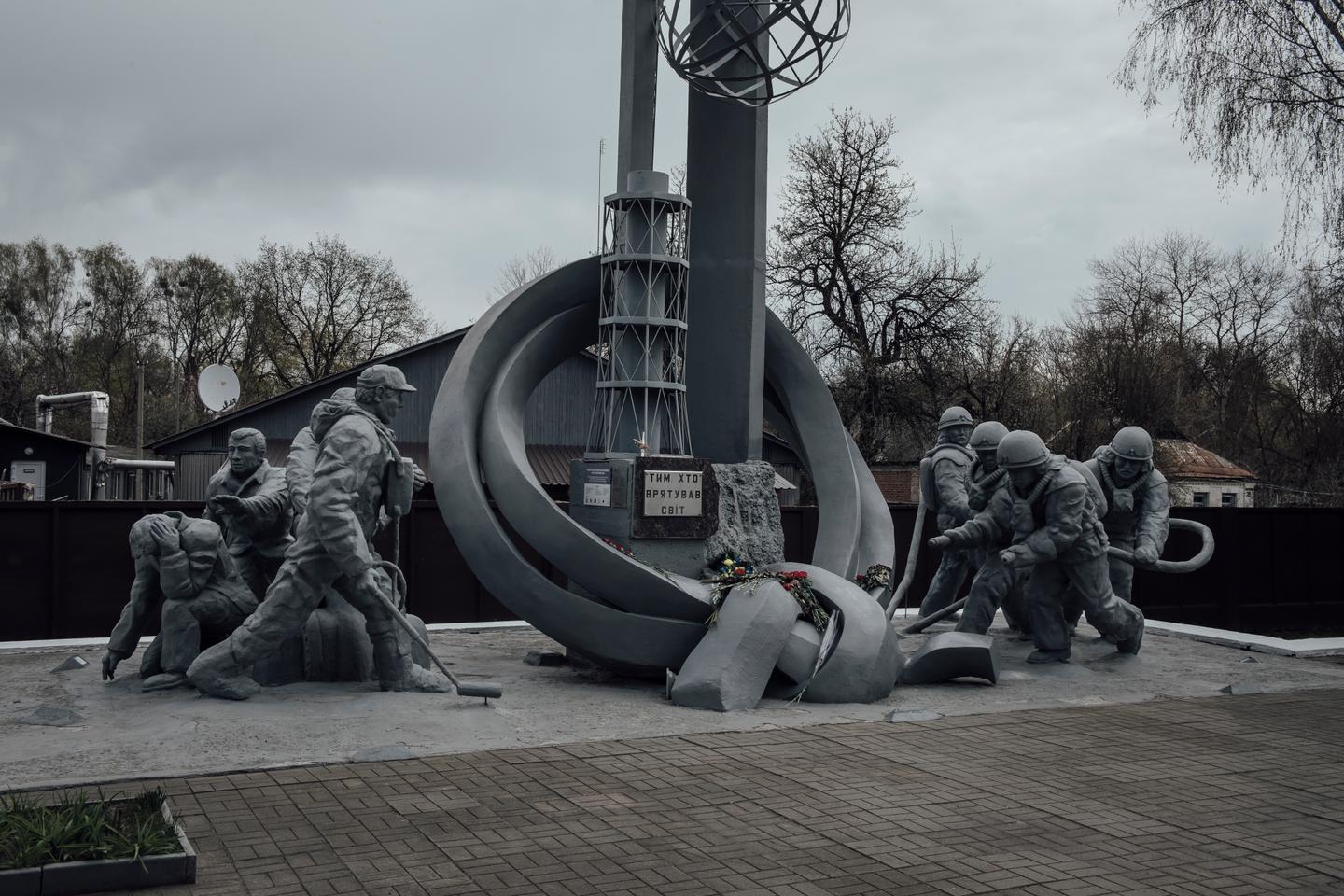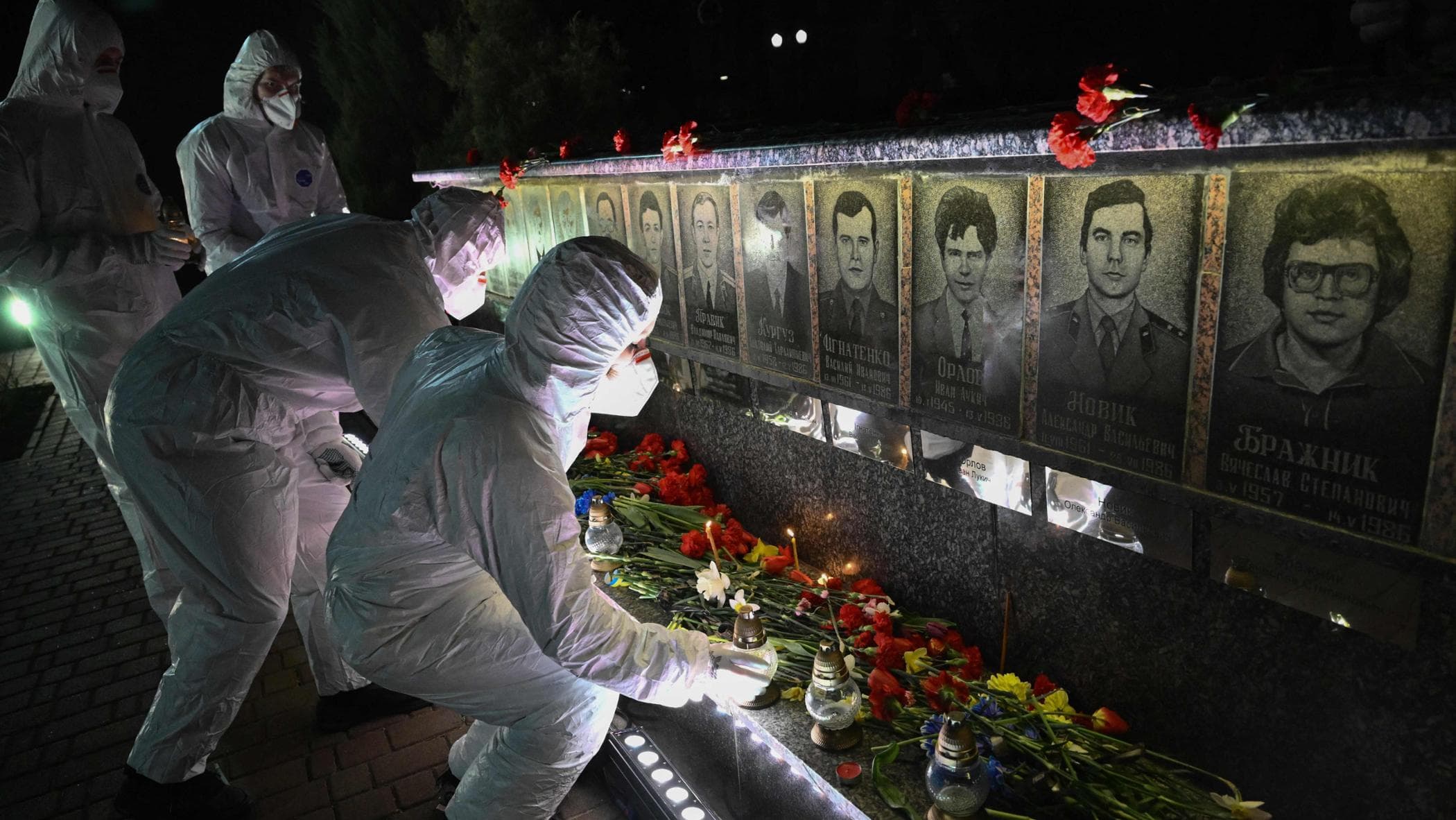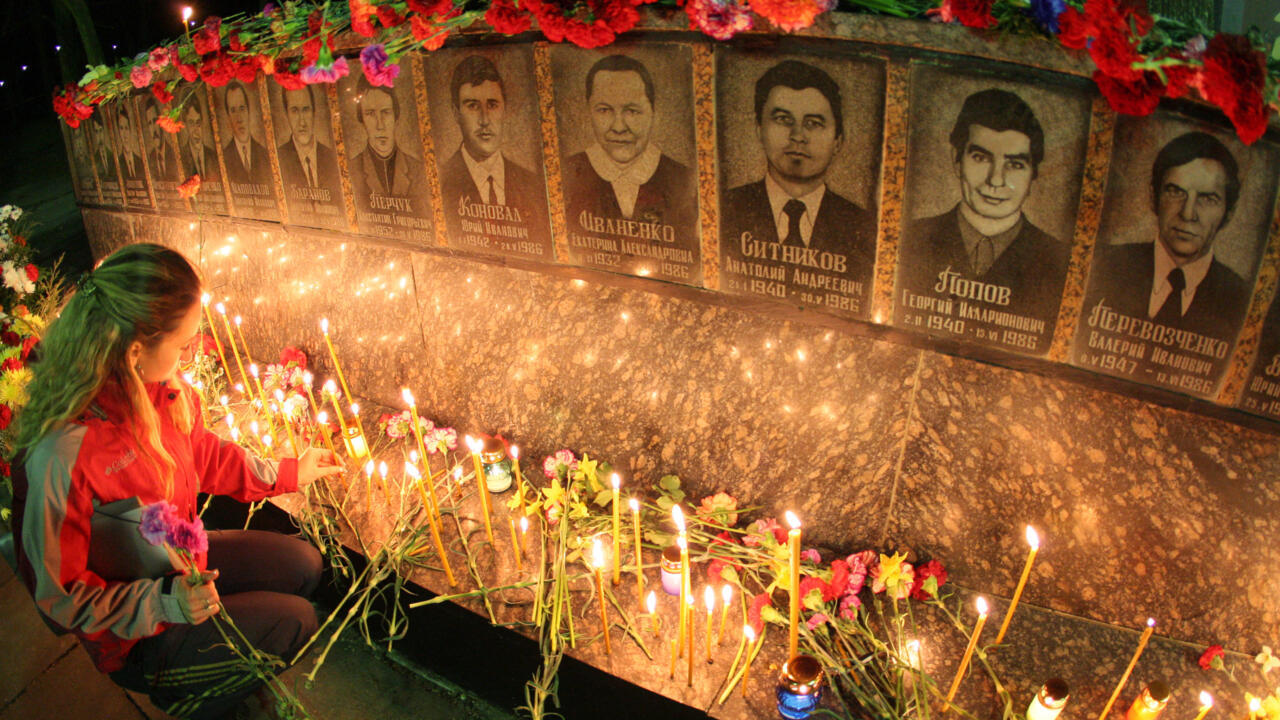
Operations engineer L. Cherkashina, shift supervisor V. Shkurko, dosimetrist L. Polezhayev, senior unit control engineer A. Lukashin, and gas circuit operator A. Tyagunov (from left to right) during a process meeting of the duty shift at the control room of the third power unit of the V. I. Lenin Chernobyl Nuclear Power Plant, December 1985 © Valery Solovyov / TASS PEOPLE The Feat of the Chernobyl Liquidators Chernobyl accident relief effort participants The Chernobyl disaster was not merely a technological catastrophe but also a test of the human spirit. In the critical hours and months following the reactor’s explosion, the safety of vast regions depended heavily on those who refused to retreat in the face of an invisible threat. These individuals took on the formidable task of containing the disaster’s consequences, demonstrating extraordinary courage and resilience.Involved in the relief effort was a diverse array of military and civilian specialists: emergency responders, plant personnel, civil defense and chemical protection units, radiation monitoring teams, medical and sanitary workers, engineers, construction crews, drivers, and many others. Their mission was to halt the progression of the accident and mitigate its impact on both people and the environment. 1986–1987 Their heroism was expressed not through grand speeches but through relentless, daily effort at the very limits of human endurance. Everyone displayed discipline, mutual support, and an unwavering willingness to do what was necessary — even at great personal risk.During this period, hundreds of thousands of individuals participated in cleanup operations to remove radioactive contamination. According to WHO estimates, approximately 350,000 people worked in the vicinity of the plant during this time, with the total number of registered cleanup workers eventually reaching around 600,000. Relief effort personnel: total strength 1986–1987 After 1987 * According to WHO estimates. 600 * thousand people 350 * thousand people Elimination of the accident’s consequences at the Chernobyl NPP The work was conducted under challenging conditions characterized by limited time, a shortage of equipment and unreliable information.It was essential to assess the radiation levels and determine the extent of contamination, followed by decontamination of sites, roads, buildings, and equipment. Concurrently, access control measures were implemented, areas secured, evacuation procedures coordinated, and medical observations arranged. Ensuring the uninterrupted operation of safety services was also a high priority.To mitigate additional risks, engineering efforts focused on stabilizing damaged structures and reducing emissions. These tasks implied short working shifts, rigorous radiation monitoring, and continuous rotation of personnel to ensure task completion while minimizing further exposure and losses. © Roman Denisov / TASS On the 10th of May, TASS reported that the situation had stabilized: temperatures within the damaged unit were decreasing, and radiation levels were subsiding. The previous day, the 9th of May, Hans Blix, then head of the International Atomic Energy Agency, also highlighted that the situation was stabilizing at a press conference upon returning to Vienna from the area. Chernobyl NPP Shelter facility One of the symbols of this struggle was the protective shelter over the destroyed unit.This extremely complex structure was erected within tight deadlines and completed in November 1986. The result required a tremendous concentration of effort, strict organization, and constant monitoring of the radiation situation at the site. The Shelter over Unit 4 of the V. I. Lenin Chernobyl Nuclear Power Plant after the accident, November 1986 © Valery Zufarov / TASS Construction of the Shelter facility, 1986 Jan Feb Mar Apr May Jun Jul Aug Sep Oct Nov Dec Project development Construction 90,000 participants Today, when speaking of the liquidators, it’s important to remember: their heroism is measured not only by statistics and deadlines, but also by their willingness to accept responsibility and protect others at the cost of their own health.The true meaning of their heroism — professional and civic — is that they stepped forward to meet the danger when the lives, safety, and future of entire regions depended on their actions. Their contribution remains a reminder of how much depends on human courage and professional responsibility in extreme conditions. © Valery Zufarov / TASS Yelena Kozlova, a participant in the cleanup operation, recalled: Drivers, concrete pump operators, and machine operators made up about a third of the workforce during the second and third relief shifts. Operating under extremely hazardous radiation conditions, they poured up to six thousand cubic meters of concrete daily — true heroes whose bravery deserves recognition. A monument honoring their sacrifice should stand beside the Shelter. Dosimetrist on duty L. Shtanko during radiation monitoring in the turbine halls of Units 1 and 2 of the V. I. Lenin Chernobyl Nuclear Power plant after the accident the accident © Valery Zufarov / TASS V. I. Lenin Chernobyl Nuclear Power Plant, 1979 © Vladimir Samokhotsky / TASS Construction of the Shelter facility over Unit 4 of the V. I. Lenin Chernobyl Nuclear Power Plant in progress after the accident © Valery Zufarov / TASS An Mi-26 helicopter during aerial decontamination of the area within the 30-kilometer exclusion zone following the accident at the V. I. Lenin Chernobyl Nuclear Power Plant © Valery Zufarov / TASS A monument to the Chernobyl accident relief effort participants by sculptor Andrey Kovalchuk in Victory Park on Poklonnaya Hill © Sergey Fadeichev / TASS Nuclear energy experience and development, "Breakthrough" project. Lessons Part 3
Chernobyl. People
How scientists, rescuers, construction workers, and medical personnel dealt with the aftermath of the Chernobyl accident - in video format.
874 words~4 min read