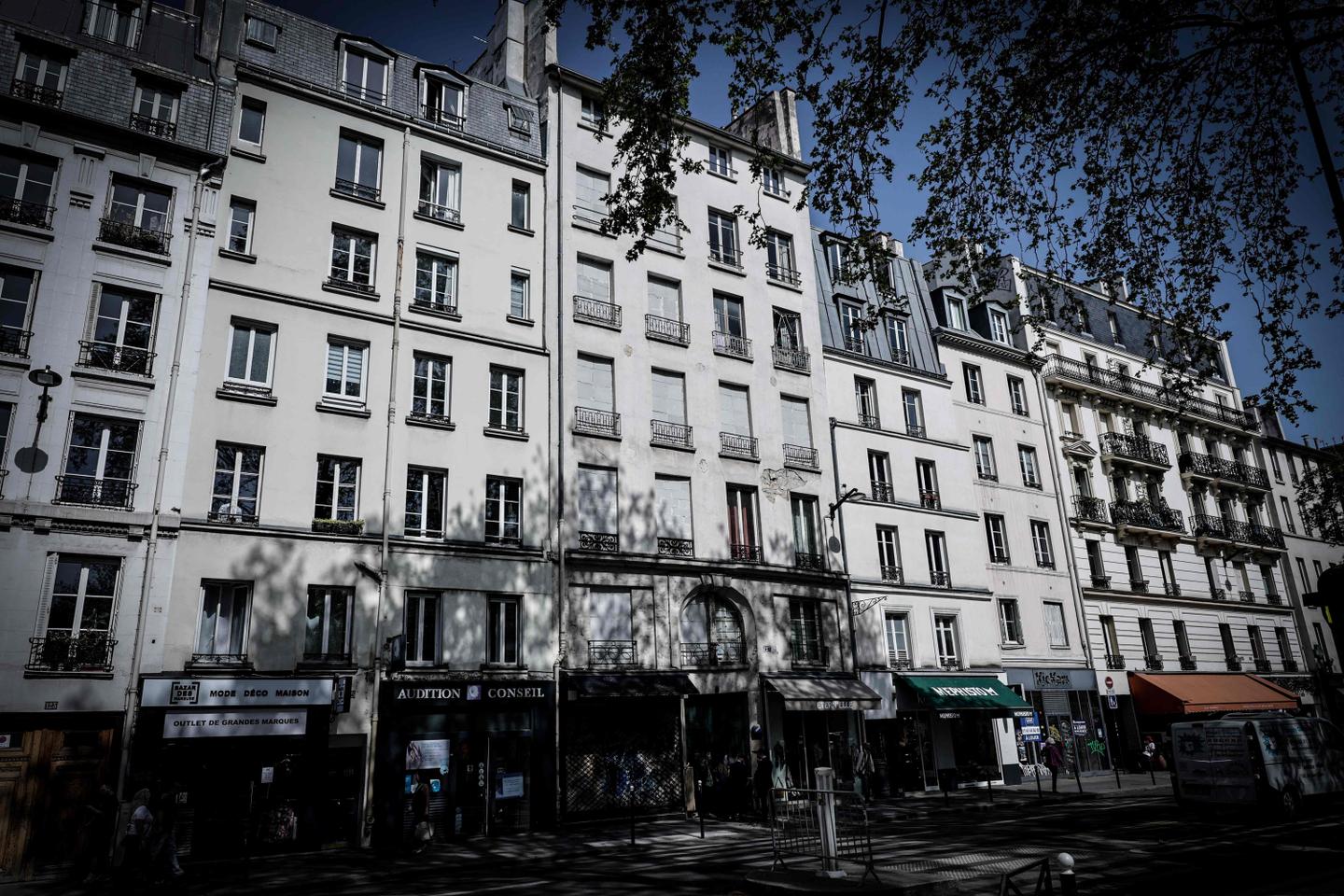
This photograph shows the outside facade of an unsanitary housing building in central Paris on April 9, 2026. STEPHANE DE SAKUTIN / AFP
Seventeen people, faces attentive and solemn, sat around U-shaped tables at an end of February information meeting on evictions, held at a city-run support center for housing-vulnerable residents in Paris. Among them was Telilani (who requested anonymity), who learned that with the March 31 end to France's winter eviction moratorium (a legal pause on forced removals during cold months), law enforcement could now remove him from his home at any moment, following a conflict with the landlord of his studio apartment in the 19th arrondissement.
"I stopped paying my rent because there were a lot of problems in my home and the landlord didn't want to do anything about it," explained the 54-year-old warehouse worker. He showed photos on his phone: a broken water heater, a window that no longer closes, deep cracks in the ceiling now held up by metal pillars. According to Telilani, the landlord took advantage of the missed payments to try to evict him: "I've lived there since 1998, but he wanted to sell the apartment." Laurent Loyer, the lawyer leading the meeting on evictions, was not surprised: "More and more tenants stop paying rent because of a dispute, without realizing that, no matter how wrong the landlord may be, they are putting themselves at risk of eviction."