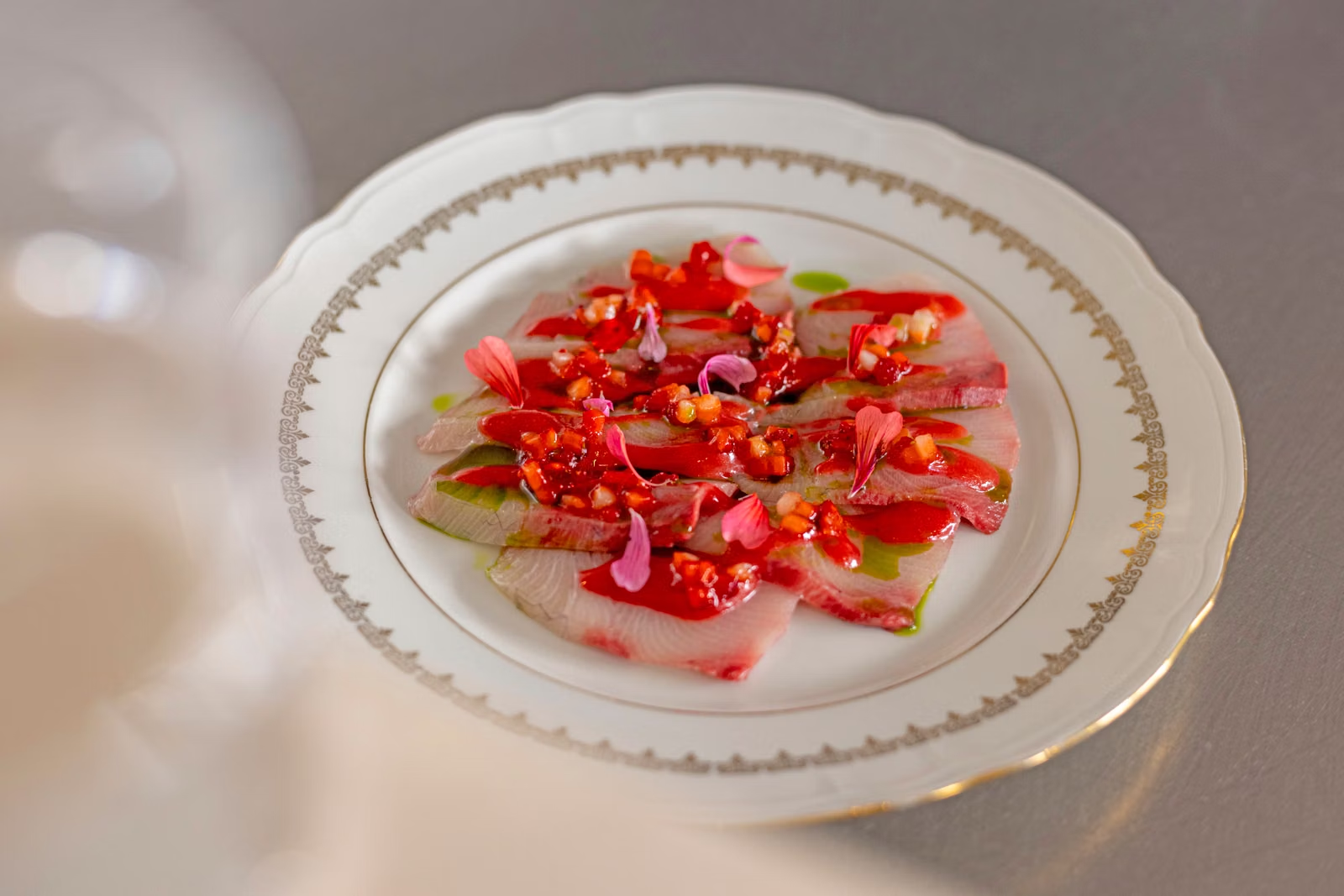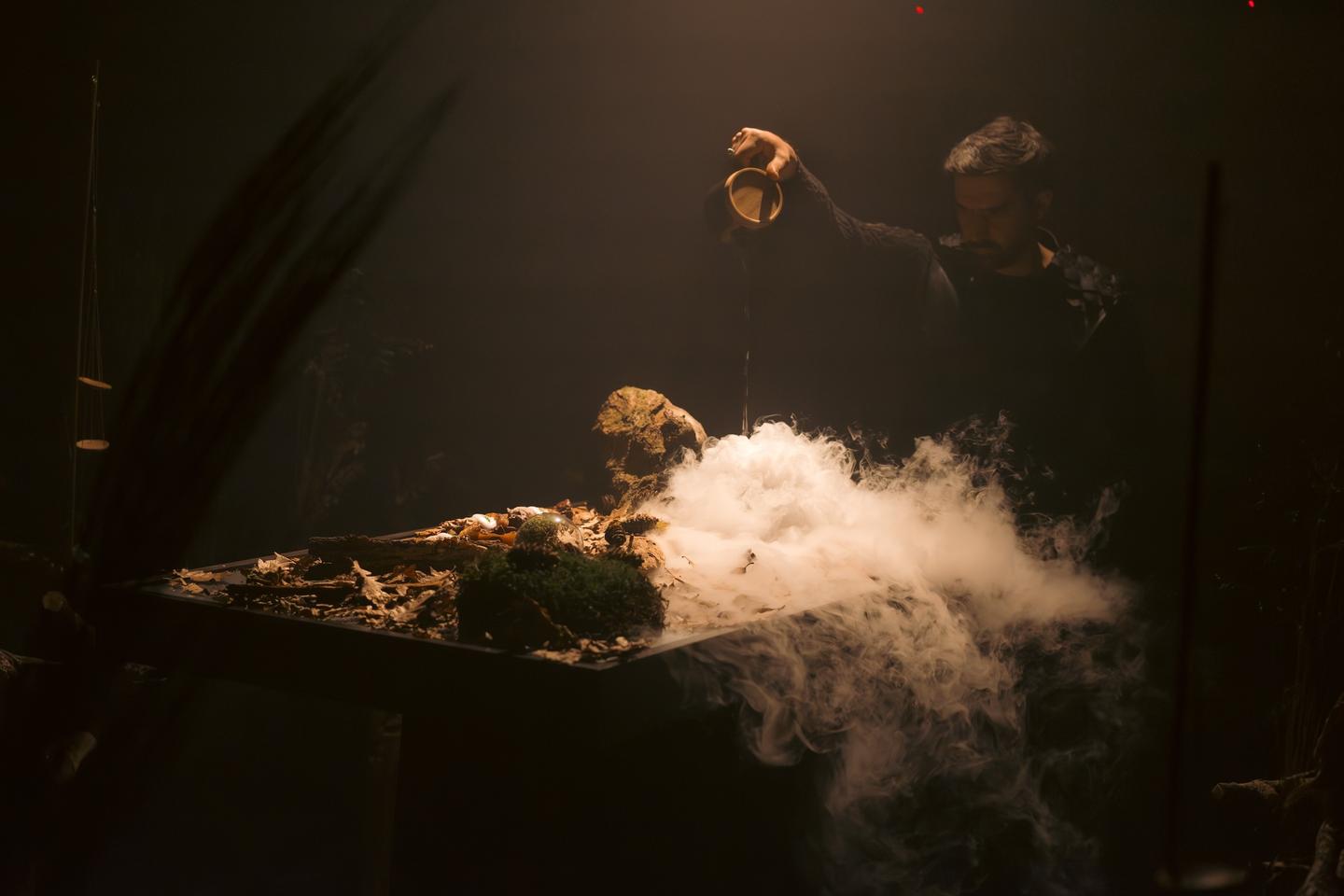
Near Lyon, Jérémy Galvan offers a completely offbeat experience called 220 BPM. Here, the desserts are being plated. JULIE CHARBONNIER FOR LE MONDE
It is the word on everyone's lips. Chefs, journalists, influencers, servers: All of them invite people to enjoy an "experience." That is true in chain restaurants (Buffalo Grill offers a "friendly steakhouse experience"), trendy venues (the "exclusive culinary experience" at Nonsense, Julien Sebbag's cabaret-restaurant in the Montmartre neighborhood of Paris), or chic dining rooms (the "unique culinary experience" put forward by Yannick Alléno at Monsieur Dior, in the Parisian townhouse where the eponymous haute couture house was born).
The term has even come to refer to anything resembling a tasting: Lavazza promotes the "exceptional sensory experience" that accompanies the preparation of a cappuccino at its Champs-Elysées location.
The idea that an establishment is not just there to feed its customers, but also to offer them a unique experience, is not new. The concept became more defined around the 1980s, when media coverage allowed top chefs to become stars. Some soon faded behind their public personas, like Marc Veyrat, who never strayed from his suit, round glasses and iconic black Savoyard hat.