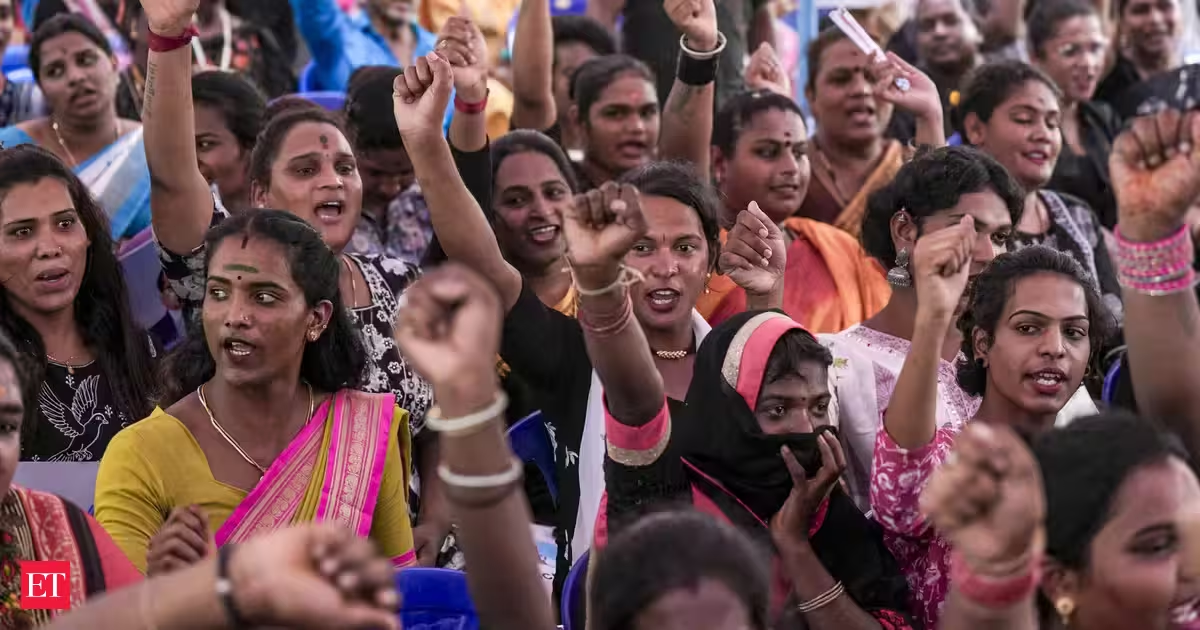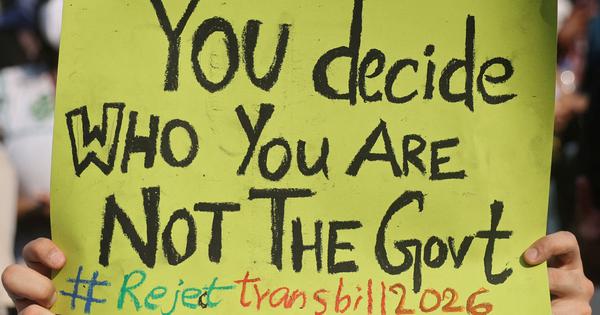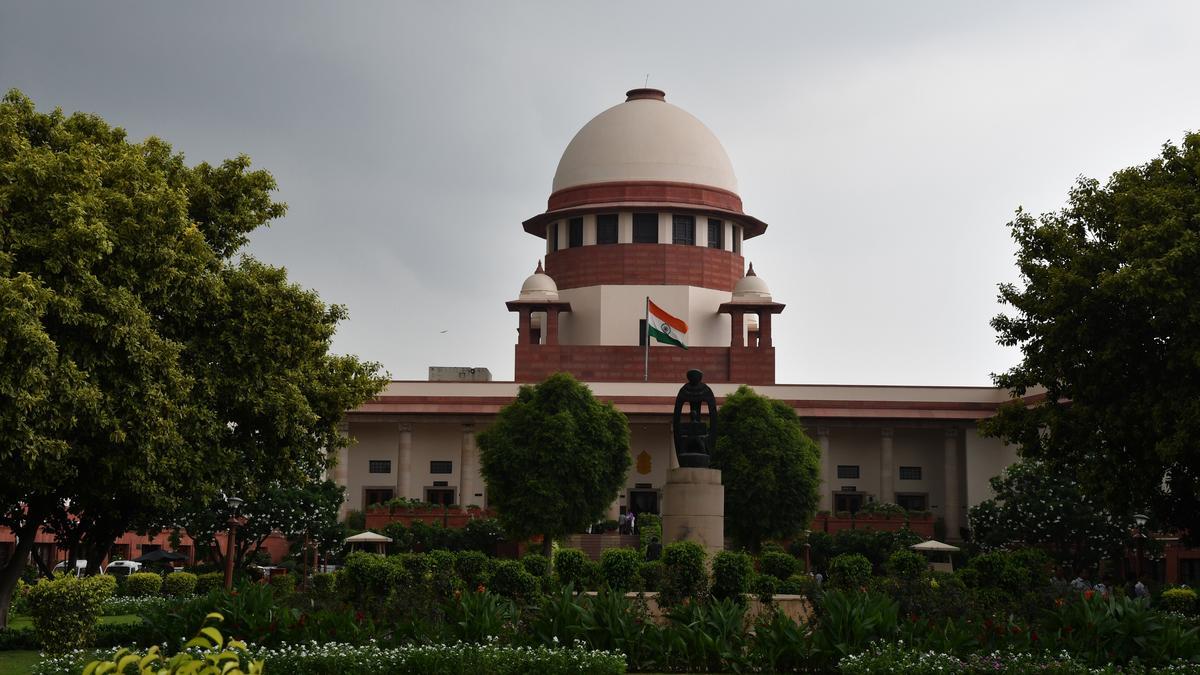
Activists, one of whom spearheaded a historic legal battle to recognise transgender persons as a third gender, have moved the Supreme Court against the Centre’s new law, which dismantles the fundamental right to self-identification of gender, a basic imperative of personal autonomy and dignity.
Editorial | On the Transgender Persons (Protection of Rights) Amendment Bill, 2026
Laxminarayan Tripathi, who became the first transgender person from the Asia-Pacific region to address the United Nations General Assembly, besides leading the first transgender participation in the Kumbh Mela, has challenged the constitutional validity of the Transgender Persons (Protection of Rights) Amendment Act, 2026, for disregarding transgender identity as an “authentic human identity, freely chosen”.
The other petitioner, Zainab Javid Patel, a recognised figure in transgender rights advocacy, agrees that the 2026 Act veers away from the Supreme Court’s own 2014 NALSA judgment that identity is determined by the person, not by biology, birth assignment or through state verification.
Trans Amendment Act may disrupt gender-affirmative care, warn health practitioners