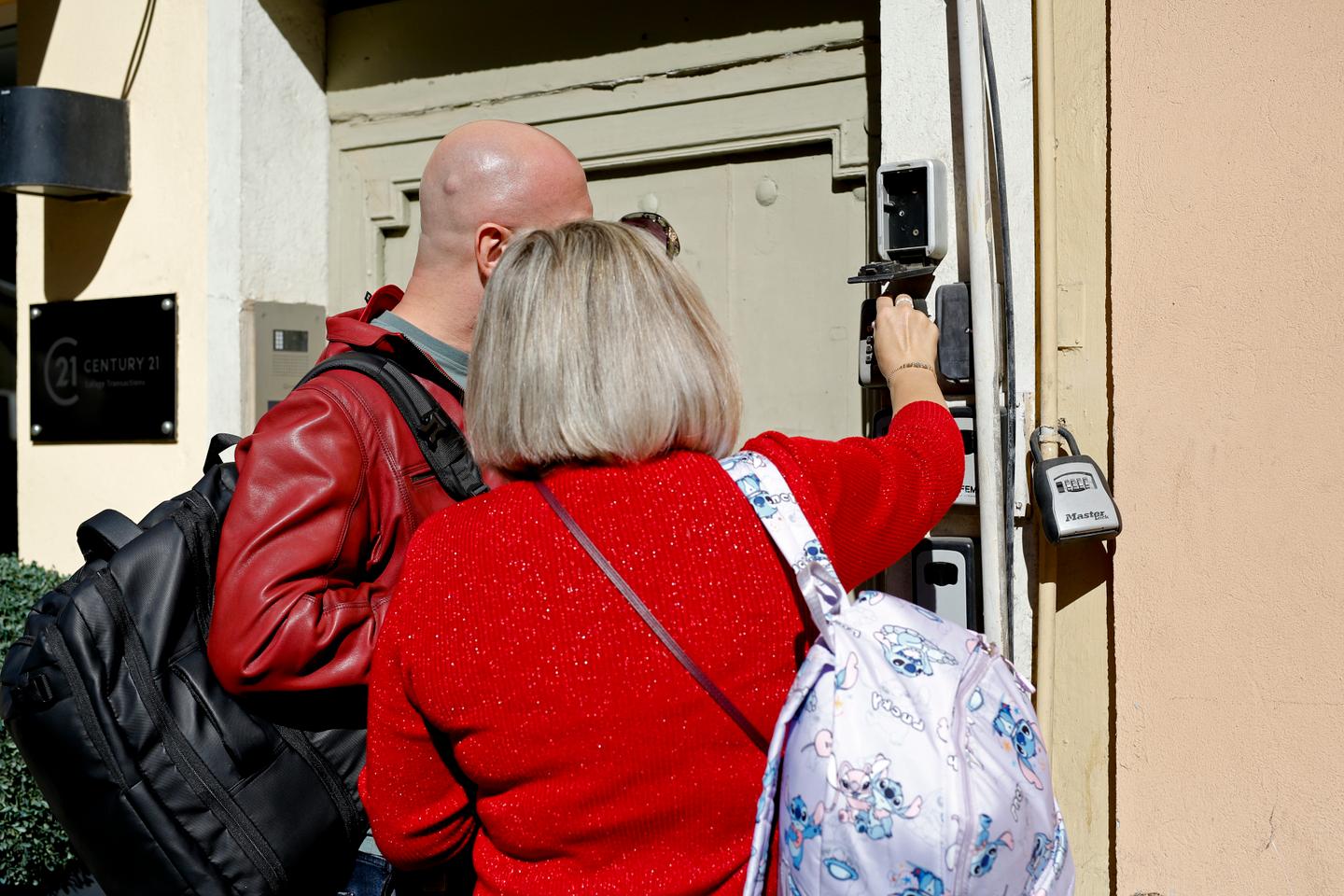
Early one drizzly morning in Paris, a handful of city officials make their way up a steep, narrow street in the historic neighborhood of Montmartre, with a reporter in tow and the domed Sacré-Coeur basilica looming above. The group stops at an apartment building that looks like any other on the block. It is only when they step inside the entrance hall that anything seems unusual. Signs pasted to the walls declare that loud noise and nighttime gatherings are forbidden. And many of the front doors have metal lockboxes bolted to them, with apartment keys inside. Both are telltale signs that the city workers have found what they’re looking for: illegal Airbnbs.
During the next half-hour, as we climb stairs and knock on doors, a few sleepy residents emerge to complain—not about us, but to us. They describe how their building has begun to feel like a travelers’ crash pad, with rolling suitcases clattering on the pavestones at all hours, and the outdoor courtyard becoming a rowdy tavern on warm evenings. “A living hell,” one calls it.
These modest Montmartre homes are just one flash point in Europe’s growing Airbnb backlash. Even as short-term home rentals have become a global travel norm, more cities worldwide have blamed Airbnb and its competitors for their housing squeeze and affordability crises. In Europe, and in Paris in particular, the growing opposition has gathered real momentum. Paris’s restrictions are among the most rigid, sharply limiting the number of nights that any property can be made available for short-term rentals. The owners of those Montmartre apartments could face fines of well over €100,000 if it’s proved they have violated the law.