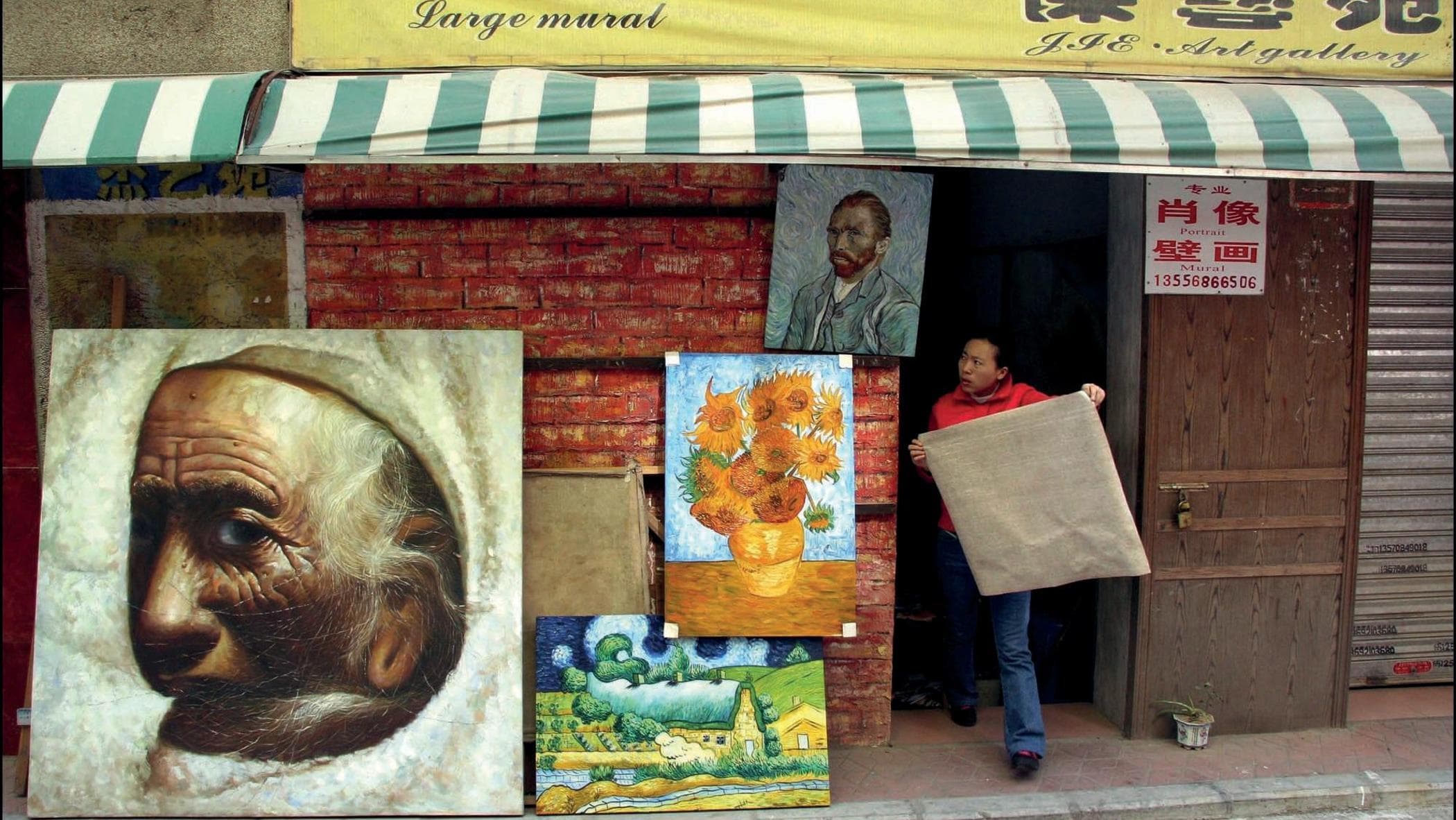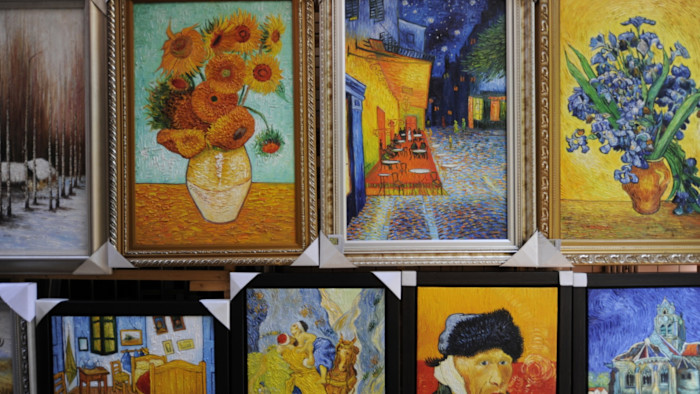
In a tree-lined alleyway in Dafen, a tiny village on the edge of China’s sprawling southern technology capital Shenzhen, painter Qiu Junbin gently corrects the brushstrokes of a girl attempting to reproduce a picture of a sweeping seascape. The girl’s mother snaps photos of them in front of the colourful display of artworks hanging on the walls of Qiu’s modest studio.
Qiu, 49, is leading one of the many “art experience” workshops that have cropped up in the past two years to attract tourists to Dafen, once known as the “world’s art factory”. This village of copyist painters has grown since 1989, when a Hong Kong entrepreneur relocated his replica oil painting studio to Dafen to take advantage of its lower labour and housing costs. By the mid-2000s, the village was producing 60 per cent of all new oil paintings worldwide. In 2018, Dafen’s art reproduction industry was reportedly worth 4.5bn yuan (around £480mn), with an estimated 8,000 workers (including artists, frame-makers and agents) selling replicas of pieces by Van Gogh, Warhol and others to consumers and retailers across the globe.
Artist and gallery owner Qiu Junbin photographed at his studio in Dafen Village, Shenzhen, China © Xiaomei Chen for the FT