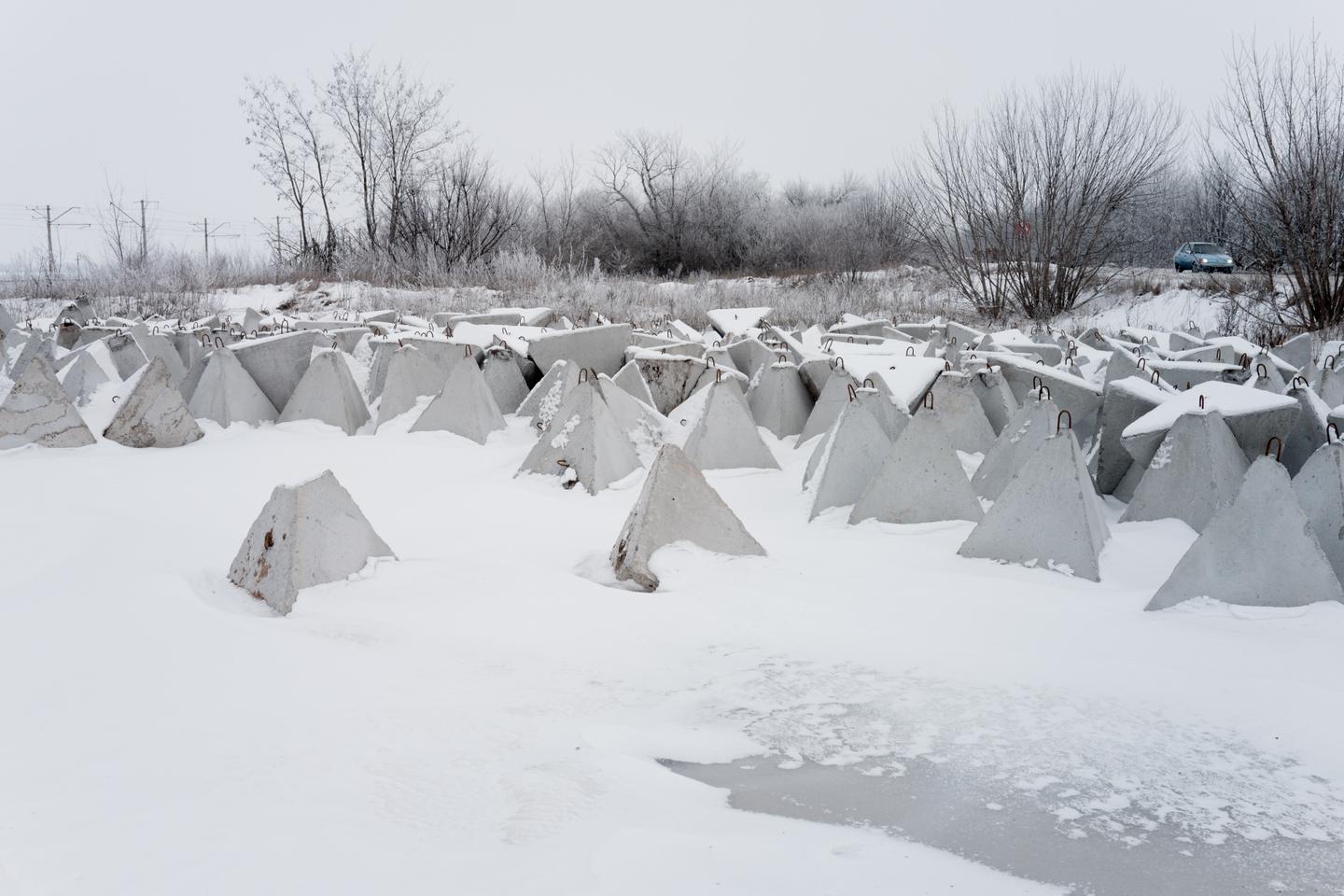
'Dragon's teeth' used by the Ukrainian army to build defensive lines along the road connecting Zaporizhzhia to Pavlohrad, in the Zaporizhzhia region, Ukraine, January 22, 2026. JEDRZEJ NOWICKI FOR « LE MONDE »
Dimitri Minic is a researcher at the Institut français des relations internationales (French Institute of International Relations) and author of Pensée et culture stratégiques russes ("Russian Strategic Thought and Culture"). In an interview with Le Monde, he analyzes the roots and evolution of the conflict in Ukraine, four years after the start of Russia's full-scale invasion on February 24, 2022.
What is the current balance of power between Ukraine and Russia?
It has shifted, but it still favors Russia, which has potentially greater reserves than Ukraine. For now, Moscow is able to make up for its losses, but those losses have grown exponentially with each passing year. Today, the Russians control about 20% of Ukrainian territory. However, most of that was gained during the first phase of the war in 2022. In 2024 and 2025, they have taken only about 1% more territory. It is extremely incremental and extremely deadly.
The war in Ukraine has also led to Russia's decline. The country has shown itself incapable of defending its partners around the world, whether in Venezuela, Syria or Iran. Most notably, Moscow has been unable to challenge the actions of Donald Trump, who embodies the American interventionism and unilateralism so despised by Russia. In just one year, the American president has ordered more strikes than Joe Biden did in four years, while also creating a substitute for the United Nations, the Board of Peace, which he intends to preside over for life.