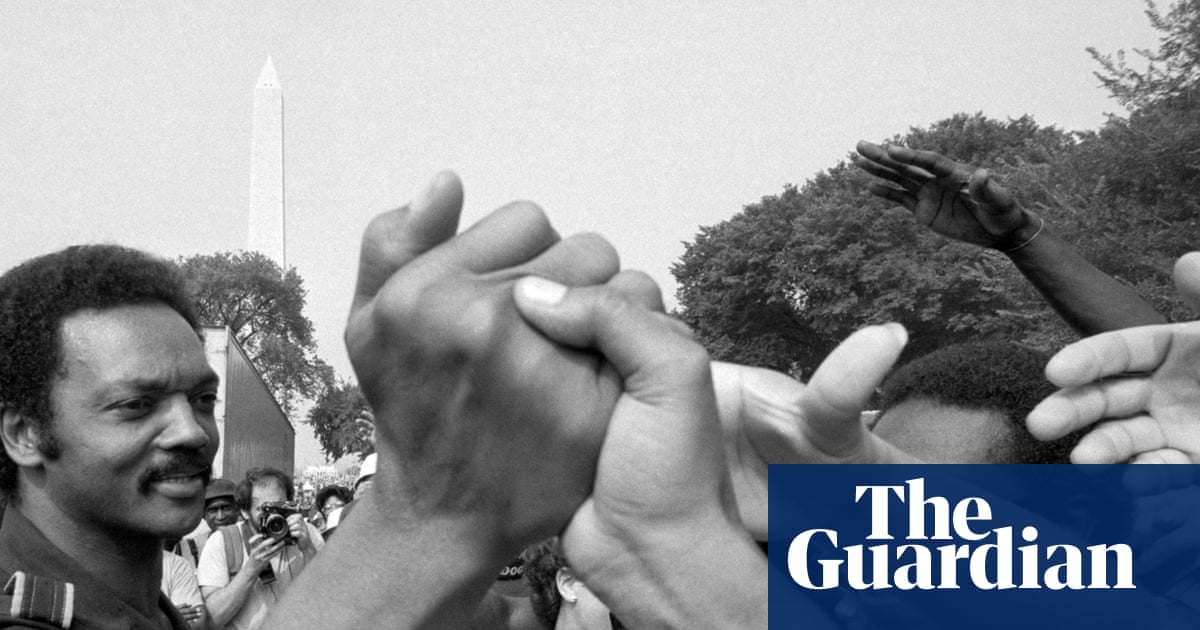
The civil rights trailblazer imagined a future for America in which the marginalized became the center of US politics
R
everend Jesse Jackson, the civil- and human-rights trailblazer who died on 17 February, imagined a version of America where the marginalized became the center. His was a much more progressive vision than what the Democratic party thought possible after the civil rights movement, and through Jackson’s National Rainbow Coalition – launched after his first presidential campaign in 1984 – he laid the groundwork for a new era.
“This Rainbow Coalition is the embodiment of a national politics that is radically inclusive,” Charles McKinney, a professor of history at Rhodes Collegesaid. “He was like: ‘I’ve got something for the middle class, I’ve got something for the elite, and I also have something for working-class folks. To me, that was the embodiment of his politics.”
Considered “capacious” and “transgressive” just four decades ago, said McKinney, Jackson’s vision for the US has been adopted and perpetuated by contemporary politicians, including Barack Obama, Bernie Sanders and Zohran Mamdani. Below are some of the details of Jackson’s progressive politics, including the ways they shaped the Democratic party that we know today.