Signs of rising financial stress, particularly among middle-income Americans, are warning flags about the U.S. economy’s health in 2026, experts say.
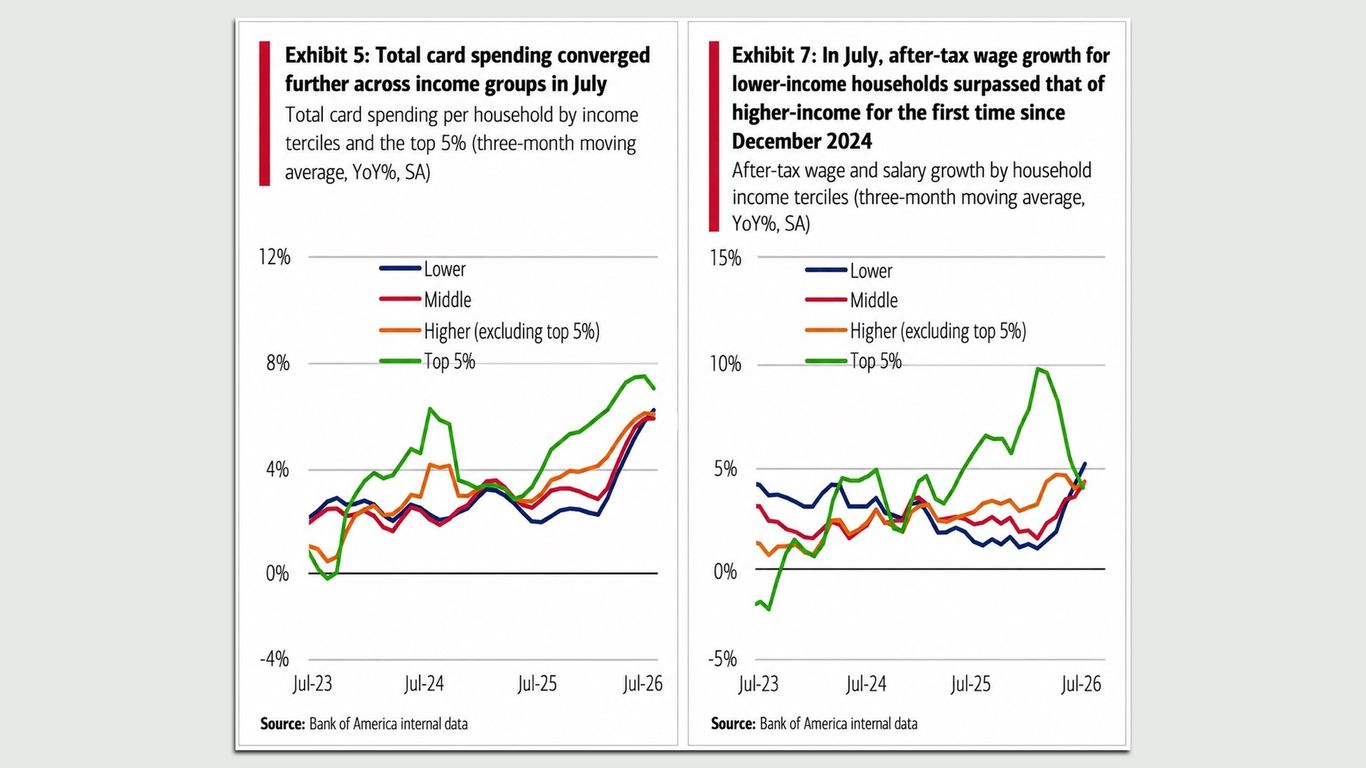
Spending growth for higher-income Americans remained relatively stable between January 2025 and January 2026, according to internal transaction data from Bank of America Institute released this week. However, spending growth slowed for lower- and middle-income households during that period.
In the so-called K-shaped economy, lower-income households are struggling, while those with higher incomes have strengthened their financial positions, mostly through stock gains and homeownership. Now, as middle-income consumers are showing signs of stress, the “K” shape is widening and beginning to look “more like the jaws of a crocodile,” said David Tinsley, senior economist at the Bank of America Institute.
“What we’re increasingly seeing is a divergence between higher- and middle-income households in terms of their spending growth,” said Tinsley, who added that the difference between middle-income and higher-income spending is the largest it has been since early 2022.
New data compiled by the National Foundation for Credit Counseling also shows that an increasing number of counseled consumers are struggling to stay afloat. The NFCC’s quarterly forecast projects that financial stress will reach an all-time high in the first quarter of this year, based on consumer behavior data from its national network of financial counseling agencies that serve more than 1 million clients.