The gap between the best and worse off Americans is growing — and economists don’t see an end in sight.
The “K-shaped” economy has been top of mind for consumers, corporate leaders, policymakers and investors since the Covid pandemic drastically reshaped Americans’ financial habits almost six years ago. But economists now warn that this two-speed economic structure is a core feature — rather than a passing fad — within the world’s largest economy.
“This is not a cyclical or temporary phenomena,” said Mark Zandi, chief economist at Moody’s Analytics. “This is a structural, fundamental issue.”
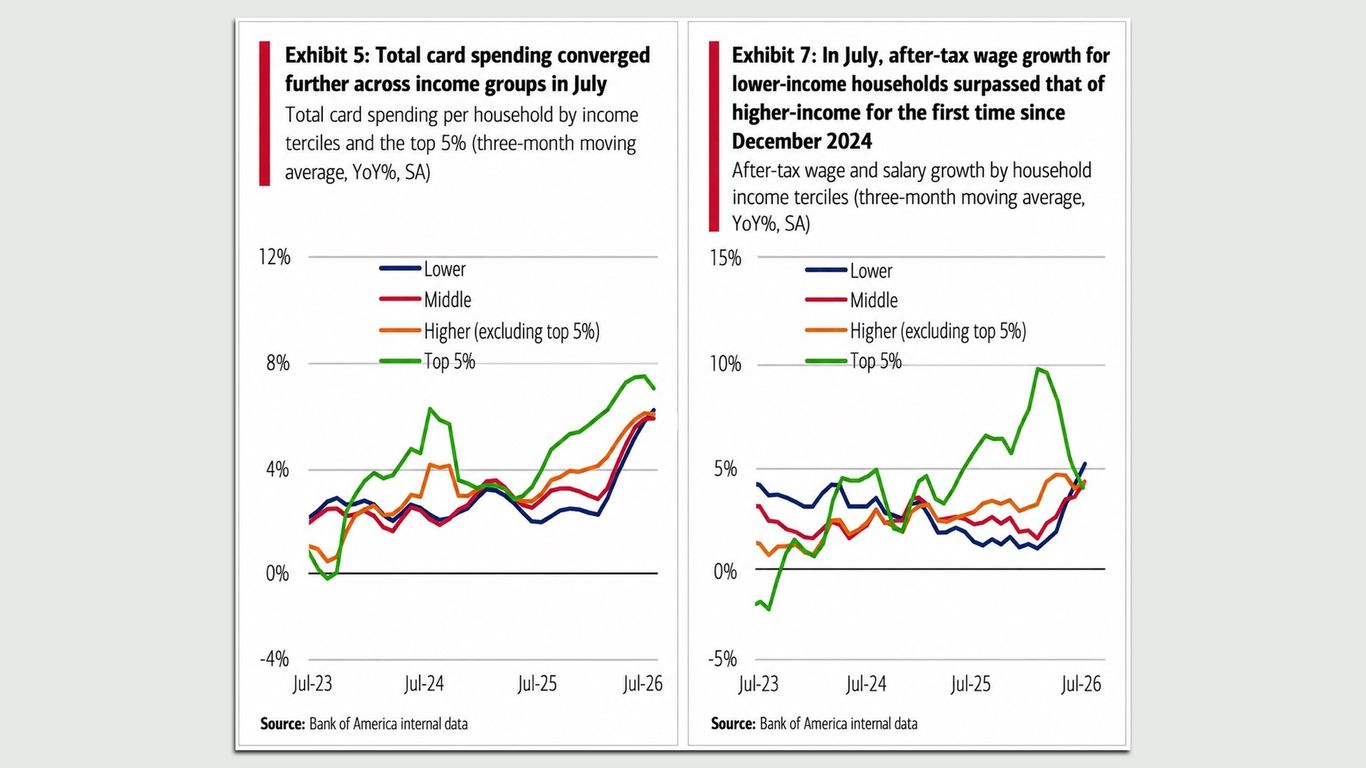
The prevailing theory goes something like this: Higher-earning consumers, encouraged by rallying stock holdings and elevated property values, are splashing out on vacations and premium goods. On the other hand, after years of higher-than-ideal inflation rates, lower-income cohorts are struggling to afford necessities such as housing, groceries and gasoline.
Taken together, recent data suggests that bifurcation is as exacerbated as ever.