Picture the letter K.
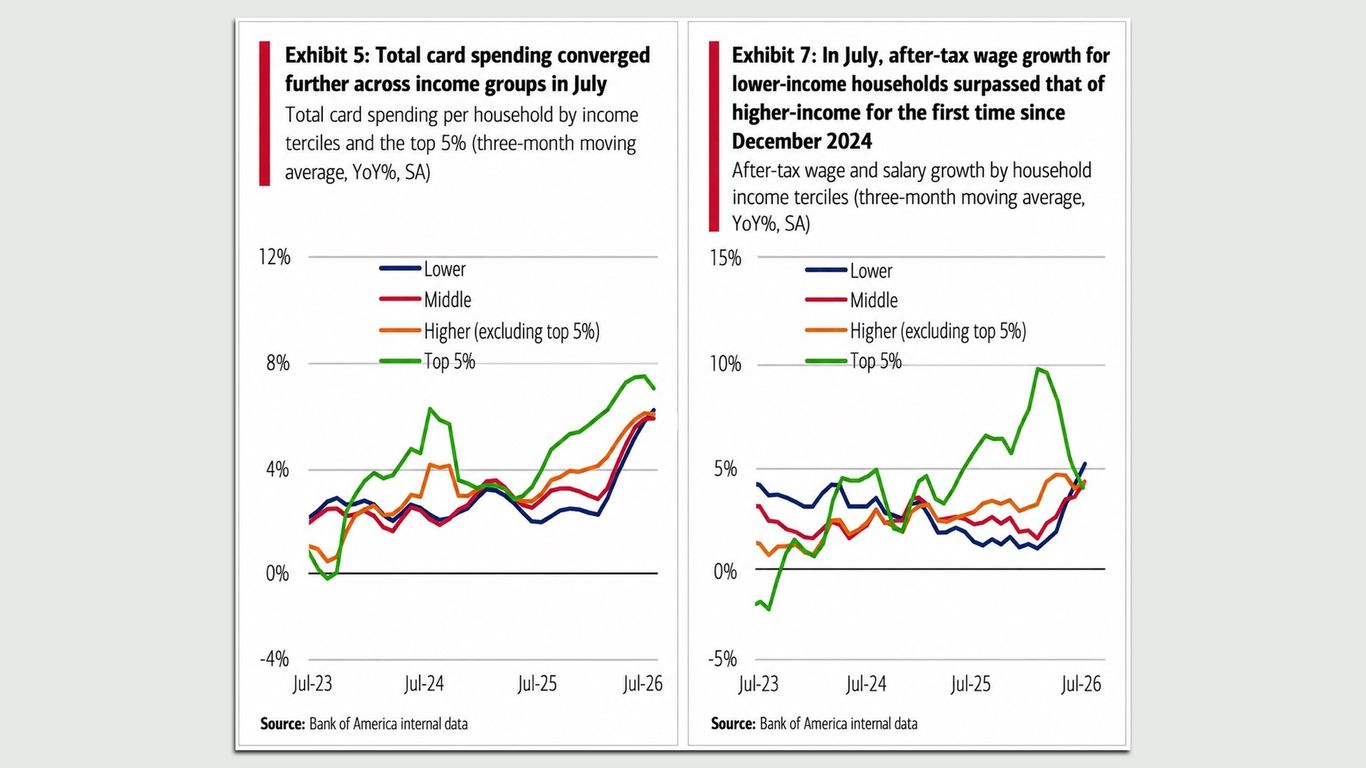
On the right side, you can see the upper diagonal heading up, while the one on the bottom falls to the ground. Now substitute upper-income Americans for the topmost diagonal, heading up and away, and lower-income folks for the one on the bottom and you can understand why comparing our economy to the shape of a “K” resonates for many people.
Beyond helping explain why many Americans feel they’re falling behind, the K-shape phenomenon is a reminder that economic policies have real-life impacts, said Diane Swonk, chief economist for KPMG US, and a warning that the divergence between fortunes for more affluent people and the rest of the country isn’t healthy.
The 'Gini coefficient' is a technical analysis of the gap between the rich and the poor.
“Inequality as measured by the 'Gini coefficient' is at its second-highest level on record,” Swonk said. “It is at a level that's more corrosive than conducive to growth.”