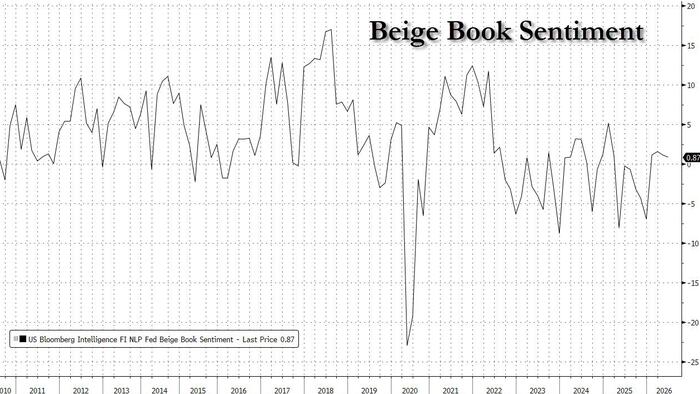
The Federal Reserve’s latest Beige Book shows a sharply diverging U.S. economy, where affluent households continue to spend while lower- and middle-income consumers begin to buckle under financial pressure: the clearest sign yet that the economy is splitting into something unmistakably K-shaped.
The Fed’s latest report describes a widening gap between America’s social classes, with “early signs of strain on middle-income consumers.”
On the lower end, households are cutting back on dining out, trading down to cheaper groceries, getting “sticker shock” from car prices, and responding more sharply to price increases. Retailers across several Fed districts noted that budget-conscious shoppers have become increasingly sensitive to small changes in prices or promotions. Fast-food chains also saw a “notable decline in sales” as lower-income diners pulled back.
At the top of the income distribution, the picture looks very different. High-income households — those who benefit most directly from asset appreciation — continue to spend robustly. Travel bookings remain strong, discretionary purchases are holding up, and “higher-end retail spending remained resilient.”
The anecdotal evidence from different industry leaders echoes what has been clearly showing up in the data. Mark Zandi, chief economist at Moody’s Analytics, found that the top 10% of households now account for roughly half of all U.S. consumer spending — an unprecedented concentration that makes the economy look healthier on the aggregate than it feels to most people living in it.