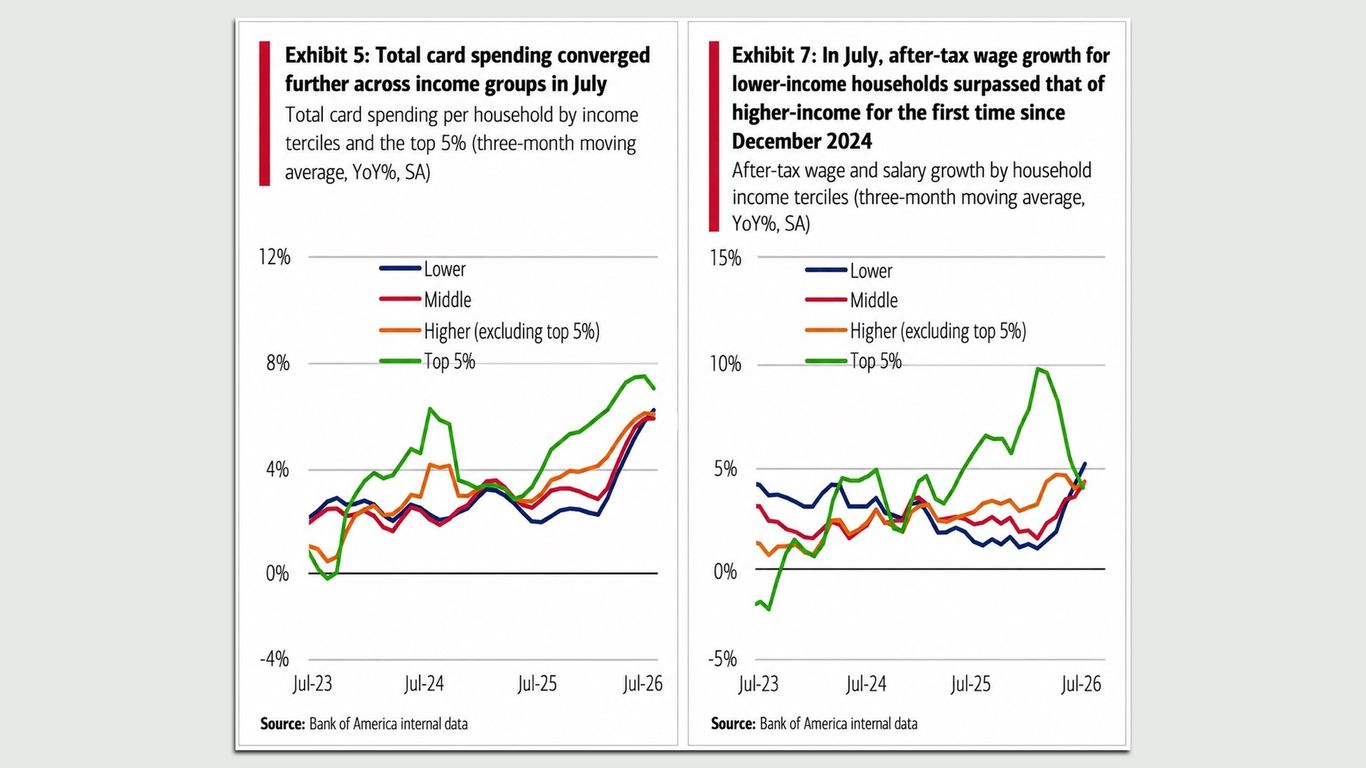
For the past 12 months, investors and consumers had settled into the idea of a “K-shaped economy.” Be it jobs or spending, the K-shape illustrated a growing divide between the fortunes of the wealthy and everyone else. Those at the top of the pile trended higher, while those already struggling pushed lower. But new analysis from Bank of America suggests the trajectory of middle-class consumers is now pulling away from those on the lower end of the income spectrum: These consumers aren’t doing as well as wealthy people, but their spending power isn’t as diminished as that of poorer consumers. A look at BofA’s data shows the shape is no longer a K. If we’re sticking with the alphabet theme, one might suggest an “E” is emerging. In a note published yesterday by six BofA economists, the group wrote that “income‑based divergence in spending and wage growth persists, and we are concerned that a ‘K’ shape is opening up between higher-income households and middle-income households, alongside the existing gap with lower-income households.”
Citing internal data, the group said that in January the spending growth between higher-income households and all others was at its largest since mid-2022, the height of the COVID-era spending boom. Year-on-year in January, higher-income consumers’ spending growth on credit and debit cards grew 2.5%. Lower-income households grew just 0.3%, while middle-income was relatively flat at 1%.