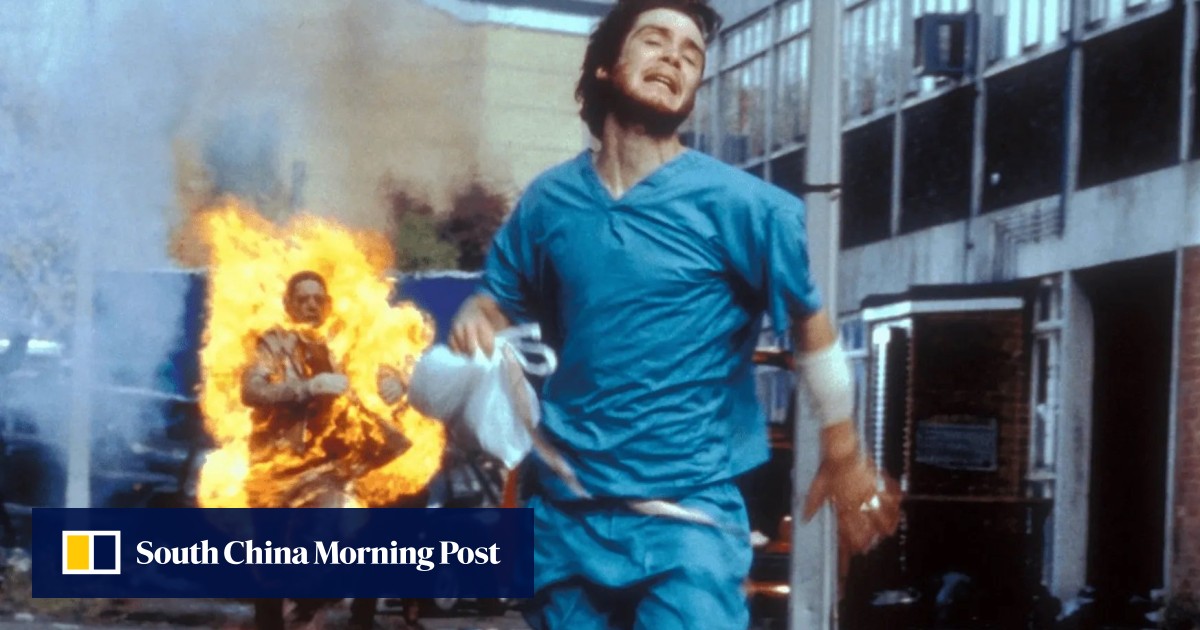
In the summer of 2002, I was an excited teenager buying a cinema ticket to 28 Days Later, the new British zombie film everyone was talking about.
As a devoted horror fan, I had high expectations, and the film didn't disappoint. In fact, it changed my relationship with the horror genre.
What struck me most was the sense that this movie, about a zombie virus outbreak, acknowledged women on screen - and in the audience - as equals.
The women in 28 Days Later were afforded emotional realism, agency and moral complexity.
This felt like a marked departure from much of the horror cinema of the late 1990s and early 2000s, which often relied on familiar slasher conventions and seemed to use female characters as objects of vulnerability or spectacle. Think: Scream, I Know What You Did Last Summer, Jeepers Creepers, The Haunting...