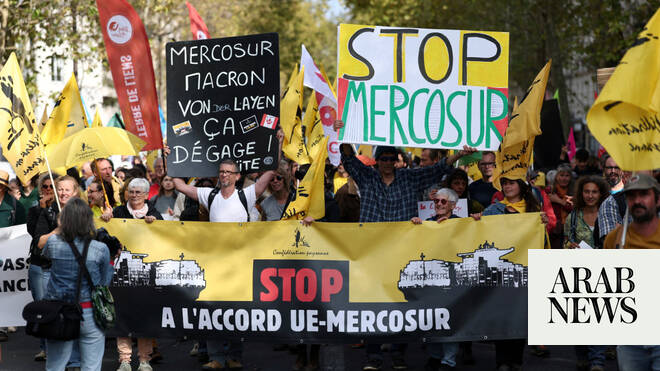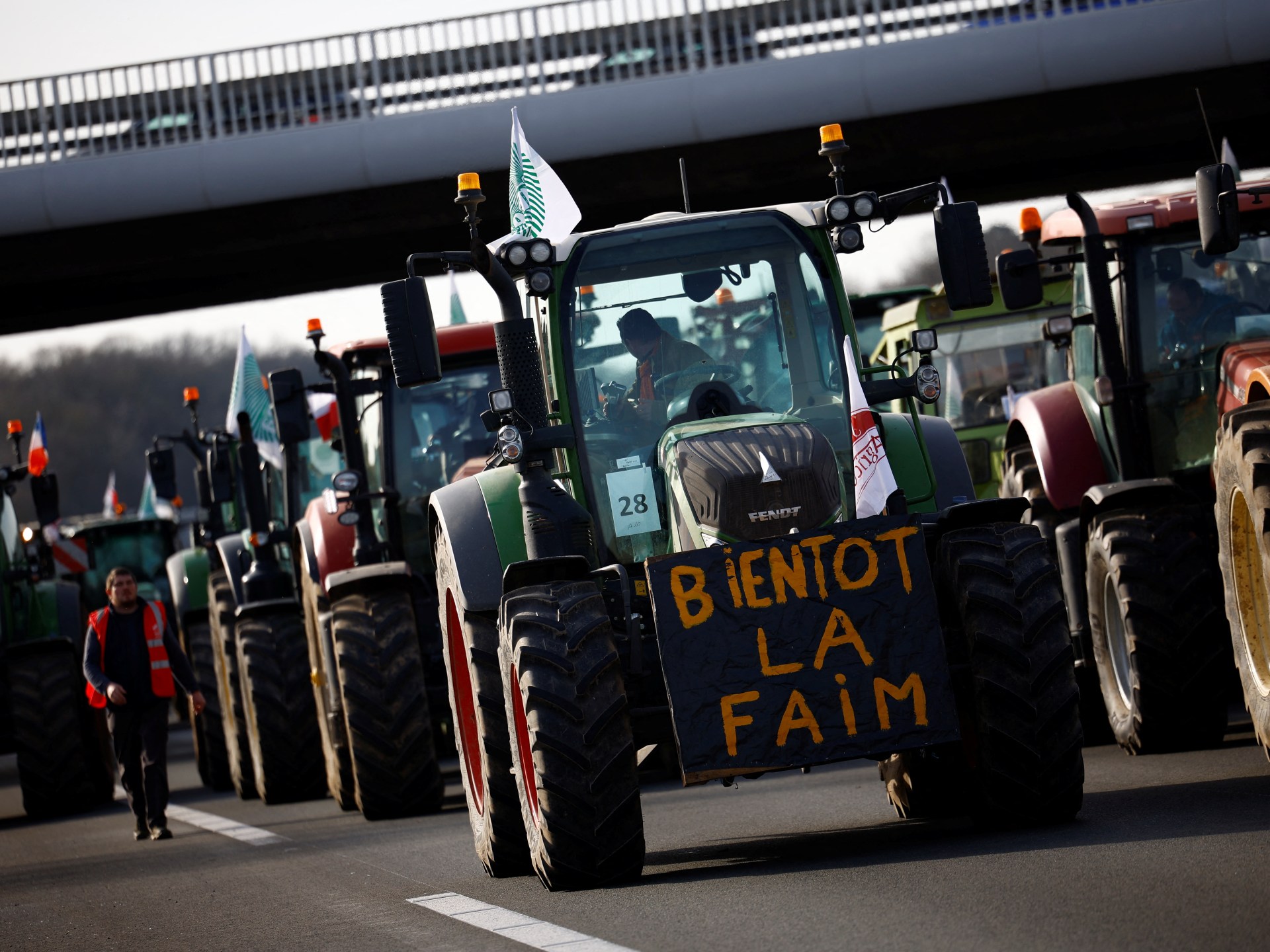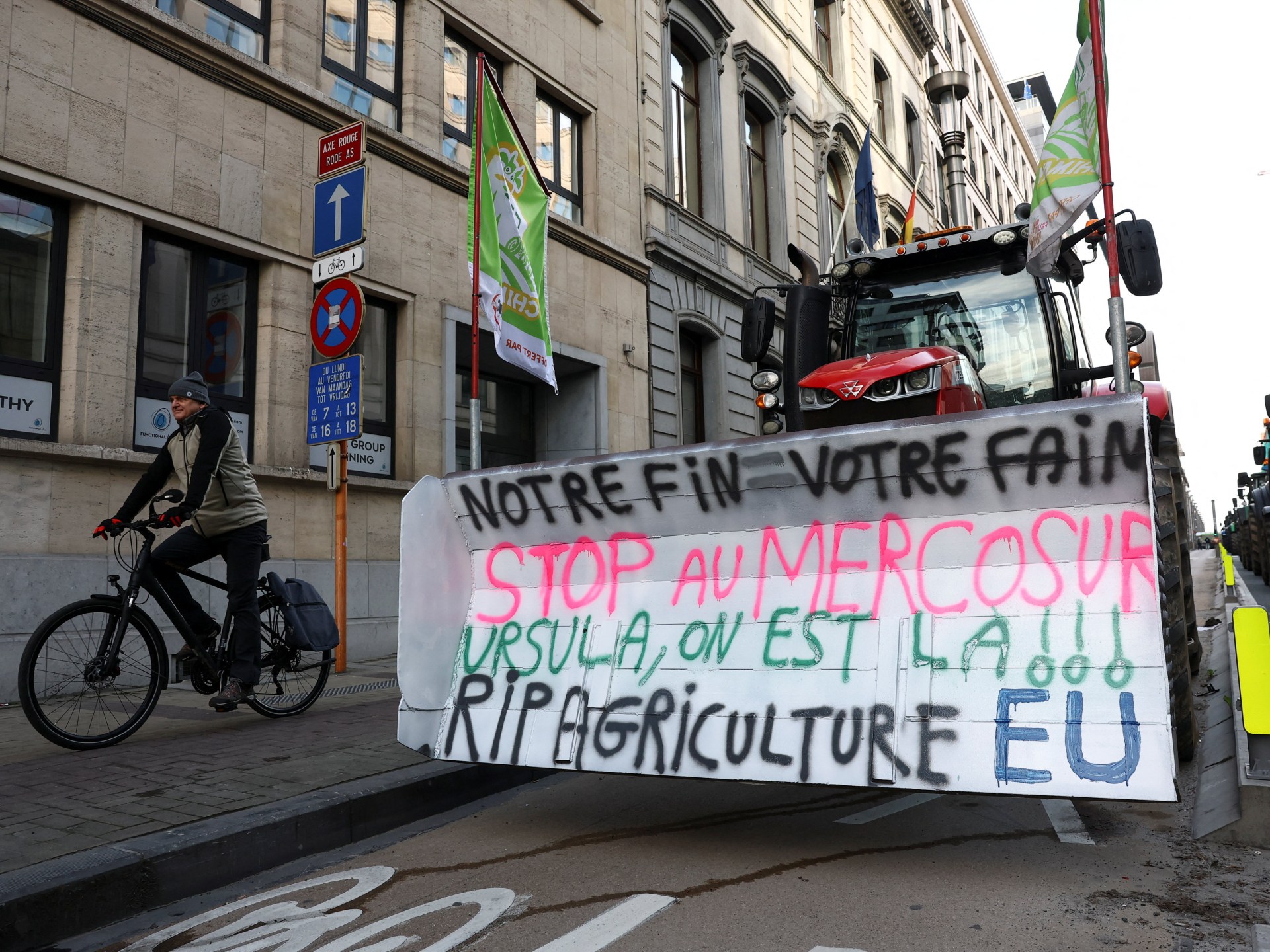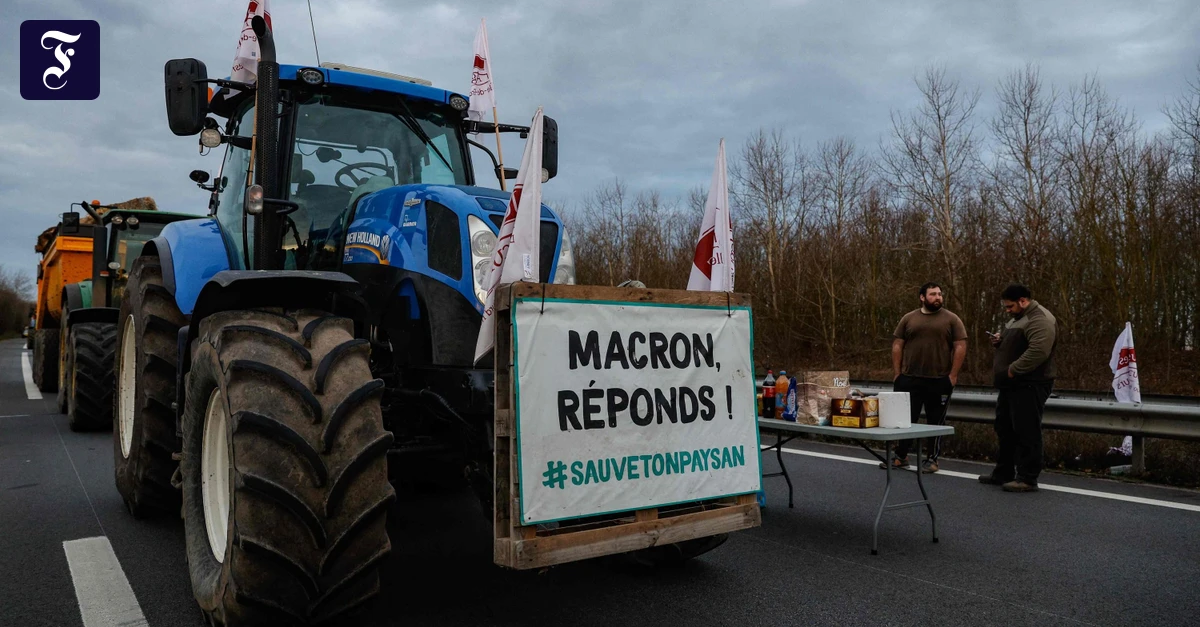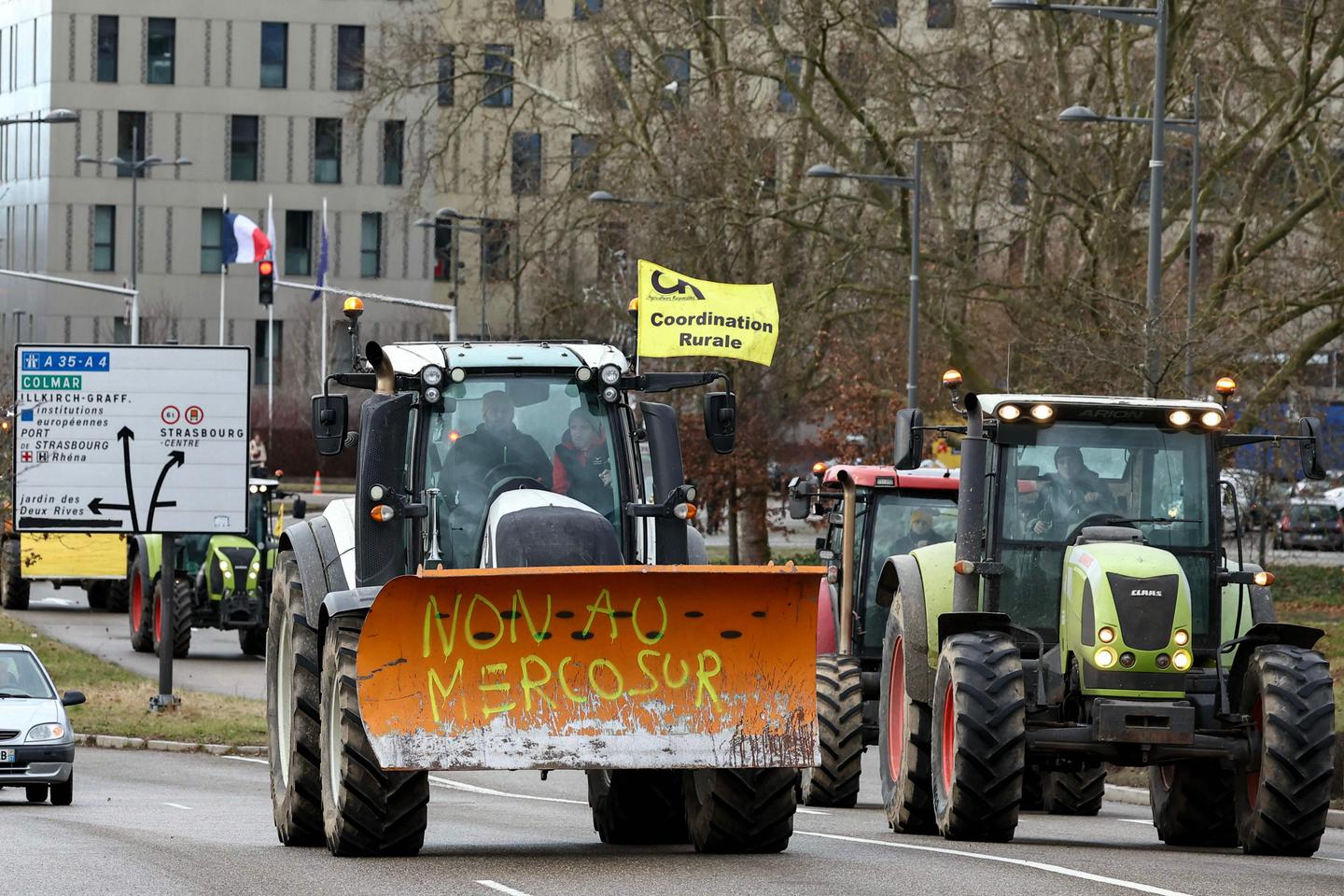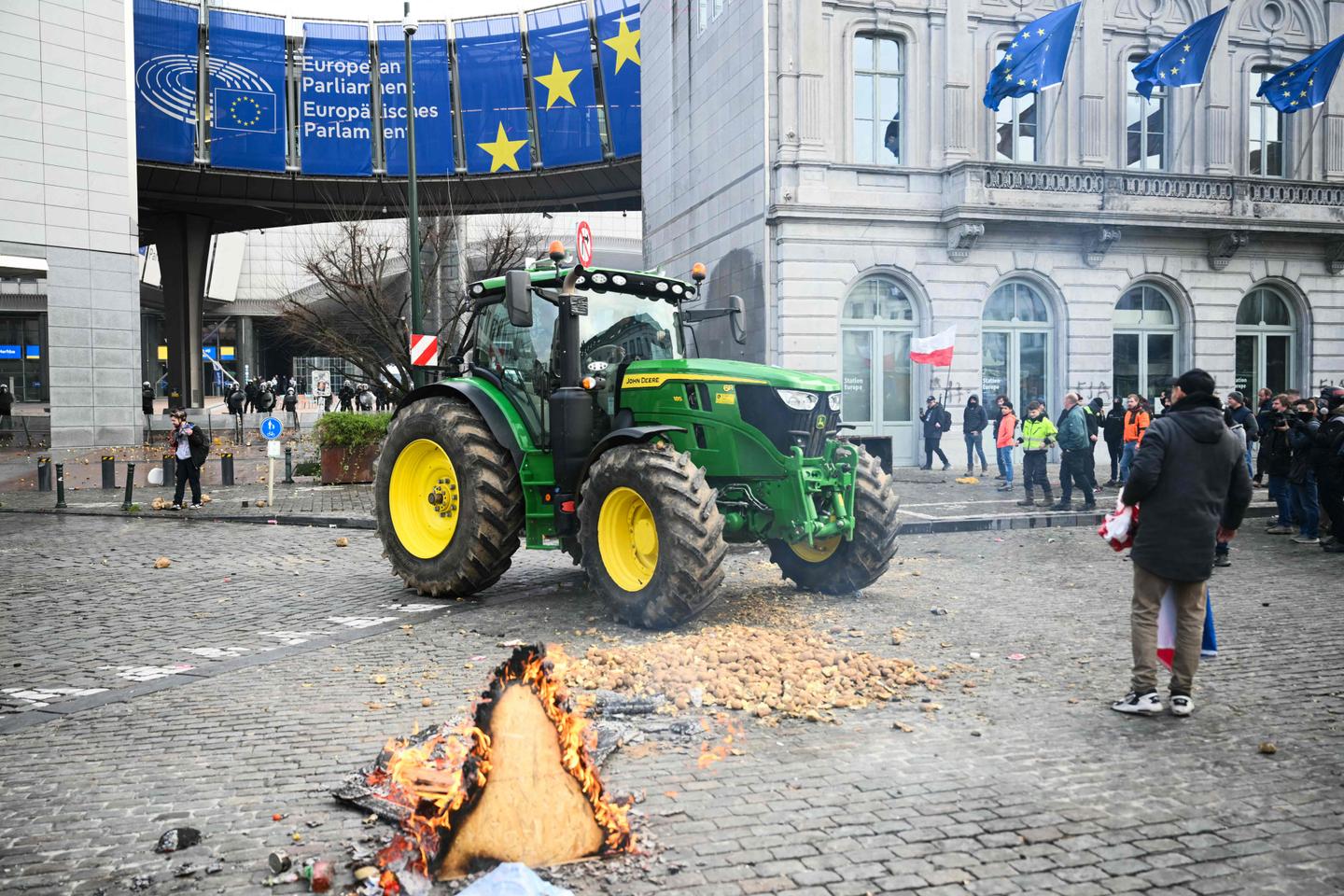
Farmers protest against the culling of herds infected by contagious nodular dermatitis and against the EU-Mercosur trade agreement, in the northern French fity of Arras, on December 13, 2025. LUC AUFFRET / ANADOLU VIA AFP
For 25 years, the European Union (EU) and four countries in the Mercosur trade bloc (Argentina, Brazil, Paraguay and Uruguay) have tried to conclude a free trade agreement which, between them, would create a joint market of 750 million people. Several times, they thought they had reached a deal, only to have to renounce in the final stretch. Will the agreement reached in December 2024, which the European Commission hopes to sign on Saturday, December 20, any different?
Should the EU member states grant her a mandate to sign the deal in the coming days, European Commission President Ursula von der Leyen has planned to fly to Foz do Iguaçu, Brazil, at the end of the week, where a Mercosur summit will be held on Saturday. However, in France, President Emmanuel Macron has suddenly called for a "postponement of the agreement's review," as announced by the Elysée on Sunday, December 14.
The issue of a free trade agreement with countries in the Mercosur bloc has always been highly sensitive in France, where part of the farming sector is categorically opposed to the deal, as well as nearly the entire political spectrum. France's industrial sector, which might benefit from the export opportunities the deal would entail, has supported it, but only in a hushed way. Against this backdrop, an outbreak of contagious nodular dermatitis among France's livestock, uncertainty about the 2026 state budget, and the upcoming local elections, set for March 2026, have convinced the president to hit the brakes.