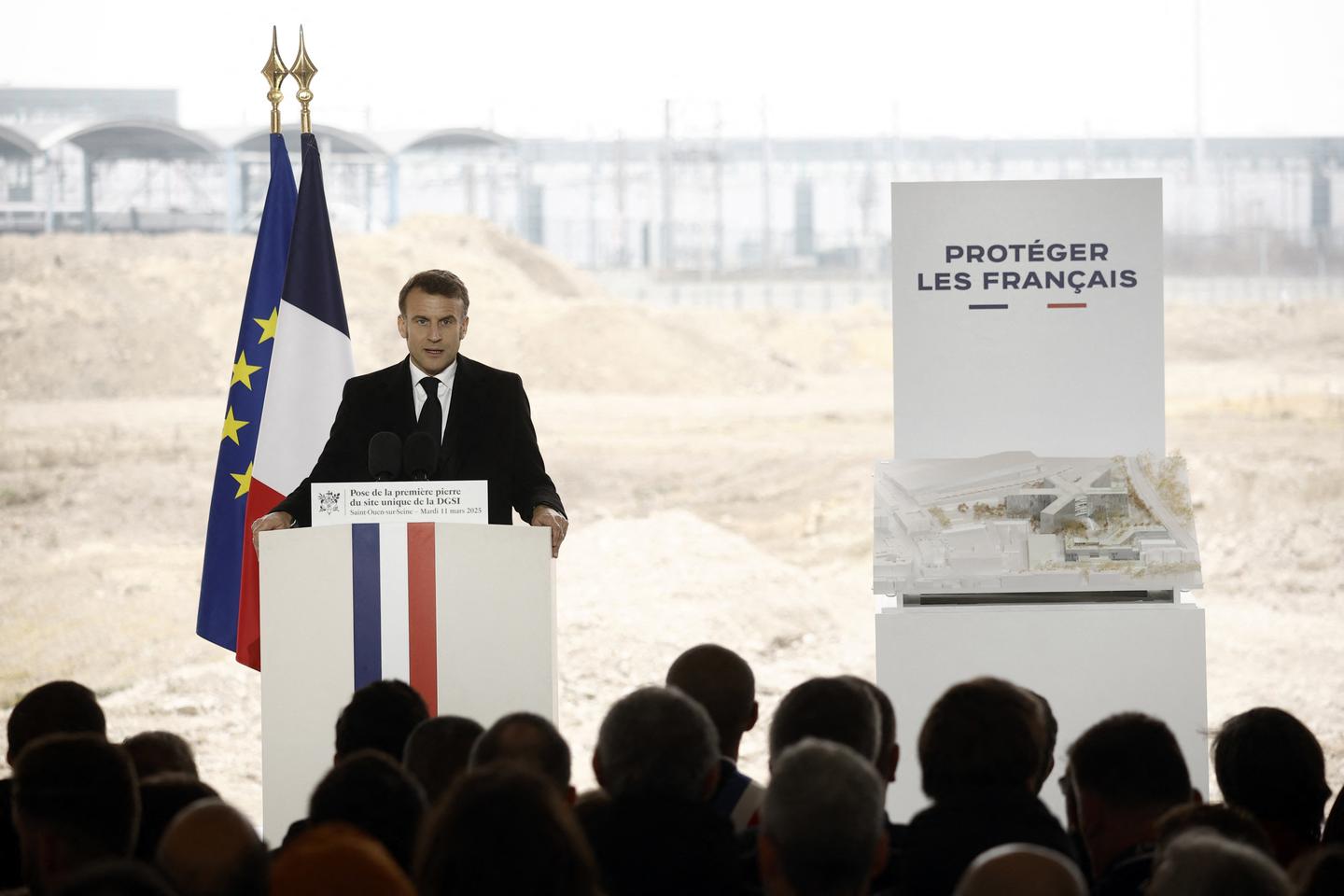
French President Emmanuel Macron speaks at the construction site of the future headquarters of the DGSI domestic intelligence service in Saint-Ouen, near Paris, March 11, 2025. YOAN VALAT/AFP
S
ince commemorating the 2015 terrorist attacks, France has evaluated the effectiveness of its response to the violence. That year, President François Hollande enacted a law on intelligence gathering. Designed to show the public that the government was taking action, the law merely legalized techniques that were already being used illegally, with two exceptions: real-time tracking on telephone and internet networks and the use of algorithms to analyze data. The law thus offered protection to intelligence officials who risked facing prosecution. Since then, the legal framework has been amended around 10 times, broadening in step with technological advances that provide new tools for the intelligence services.
The law was presented as a historic turning point for democratic oversight of state surveillance. In practice, however, it has shown signs of fatigue and even of regression in light of technological advances. What stands out is not so much the risk to civil liberties, but rather the government's and lawmakers' desire to reduce the power of checks and balances. It's a policy that runs counter to European legal precedent and citizen accountability, while also opening the door to potential abuses should the political system veer toward authoritarianism.