T
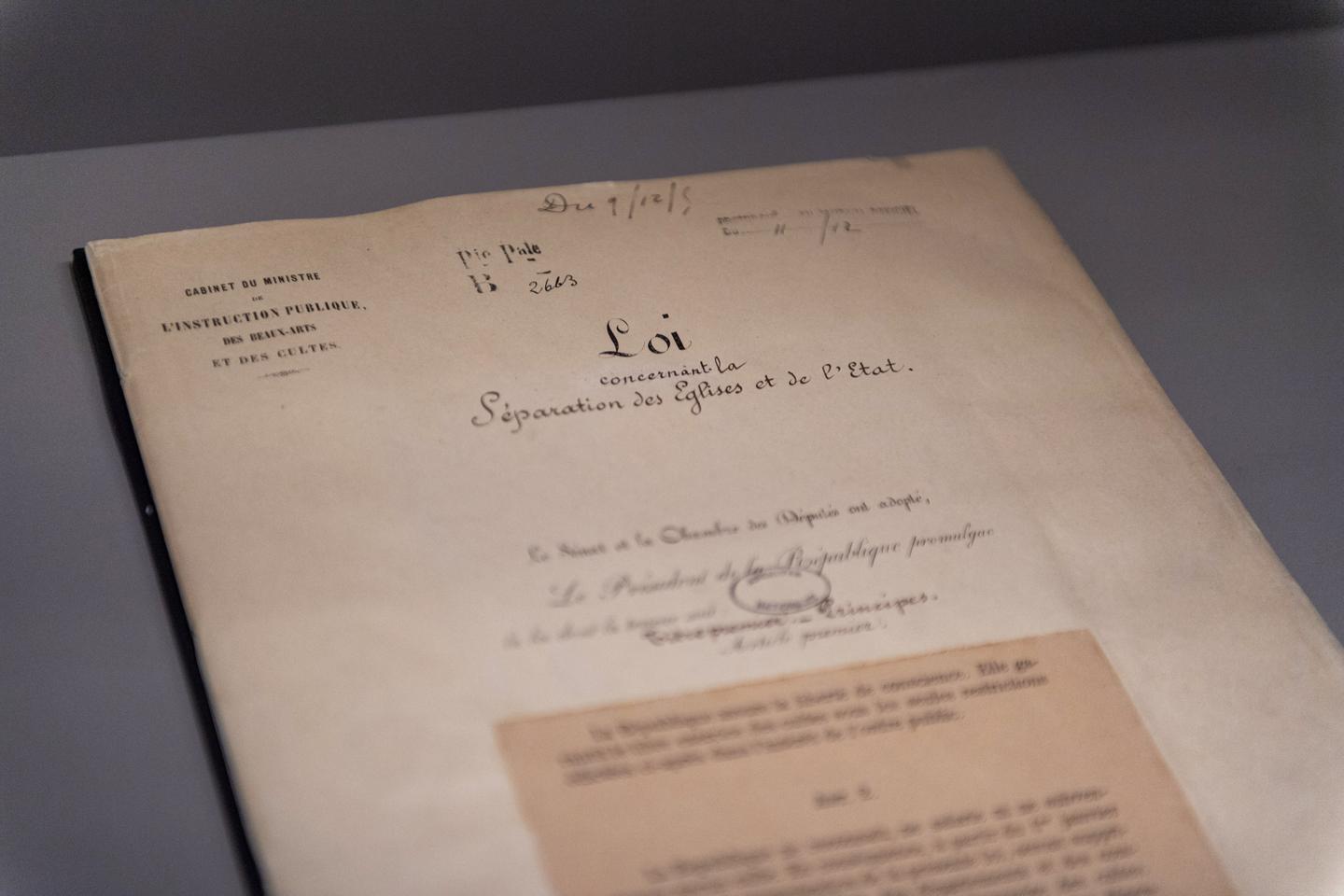
he commemoration of the 120th anniversary of the December 9, 1905 law on the separation of churches and state is a moment to recall how essential laïcité [the French conception of secularism] is to the foundation of democratic life. That was the intention of the Constitution, which made laïcité one of the founding principles of the Republic, placing it in the service of liberty, equality and fraternity.
Linking France to the community of democratic nations, laïcité traces its origins to the 1789 Declaration of the Rights of Man and of the Citizen. By establishing "the principle of all sovereignty in the Nation" (Article 3), the declaration affirmed the political authority's independence from religious laws. By asserting that "no one shall be disquieted for his opinions, even religious ones, provided that their manifestation does not disturb the public order established by law" (Article 10), it enabled each individual to choose their own beliefs or convictions in complete freedom. This marked a decisive break from the order of the Ancien Régime, which was based on religious primacy and unity of faith. It fell to the legislation of the Third Republic to confirm the system established in 1789. The 1905 law, which the Conseil d'Etat [France's highest administrative court] described in its 2004 annual report as the "keystone" of French laïcité, crowned the secular framework by instituting the separation of churches and state.