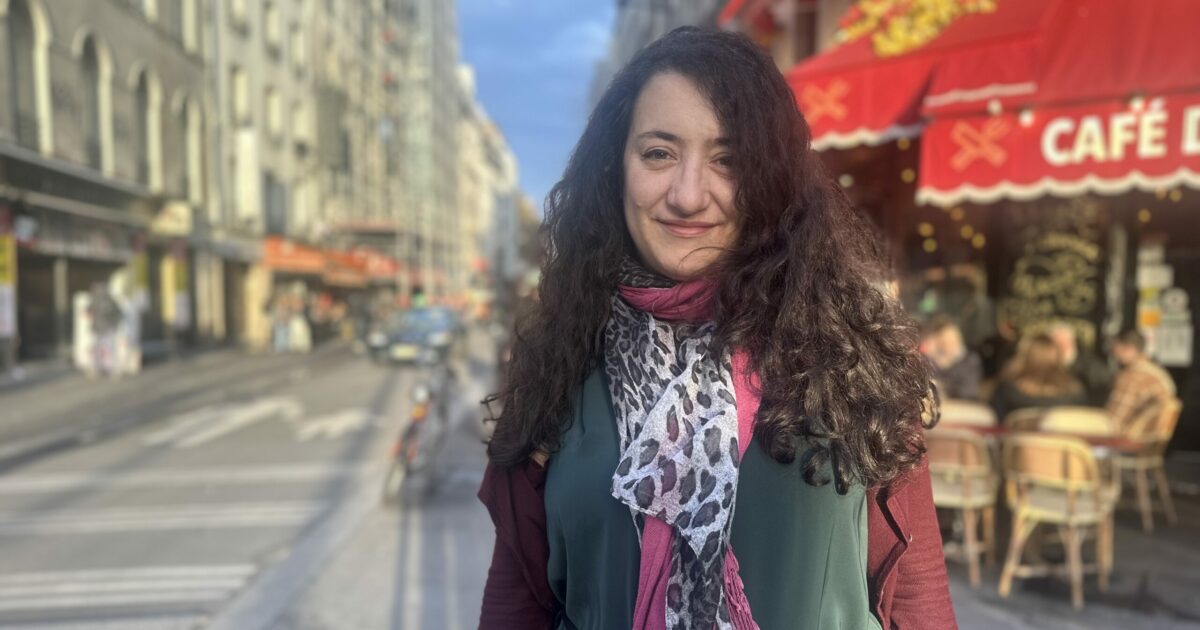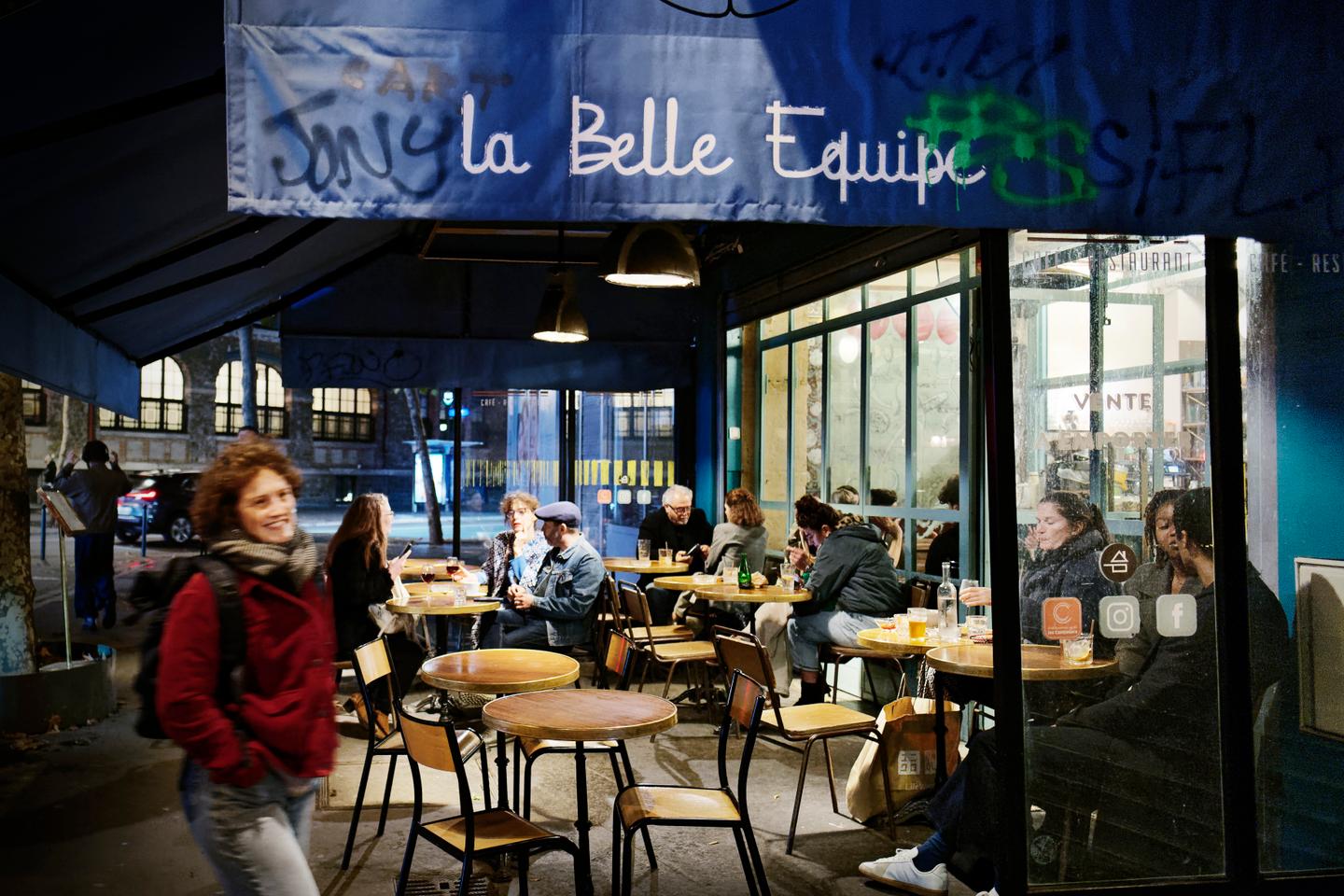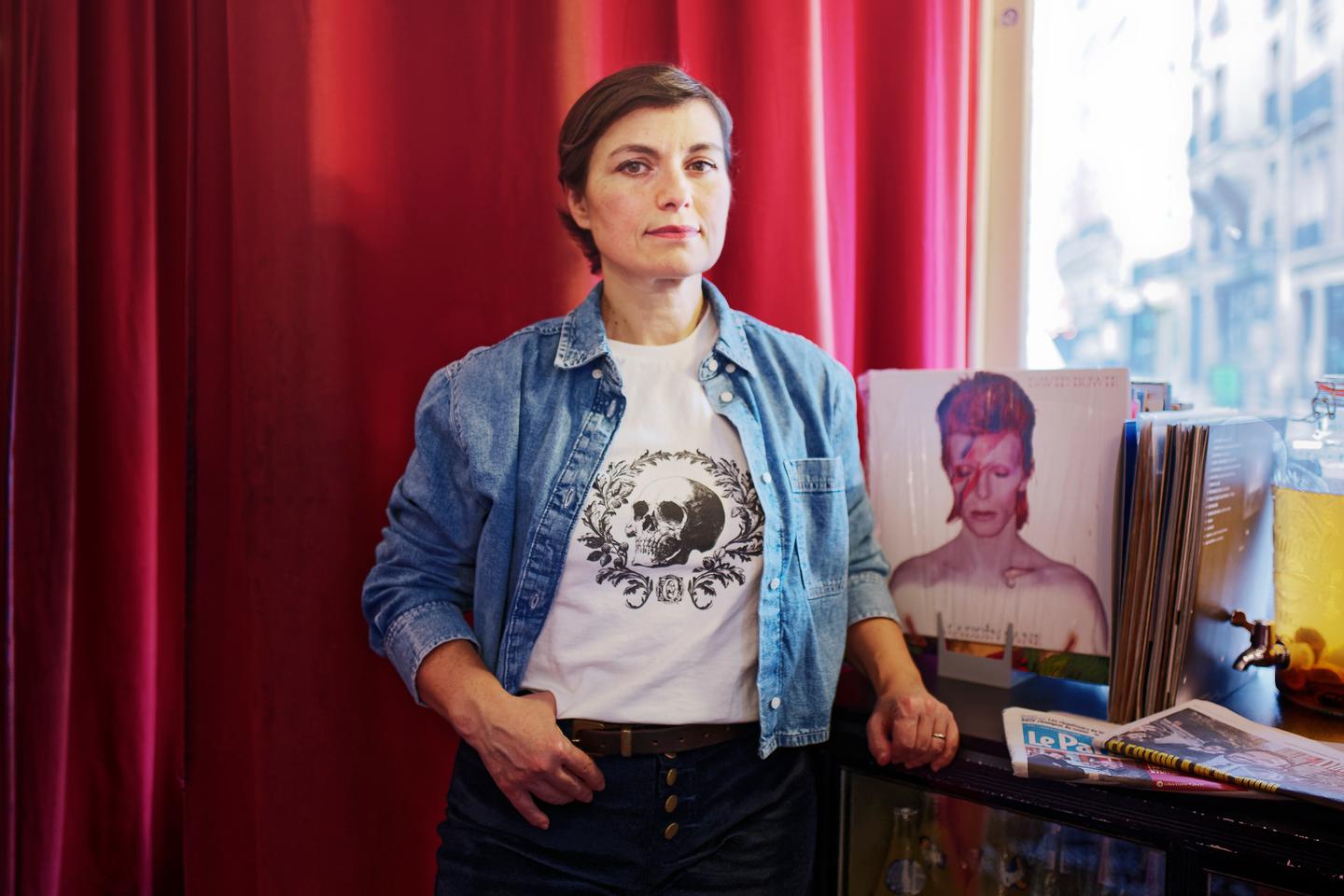
Marie, former hostage at the Bataclan, in a café in Paris's 20th arrondissement, on November 3, 2025. CAMILLE GHARBI FOR LE MONDE
She walks in, and with her comes that insistent feeling of familiarity. But one knows that this is not possible. And for good reason: 10 years ago, Marie Hourcastagnou had specifically refused to tell her story to Le Monde. A month after the Paris attacks of November 13, 2015, her husband Arnaud's account – he was the last of the 11 hostages to be freed from the Bataclan – made the newspaper's front page run cold. She was in the same narrow corridor as him that night, trapped with the two terrorists for two hours. "But I wanted to move on." For Marie, there was no way she would let that moment be frozen on paper; she needed to "get past it," "move forward," "not dwell on it." And here she is now, sitting across from us, 10 years later. Still not frozen, her life is a whirlwind during this strange autumn, marked by commemorations and the release of a television series inspired in part by her story.
So where does this sense of déjà vu come from, faced with her piercing eyes and her rapid speech? It happens to her now and then, she confides. Like with the older woman who insisted so much, saying this feeling would "nag at her" all evening, Marie recalls. So "I had to relieve her," even knowing what it would set off. "You must have seen me in a documentary..." Marie told her, discreetly. The woman stopped smiling immediately. Awkward apologies, discomfort.