ByMark Travers,
Contributor.
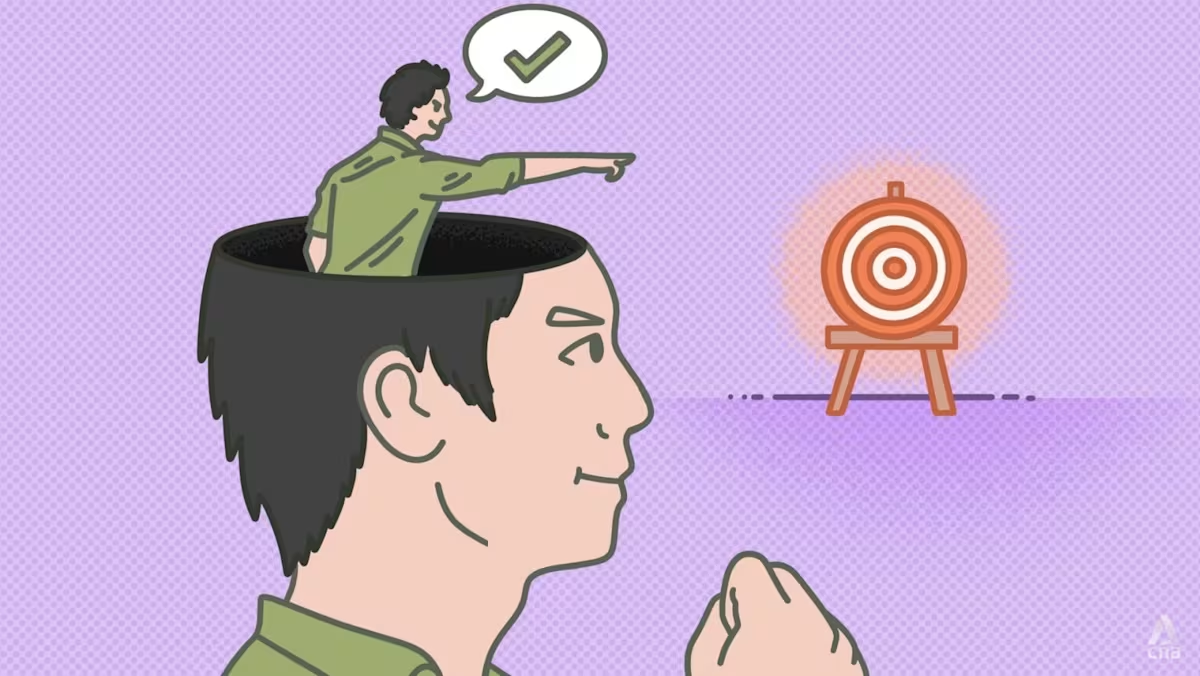
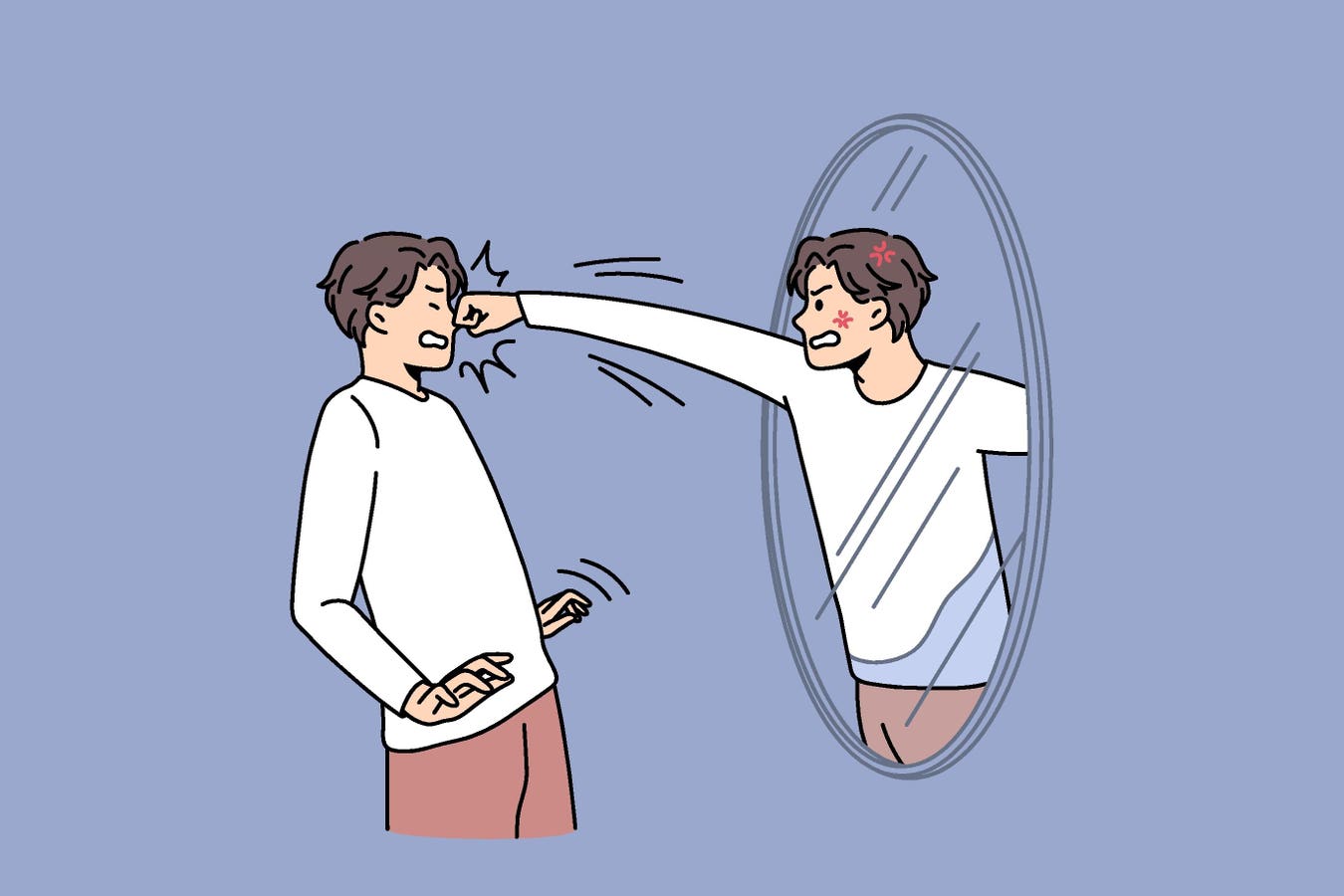
Have you ever noticed a voice in your head that seems to comment on everything you do? Sometimes it cheers you on; other times, it reminds you of every mistake you’ve ever made. This latter is negative self-talk, while the former is positive. We all are constantly talking to ourselves in some way and following a narrative shaped by what we have learned from the experiences and world around us.
This inner voice is built over years of experiences and feedback you absorb from others. The way you were spoken to as a child, how you were praised or criticized and the standards you learned to hold yourself to all quietly shape the tone of your self-talk today. In some cases, it becomes your supportive coach; but in others, it serves as a relentless critic.
A 2021 study published in Scientific Reports explored how the way we talk to ourselves, either positively or negatively, impacts brain function and cognitive performance. Researchers used fMRI brain scans and a problem-solving test to compare two types of self-talk. One is self-respect, which is positive self-talk, and self-criticism, which is negative self-talk.