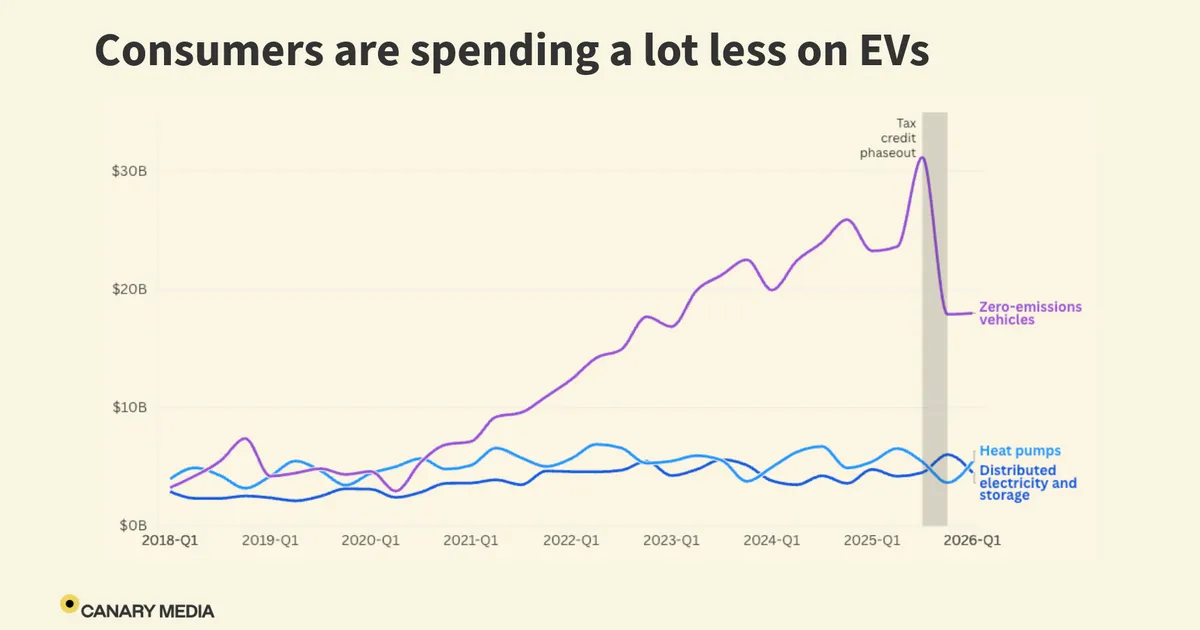
On Wednesday, federal EV tax credits in the US officially came to an end. Those credits, expanded and extended in the 2022 Inflation Reduction Act, gave drivers up to $7,500 in credits toward the purchase of a new electric vehicle. They’ve been a major force in cutting the up-front costs of EVs, pushing more people toward purchasing them and giving automakers confidence that demand would be strong. The tax credits’ demise comes at a time when battery-electric vehicles still make up a small percentage of new vehicle sales in the country. And transportation is a major contributor to US climate pollution, with cars, trucks, ships, trains, and planes together making up roughly 30% of total greenhouse-gas emissions. To anticipate what’s next for the US EV market, we can look to countries like Germany, which have ended similar subsidy programs. (Spoiler alert: It’s probably going to be a rough end to the year.)
When you factor in fuel savings, the lifetime cost of an EV can already be lower than that of a gas-powered vehicle today. But EVs can have a higher up-front cost, which is why some governments offer a tax credit or rebate that can help boost adoption for the technology. In 2016, Germany kicked off a national incentive program to encourage EV sales. While the program was active, drivers could get grants of up to about €6,000 toward the purchase of a new battery-electric or plug-in hybrid vehicle.