Once upon a time, Americans could get big federal tax incentives for buying electric vehicles, heat pumps, rooftop solar, and home batteries. But the Trump administration scrapped those tax breaks last year — and no category of household cleantech has suffered more as a result than EVs.
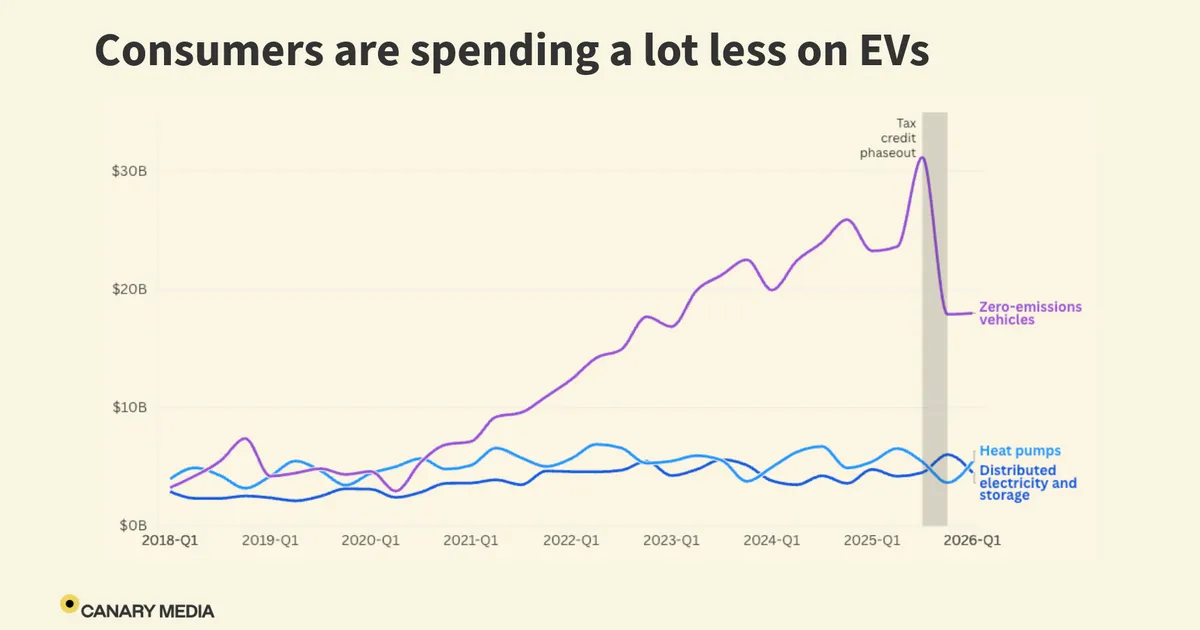
Consumer spending on EVs has fallen off a cliff since the phaseout of the $7,500 federal tax credit at the end of last September.
In a rush to snap up that incentive before it disappeared, Americans spent a record $31 billion on EVs in Q3 2025 — only for that figure to plummet to around $18 billion for each of the last two quarters, per new data from the Clean Investment Monitor, a joint project of Rhodium Group and the Massachusetts Institute of Technology’s Center for Energy and Environmental Policy Research.
It’s the equivalent of turning back the clock to early 2023 in terms of spending on EVs, which made up nearly 10% of new car sales in the U.S. in 2025.
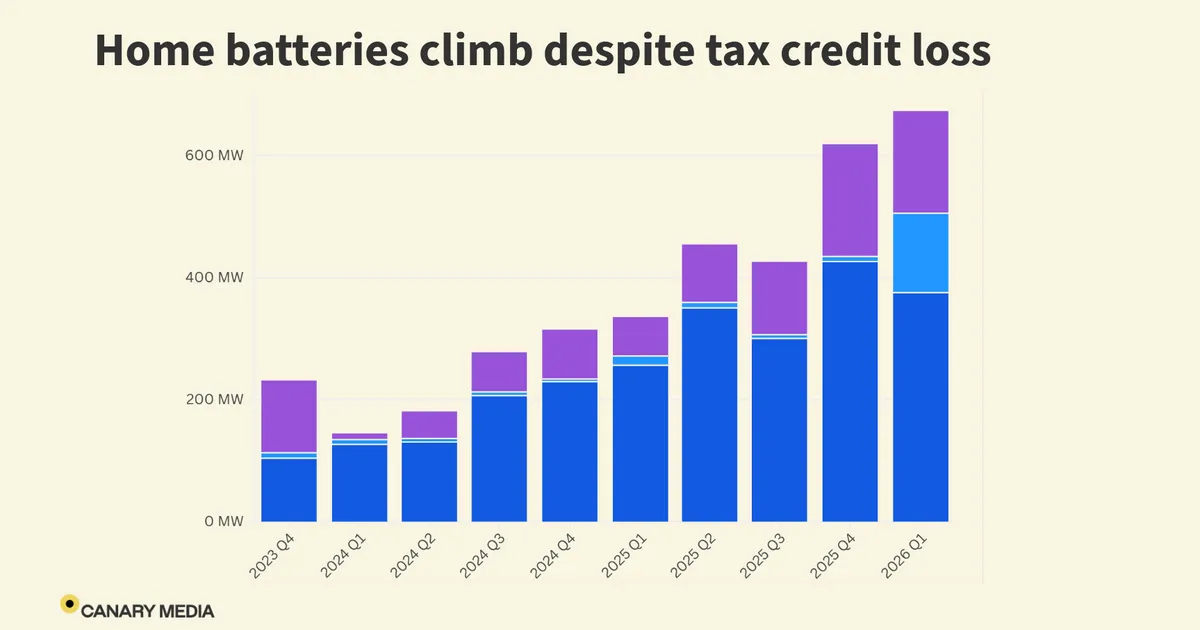
The effects have been less dire for other consumer cleantech, like distributed electricity and storage — primarily rooftop solar and home batteries — as well as heat pumps.