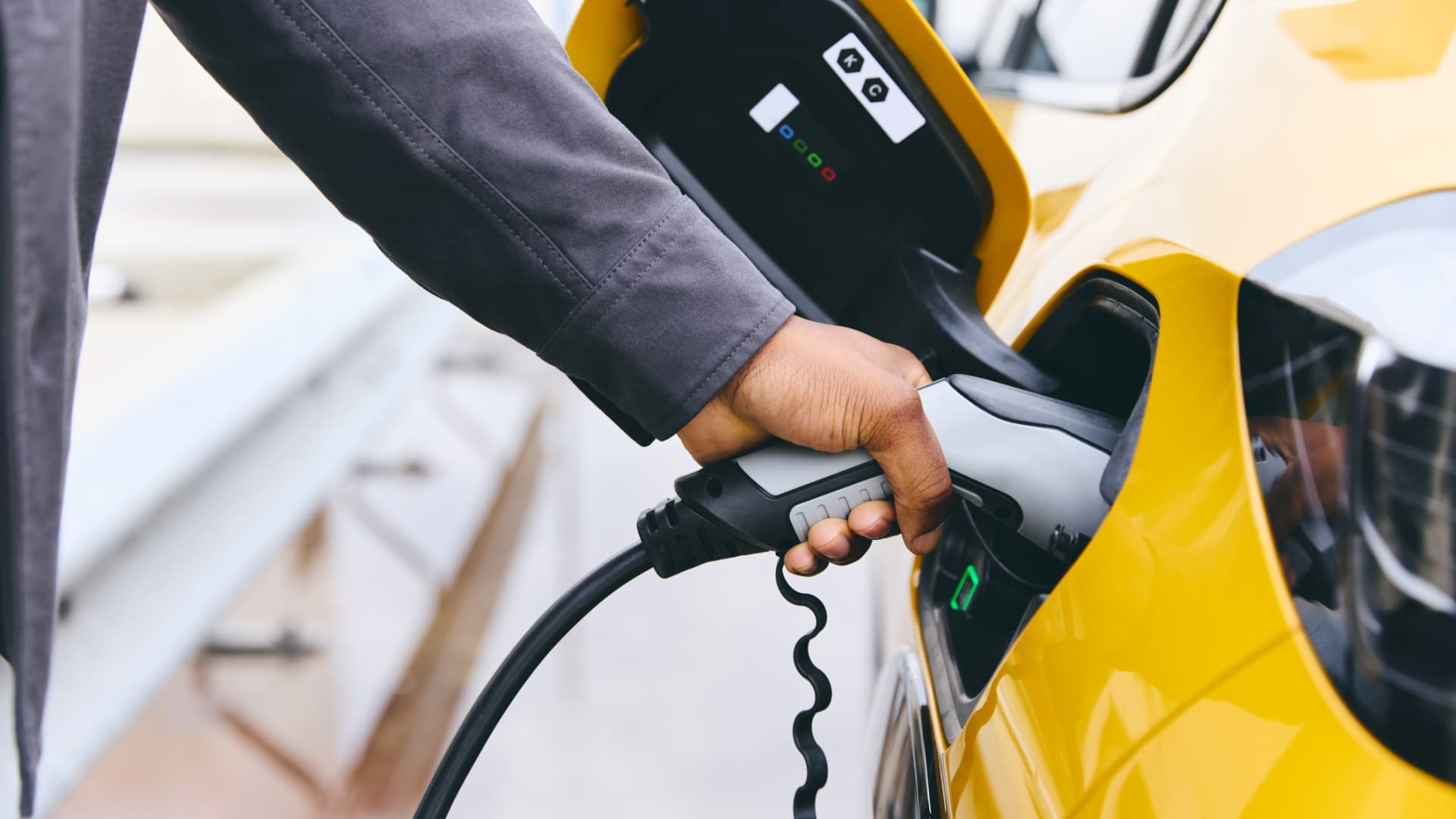
A federal tax break worth up to $7,500 for new EVs and up to $4,000 for used ones expires Sept. 30, but new Internal Revenue Service guidance says shoppers can still qualify if they sign a binding contract and make a payment before the deadline, even if the car is delivered later.
Previously, eligibility was tied to the delivery date. That meant even if a buyer signed a contract before Sept. 30, they could lose the credit if shipping delays pushed delivery into October.
The tax break is still only claimed once the buyer takes possession of the vehicle, but the qualifying date is now tied to the contract and payment, the IRS says. This makes qualifying for the credit less of a risk for those purchasing close to the deadline.
“The added wiggle room” is especially helpful to “shoppers who want to buy a vehicle that’s located in another state and needs to be shipped to them, or who would like to order a car that hasn’t yet been manufactured,” says Andy Phillips, vice president of the Tax Institute at H&R Block. “In both cases, they might run out of time to get the car delivered before the deadline.”
The Inflation Reduction Act of 2022 overhauled a long-standing federal EV tax credit, renaming it the Clean Vehicle Credit, extending it through 2032 and adding new income, price and manufacturing requirements. However, with the passage of the President Donald Trump’s tax and spending megabill, the credit is now set to expire Sept. 30.