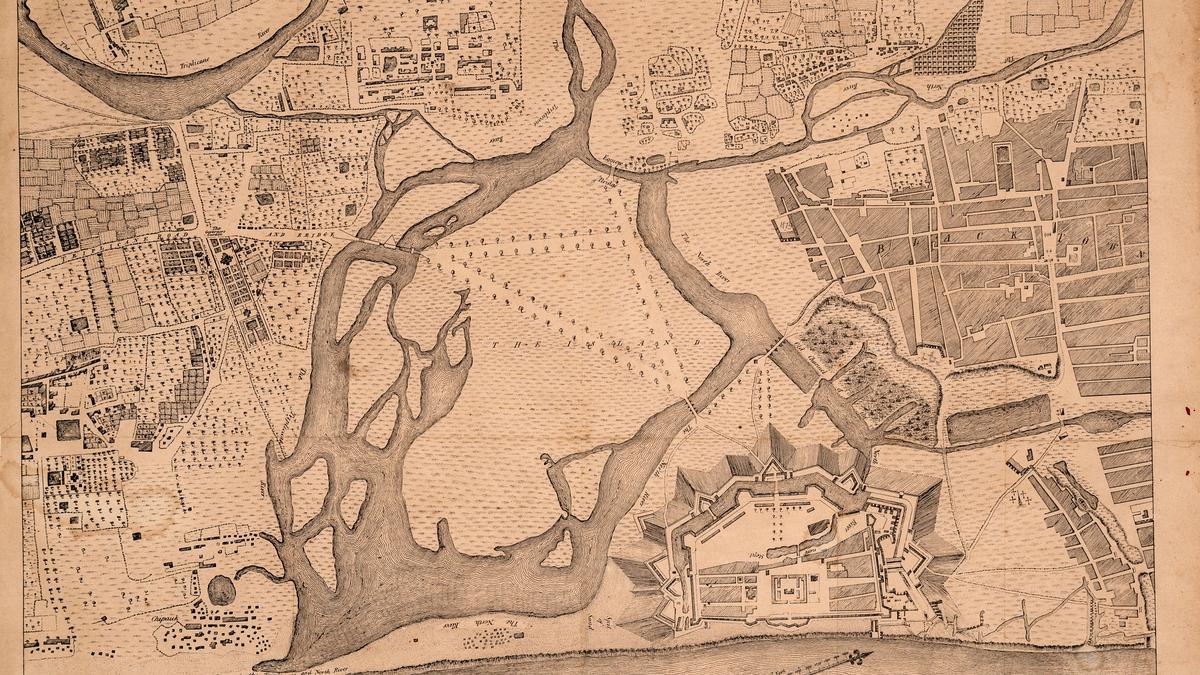
The arrival of the Portuguese, Dutch, Danes, English, and French to the Tamil coast and the history of cartography have been explored to a limited extent. Forts and buildings were erected in the White Town of the European settlements, which was separated from the Black Town with well demarcated boundaries. The European overseas commercial expansion led to the preparation of coastal charts and maps. The hydrographical, geographical and cartographical knowledge of the Tamil coast and the hinterland obtained by the European traders and missionaries has not yet received adequate attention in historical research.
Map, as a depiction on a piece of paper of different types of physical spaces calculated to scale, had emerged in the age of expanding European commerce on the Tamil coast. The westerners carved up a vast region of the Tamil country on maps by drawing a straight line across the terrain they had seen. They prepared coastal charts featuring sensitive information. Hence, they never wanted them to fall into the hands of rival trading companies. These charts had marked the depth of water or dangers that lurked below the surface at high or low tide. They largely helped the sea-captains and the pilots.