The unprecedented find has shifted archaeological understanding about the first civilisations in the Americas
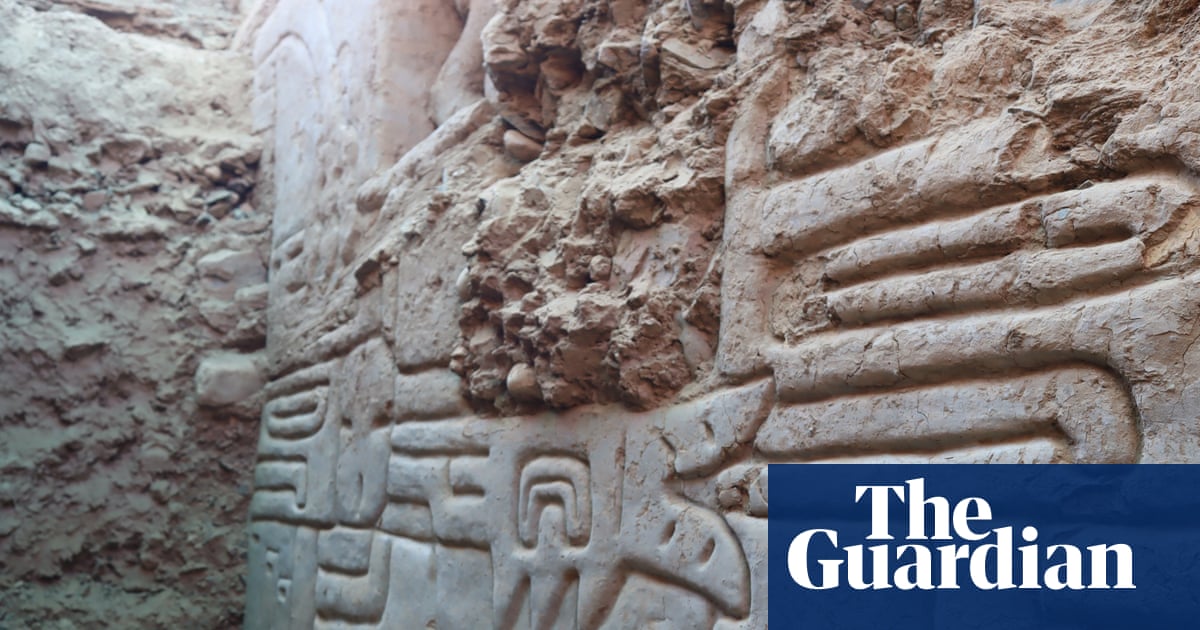
Archaeologists in Peru have discovered a multicoloured three-dimensional mural that could date back 4,000 years, in an unprecedented find that has shifted archaeological understanding about the first civilisations in the Americas.
The centrepiece of the three-by-six metre mural is a stylistic depiction of a large bird of prey with outstretched wings, its head adorned with three-dimensional diamond motifs that visually align the south and north faces of the mural. It is covered with high-relief friezes and features designs painted in blue, yellow, red and black.
The sophisticated and stylistic imagery sheds new light on the beliefs and social structures of early civilisations in the formative period (2000-1000BC) in Peru. Archaeologists consider pre-Hispanic Peru to be one of the birthplaces of civilisation in the Americas, with an estimated 100,000 archaeological sites, including iconic tourist attractions like Machu Picchu and the Nazca Lines.
Ana Cecilia Mauricio, the lead archaeologist at the Huaca Yolanda excavation site in the Tanguche valley, in Peru’s La Libertad region, said the murals speak of “the emergence of social hierarchy in Peru as societies get more complex and become civilisations”.