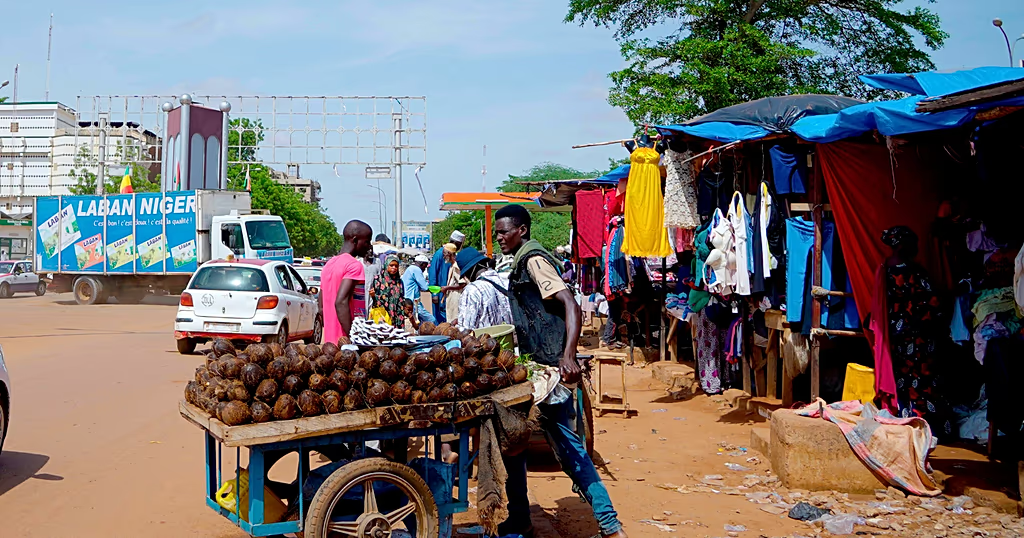
A once thriving Saharan tourist city with a rich but fading heritage confronts harsh realities two years since Niger’s coup.
Agadez, Niger – On a torrid afternoon in July, Elhadj Amadou Dizi Illo sat on a low stool in his souvenir store in Agadez, beads of sweat dotting the skin under his bright yellow turban as he dusted a heap of ornamented knives on the floor.
Opposite the store, a sign on a brown, mudbrick building with lattice doors announced the Hotel Auberge, which has long closed down. Two buildings down, another structure bore the word “Antiquite” written boldly in chalk. It, too, was closed. Outside, women in long, sweeping hijabs and men in turbans walked past, shouting hellos, as a roaming tea seller stopped to prepare glasses of ataya – a mixture of green tea, mint and sugar.
Inside, Illo cleaned and dusted away, focused on his task. At age 63, he is tall and stately with a serene presence. A grey moustache and beard frame his lips, and the sides of his milky eyes crinkle when he smiles, which he does generously.
Illo’s store is one of the last few souvenir vendors still operating in the old Nigerien city.