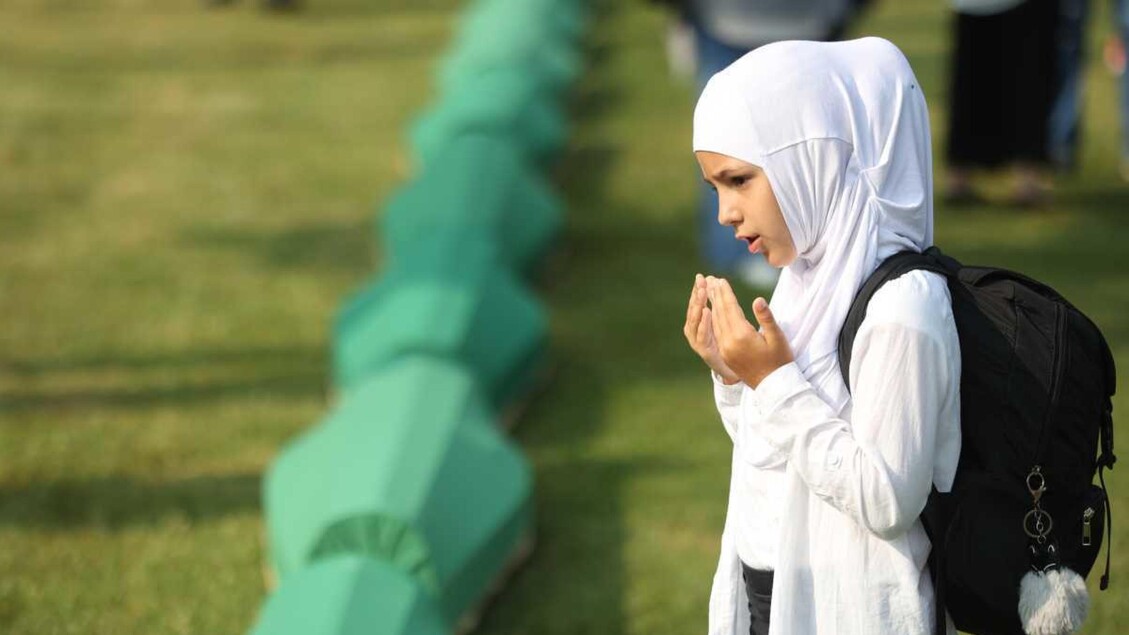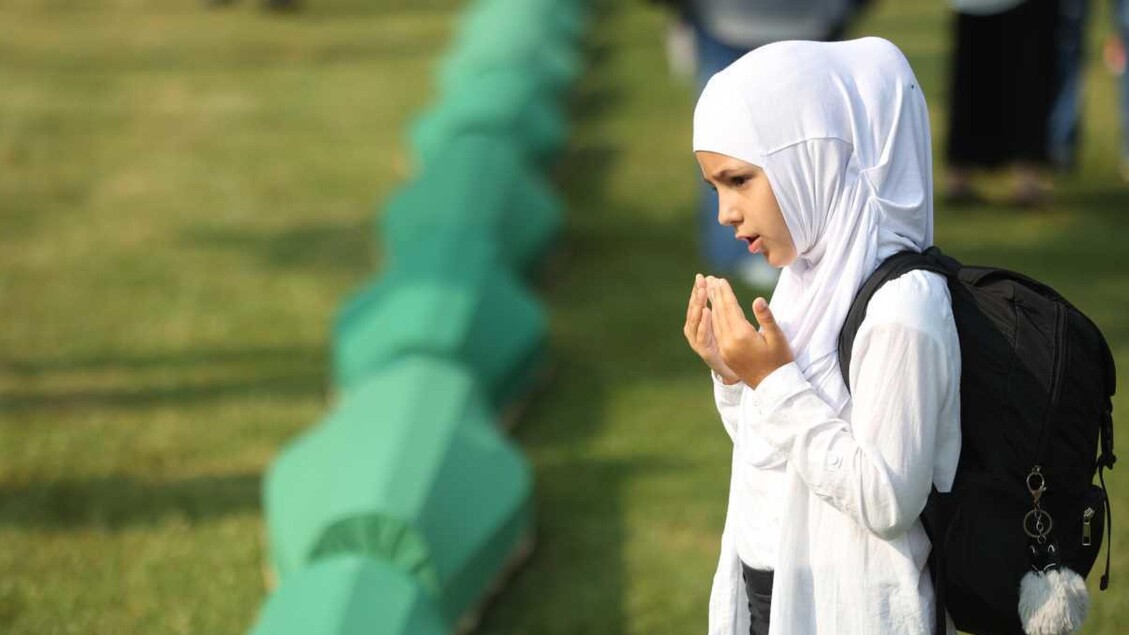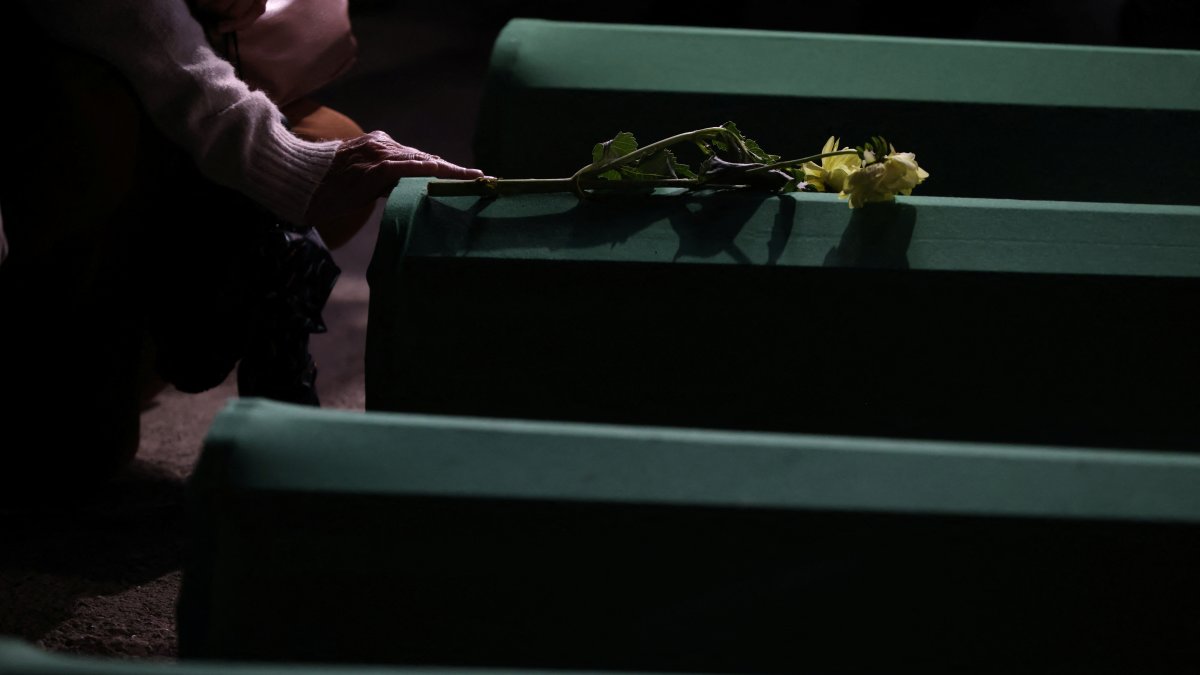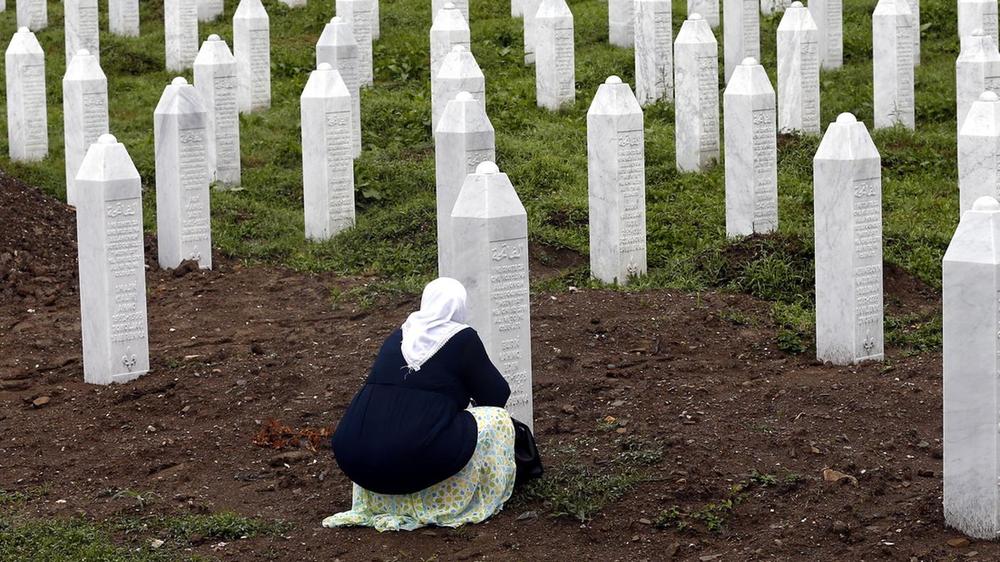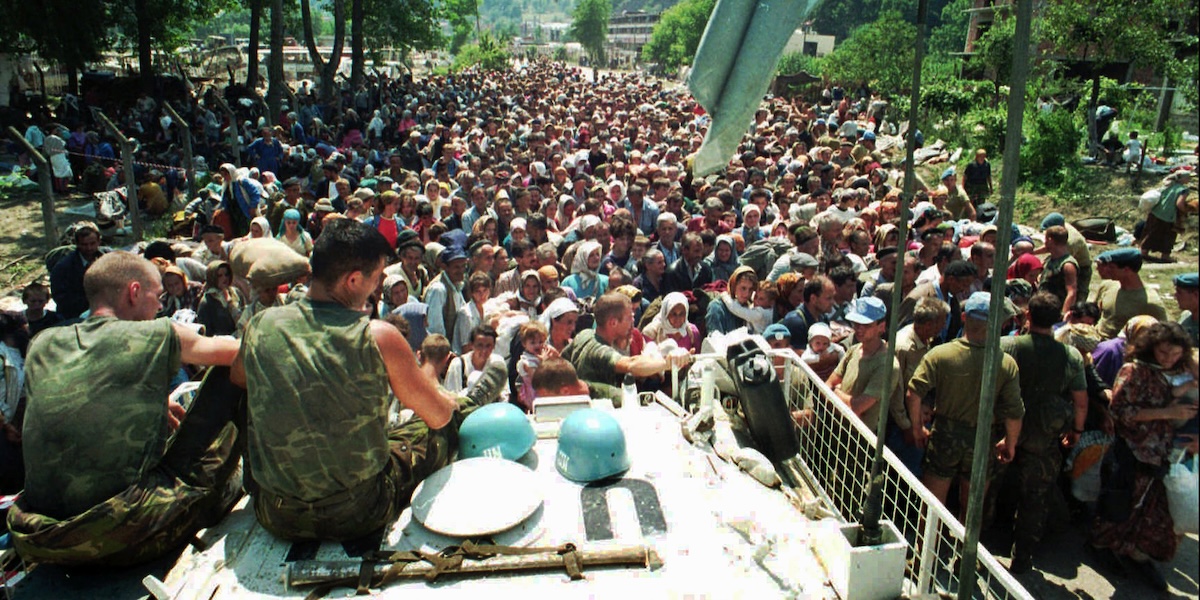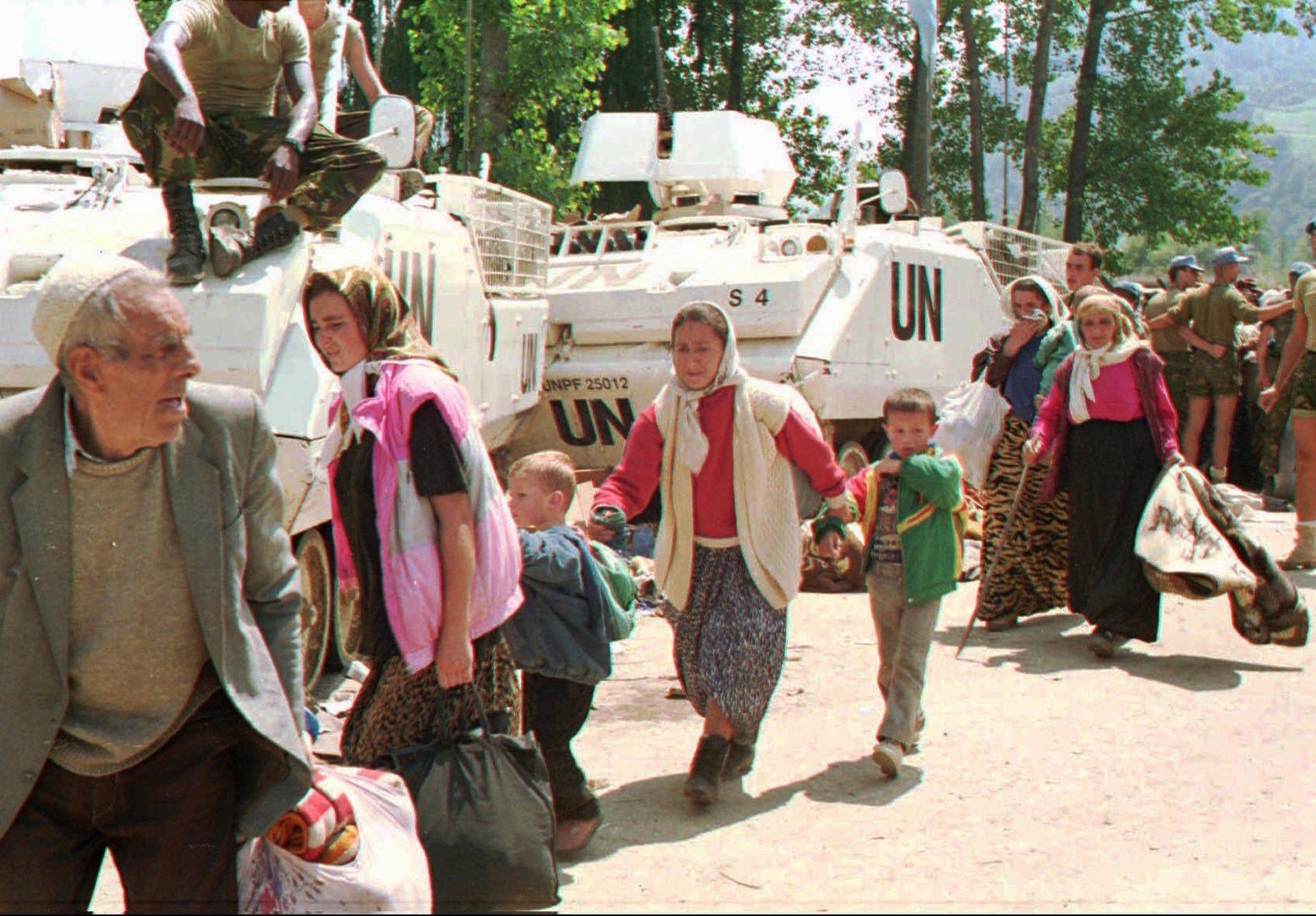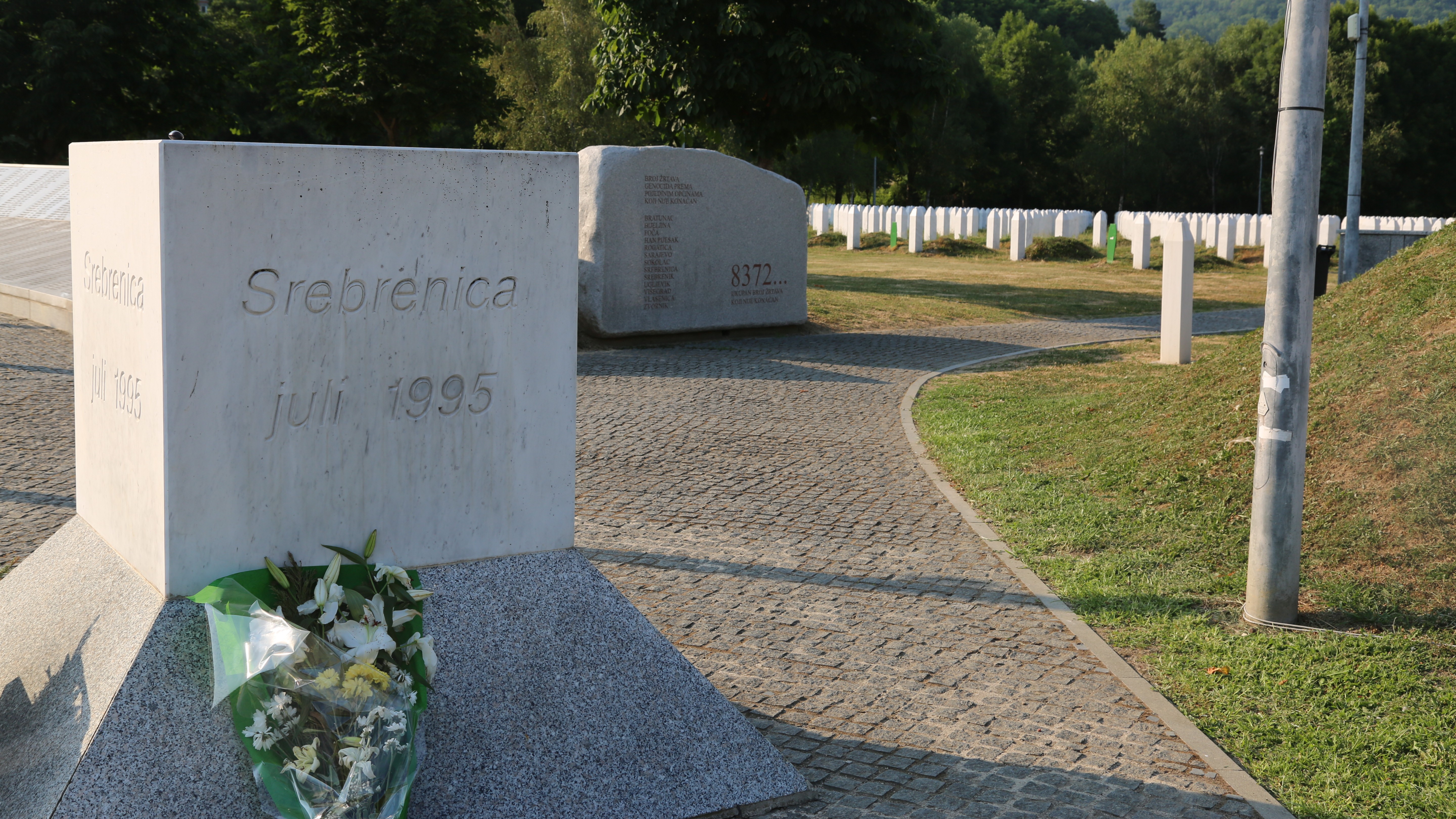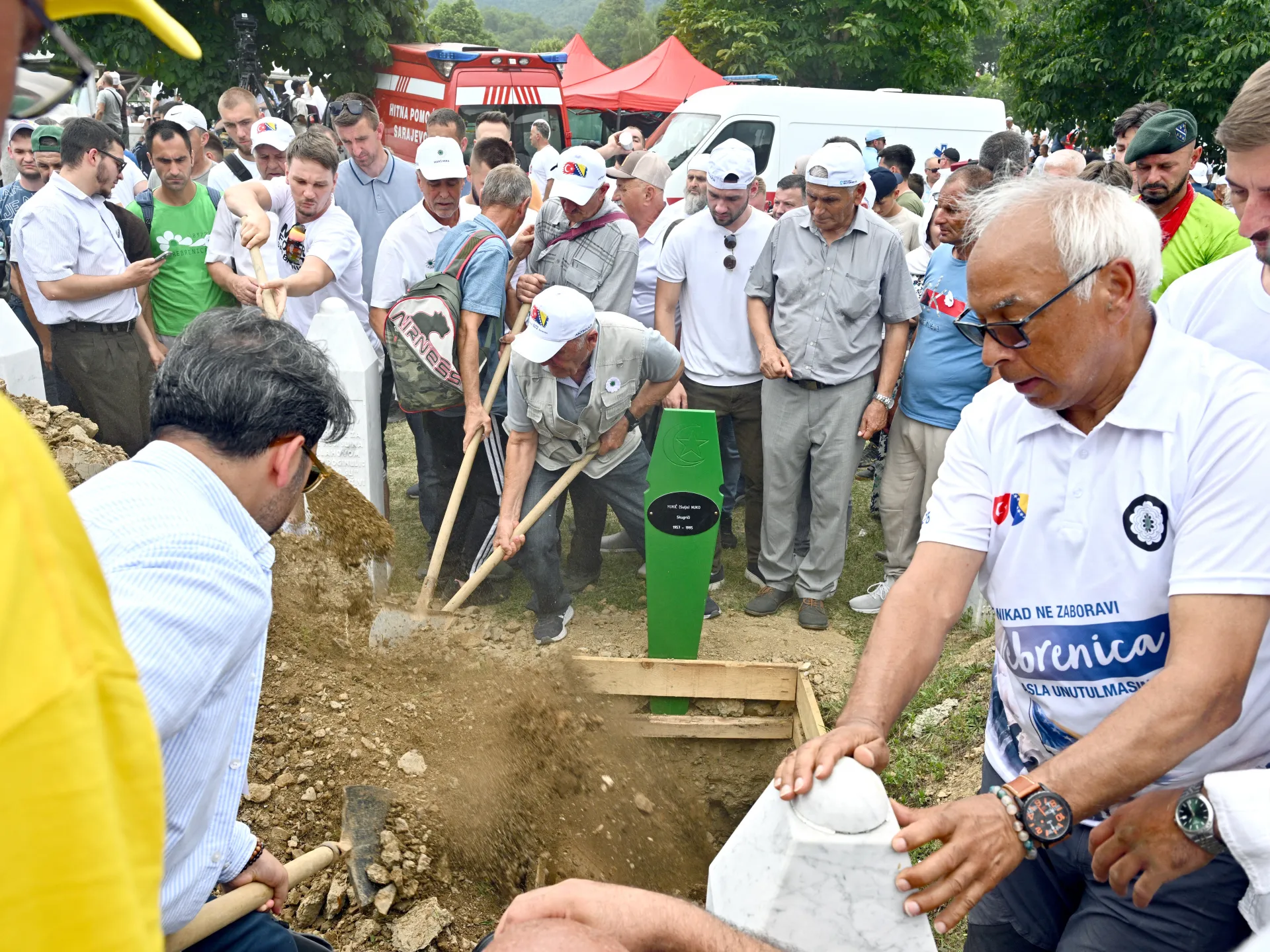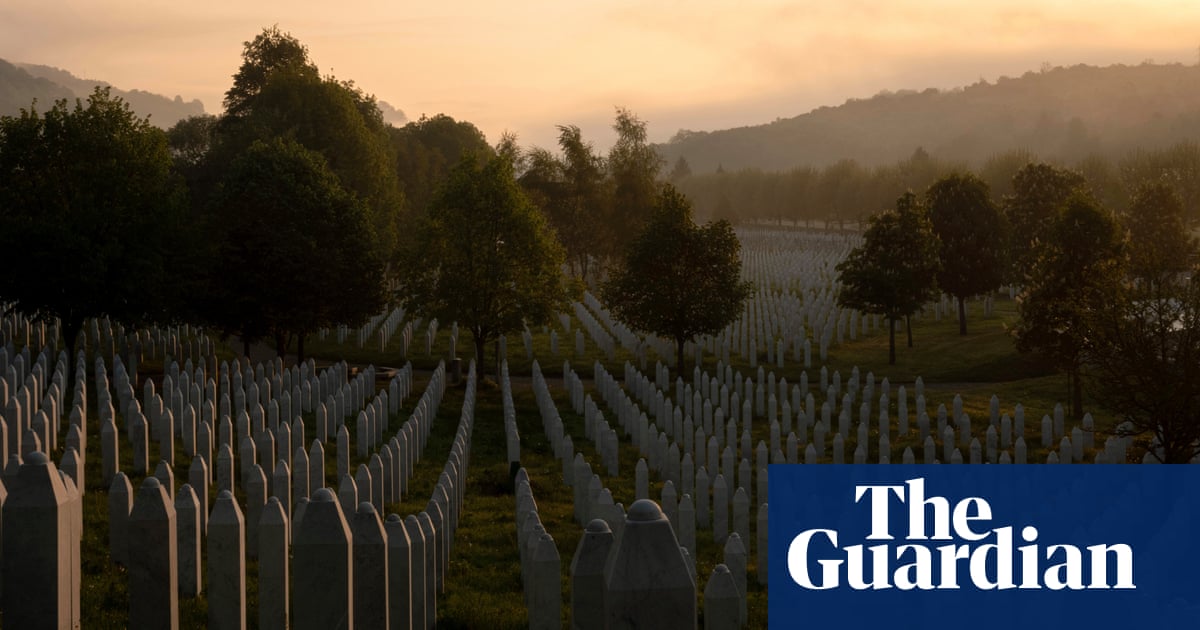
Today, the landscape looks picturesque – but it holds memories of the largest mass killing since the second world war. A photojournalist meets some of the Bosnian Muslim survivors building new lives alongside this legacy
B
ehind battle-ruined houses, the blue sky tumbles down. Useless stairs on the sides of buildings have led nowhere for 30 years now. On the road skirting the shores of Lake Perućac, on the border between Bosnia and Herzegovina and Serbia, all is quiet, apart from the birdsong. A few families picnic on the banks, grilling fish they have caught from the artificially created waters.
There were 238 bodies dumped in the lake on this former frontline; dredged up after the Srebrenica genocide. Softened by the gauze of net curtains, the panoramic view of Lake Perućac from Šehra’s living-room window appears like staged scenery. Tourists who once frequented the picturesque Drina national park no longer come. The restaurants and pontoons have rotted away. The only water-skiers to be seen are on the far, now foreign, shore.
Šehra finds solace in gardening on her small plot of land. She says every day is lonely.