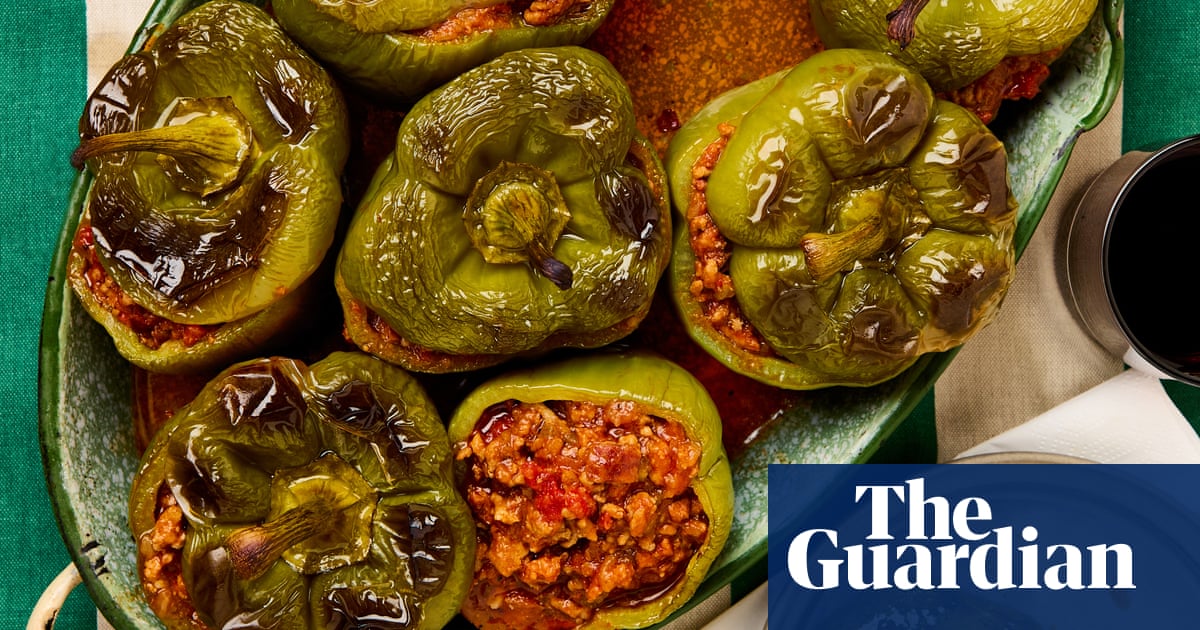
Few vegetables are as celebrated by the Spanish as the pepper, as evidenced by these light and moreish empanadas filled with green peppers and sardines, and roast peppers stuffed with a rich ragu
P
eppers are more than just staples of the Spanish kitchen, they are one of our culinary foundations. As with tomatoes, when Columbus returned from the Americas in the late 15th century, he presented peppers as a gift to Queen Isabella and King Ferdinand, and they very quickly became a key part of our cooking traditions. The pepper’s most iconic contribution to Spanish cuisine is surely pimentón de la Vera, or smoked paprika, which is an essential seasoning in a lot of Spanish cooking, adding exquisite depth to stews, rice dishes, seafood and, of course, chorizo. But we also celebrate fresh peppers in all their guises. Padrón peppers are, of course, a classic tapa, while pimientos rellenos (stuffed peppers) are filled every which way, from seafood and minced meat to creamy bechamel. From the royal court to home kitchens, peppers have taken root in our culinary culture.
Stuffed piquillo peppers have long been popular in restaurants and homes across Spain, and are often filled with oxtail or bacalao. This dish provides a similar comforting experience, maintaining the essence of the traditional classic while at the same time being a bit more accessible, making it perfect for home cooking. Serve with a lovely glass of bobal, a wine from a grape variety common in Valencia and Utiel-Requena. Its richness will complement the bold flavours of the stuffed peppers. You can make the ragu in advance and freeze it, then defrost and pick things up again from the last paragraph.