HomeAI · summaries
Storia in 2 fonti
Design AI Systems That Actually Strengthen Human Reasoning
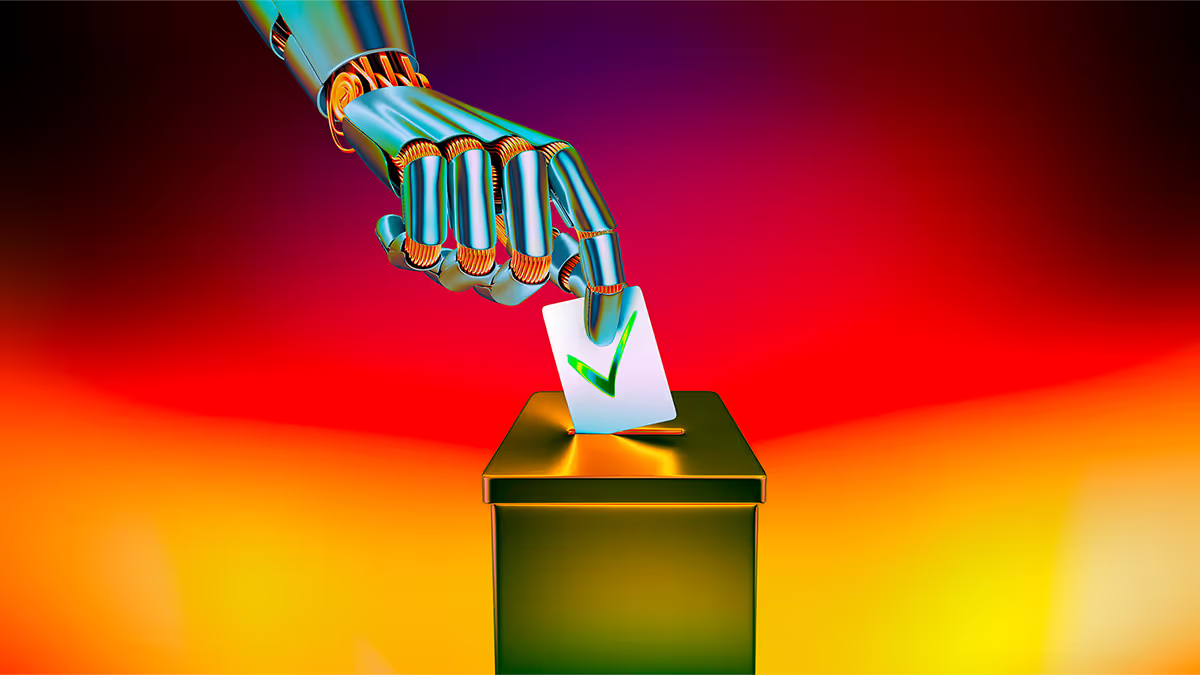
Research from management, cognitive science, and human-computer interaction indicates that users often accept AI-generated outputs uncritically, leading to cognitive offloading, the erosion of contextual expertise, and increasingly homogeneous thinking. These risks are amplified when organizations reduce opportunities for employees—particularly junior staff—to develop independent judgment and domain knowledge. Rather than focusing solely on efficiency, leaders should design AI systems and workflows that strengthen human reasoning. Promising approaches include using “reverse prompting” to encourage questioning and learning, creating AI-free spaces and stages within work processes, running human and AI analyses in parallel, and designing interfaces that expose alternative interpretations rather than delivering a single authoritative answer. The goal is not to limit AI adoption but to use it in ways that preserve human agency, deepen expertise, and sustain the diverse thinking organizations need to adapt, innovate, and compete over the long term.
Confronto fonti
2 prospettive sulla stessa storiaTimeline cronologica
- ·
benzinga.com
Experts Warn AI Could Hurt Critical Thinking as Workplace Adoption Surges - NVIDIA (NASDAQ:NVDA)
Experts say relying too heavily on AI at work could weaken critical thinking, creativity and career growth.
- ·
hbr.org

Design AI Systems That Actually Strengthen Human Reasoning
Research from management, cognitive science, and human-computer interaction indicates that users often accept AI-generated outputs uncritically, leading to cognitive offloading,…