WARPTECHNEWS · LAB
HomeAIBusinessTechArchive
WARPTECH LAB NEWS

Warptech Lab News aggrega le notizie più rilevanti da oltre 700 fonti internazionali, con classificazione AI, TL;DR sintetici e timeline cluster su singole storie.

Navigazione

  • Home
  • Archivio
  • Editor's Brief
  • Cerca
  • Il tuo account
  • Newsletter tech/AI

Informazioni legali

  • Privacy Policy
  • Termini di servizio
  • Cookie Policy

© 2026 Sparktech S.R.L. — Tutti i diritti riservati. Sito gestito e manutenuto da Sparktech S.R.L.

Sede legale: Corso Libertà 55, 13100 Vercelli (VC), Italia · P.IVA / C.F. 02835910023 · Contatti: admin@warptechlab.com

Home
Storia in 4 fonti

Perioperative apalutamide in high-risk localized or locally advanced prostate cancer reduces risk of metastasis, death

High-risk localized and locally advanced prostate cancer patients treated with apalutamide—a next generation neoadjuvant androgen-receptor pathway inhibitor (ARPI)—plus hormone therapy before and after prostate cancer surgery resulted in more major pathologic responses and reduced the risk of metastasis or death, meeting both primary endpoints, in an international Phase III clinical trial led by principal investigator Mary-Ellen Taplin, MD, medical oncologist at Dana-Farber Cancer Institute, and Adam Kibel, MD, chair of the Department of Urology at Mass General Brigham.

Raccontata dahealio.commorningstar.commedpagetoday.commedicalxpress.com

Confronto fonti

4 prospettive sulla stessa storia
AI · summaries
medicalxpress.comStai leggendo23 h fa

Perioperative apalutamide in high-risk localized or locally advanced prostate cancer reduces risk of…

High-risk localized and locally advanced prostate cancer patients treated with apalutamide—a next generation neoadjuvant androgen-receptor pathway inhibitor (ARPI)—plus hormone therapy before and after prostate cancer…

originale

Timeline cronologica

  1. domenica 31 maggio 2026·healio.com

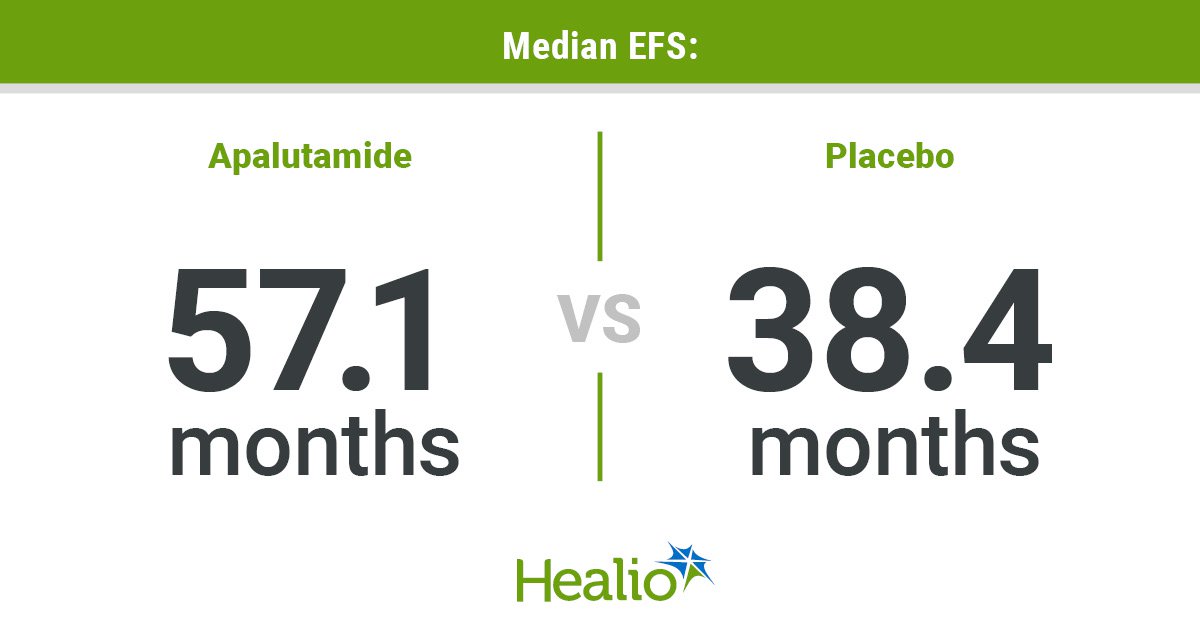
    ‘Thrilling’: Regimen reduces metastasis, recurrence in high-risk prostate cancer

    CHICAGO — The addition of apalutamide to androgen deprivation therapy before and after surgery improved outcomes among men with localized high-risk prostate cancer, according to…

  2. domenica 31 maggio 2026·morningstar.com

    Johnson & Johnson's Phase 3 prostate cancer study shows ERLEADA® (apalutamide) before and after surgery significantly reduces risk of…

    Johnson & Johnson's Phase 3 prostate cancer study shows ERLEADA® (apalutamide) before and after surgery significantly reduces risk of metastasis or death, breaking a decades-long…


healio.com
2 g fa

‘Thrilling’: Regimen reduces metastasis, recurrence in high-risk prostate cancer

CHICAGO — The addition of apalutamide to androgen deprivation therapy before and after surgery improved outcomes among men with localized high-risk prostate cancer, according to findings presented in ASCO Annual…

Leggi questa versione → originale
medpagetoday.com1 g fa

Practice-Changing Trial in Prostate Cancer Shows Benefits of Perioperative Therapy

ADT plus apalutamide before and after surgery significantly improved metastasis-free survival

Leggi questa versione → originale
morningstar.com1 g fa

Johnson & Johnson's Phase 3 prostate cancer study shows ERLEADA® (apalutamide) before and after surgery…

Johnson & Johnson's Phase 3 prostate cancer study shows ERLEADA® (apalutamide) before and after surgery significantly reduces risk of metastasis or death, breaking a decades-long treatment paradigm

Leggi questa versione → originale
  • domenica 31 maggio 2026·medpagetoday.com

    Practice-Changing Trial in Prostate Cancer Shows Benefits of Perioperative Therapy

    ADT plus apalutamide before and after surgery significantly improved metastasis-free survival

  • lunedì 1 giugno 2026·medicalxpress.com

    Perioperative apalutamide in high-risk localized or locally advanced prostate cancer reduces risk of metastasis, death

    High-risk localized and locally advanced prostate cancer patients treated with apalutamide—a next generation neoadjuvant androgen-receptor pathway inhibitor (ARPI)—plus hormone…