WARPTECHNEWS · LAB
HomeAIBusinessTechArchive
WARPTECH LAB NEWS

Warptech Lab News aggrega le notizie più rilevanti da oltre 700 fonti internazionali, con classificazione AI, TL;DR sintetici e timeline cluster su singole storie.

Navigazione

  • Home
  • Archivio
  • Editor's Brief
  • Cerca
  • Il tuo account
  • Newsletter tech/AI

Informazioni legali

  • Privacy Policy
  • Termini di servizio
  • Cookie Policy

© 2026 Sparktech S.R.L. — Tutti i diritti riservati. Sito gestito e manutenuto da Sparktech S.R.L.

Sede legale: Corso Libertà 55, 13100 Vercelli (VC), Italia · P.IVA / C.F. 02835910023 · Contatti: admin@warptechlab.com

Home
Storia in 5 fonti

You Can’t Patch Your Way Out of This One

Claude Mythos found thousands of vulnerabilities, exposing patching limits as AI-driven exploit discovery accelerates cyber risk.

Raccontata dathe-decoder.comnewsbytesapp.comthehackernews.comsecurityweek.comcryptobriefing.com

Confronto fonti

5 prospettive sulla stessa storia
AI · summaries
thehackernews.comStai leggendo1 g fa

You Can’t Patch Your Way Out of This One

Claude Mythos found thousands of vulnerabilities, exposing patching limits as AI-driven exploit discovery accelerates cyber risk.

originale
newsbytesapp.com3 g fa

Claude Mythos found 10,000+ bugs in just a month

Anthropic's AI, Claude Mythos, uncovered over 10,000 critical software vulnerabilities within a month, showcasing its unprecedented potential for cybersecurity advancements.

Leggi questa versione → originale
cryptobriefing.com14 h fa

Anthropic's Mythos AI model detects 23,000 vulnerabilities across 1,000 open source projects

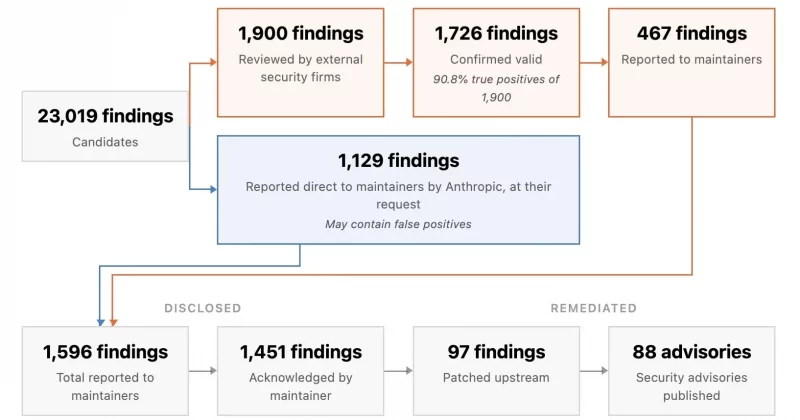
Anthropic's Claude Mythos Preview found 23,000 potential vulnerabilities in 1,000 open source projects, with over 1,000 confirmed as critical severity flaws.

Leggi questa versione → originale
securityweek.com1 g fa

Anthropic: Mythos Detected 23,000 Potential Vulnerabilities Across 1,000 OSS Projects

Anthropic says its Claude Mythos model discovered thousands of severe vulnerabilities across more than 1,000 OSS projects.

Leggi questa versione → originale
the-decoder.com3 g fa

Anthropic warns Claude Mythos Preview finds bugs faster than developers can patch them

Anthropic's AI model Claude Mythos Preview, working with about 50 partners as part of Project Glasswing, has found over 10,000 critical vulnerabilities in system-critical software. The bugs are piling up faster than…

Leggi questa versione → originale

Timeline cronologica

  1. sabato 23 maggio 2026·the-decoder.com

    Anthropic warns Claude Mythos Preview finds bugs faster than developers can patch them

    Anthropic's AI model Claude Mythos Preview, working with about 50 partners as part of Project Glasswing, has found over 10,000 critical vulnerabilities in system-critical…

  2. sabato 23 maggio 2026·newsbytesapp.com

    Claude Mythos found 10,000+ bugs in just a month

    Anthropic's AI, Claude Mythos, uncovered over 10,000 critical software vulnerabilities within a month, showcasing its unprecedented potential for cybersecurity advancements.

  3. sabato 23 maggio 2026·thehackernews.com

    Claude Mythos AI Finds 10,000 High-Severity Flaws in Widely Used Software

    Anthropic uncovered 10,000 vulnerabilities through Project Glasswing, driving urgent patching efforts and stronger cyber defenses.

  4. lunedì 25 maggio 2026·thehackernews.com

    You Can’t Patch Your Way Out of This One

    Claude Mythos found thousands of vulnerabilities, exposing patching limits as AI-driven exploit discovery accelerates cyber risk.

  5. lunedì 25 maggio 2026·securityweek.com

    Anthropic: Mythos Detected 23,000 Potential Vulnerabilities Across 1,000 OSS Projects

    Anthropic says its Claude Mythos model discovered thousands of severe vulnerabilities across more than 1,000 OSS projects.

  6. martedì 26 maggio 2026·cryptobriefing.com

    Anthropic's Mythos AI model detects 23,000 vulnerabilities across 1,000 open source projects

    Anthropic's Claude Mythos Preview found 23,000 potential vulnerabilities in 1,000 open source projects, with over 1,000 confirmed as critical severity flaws.