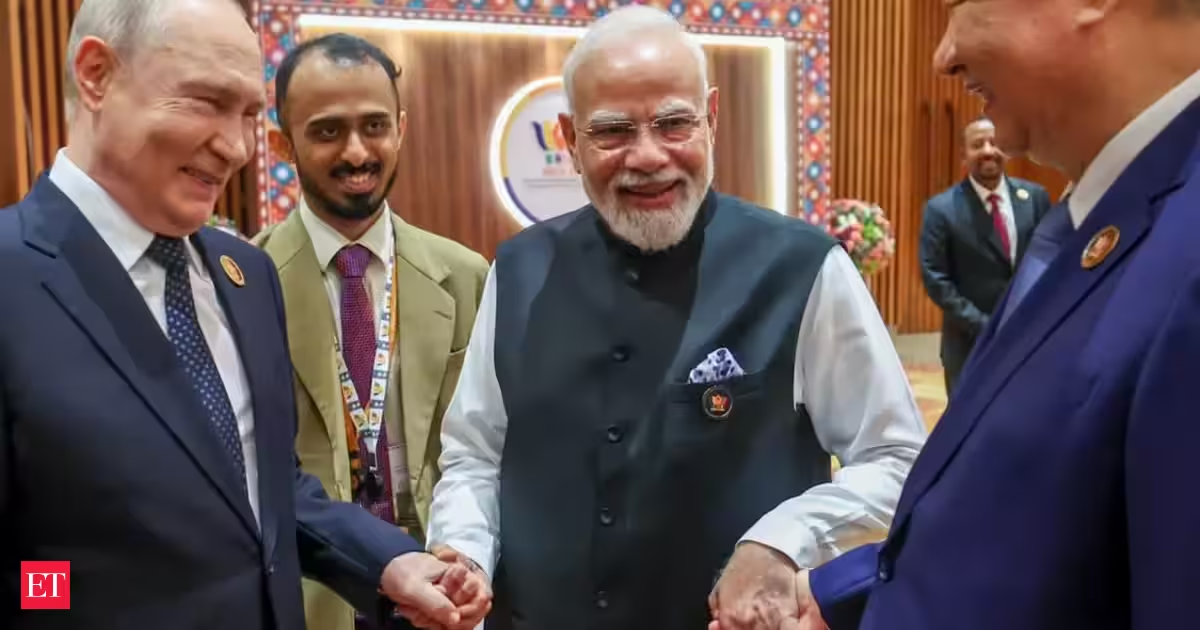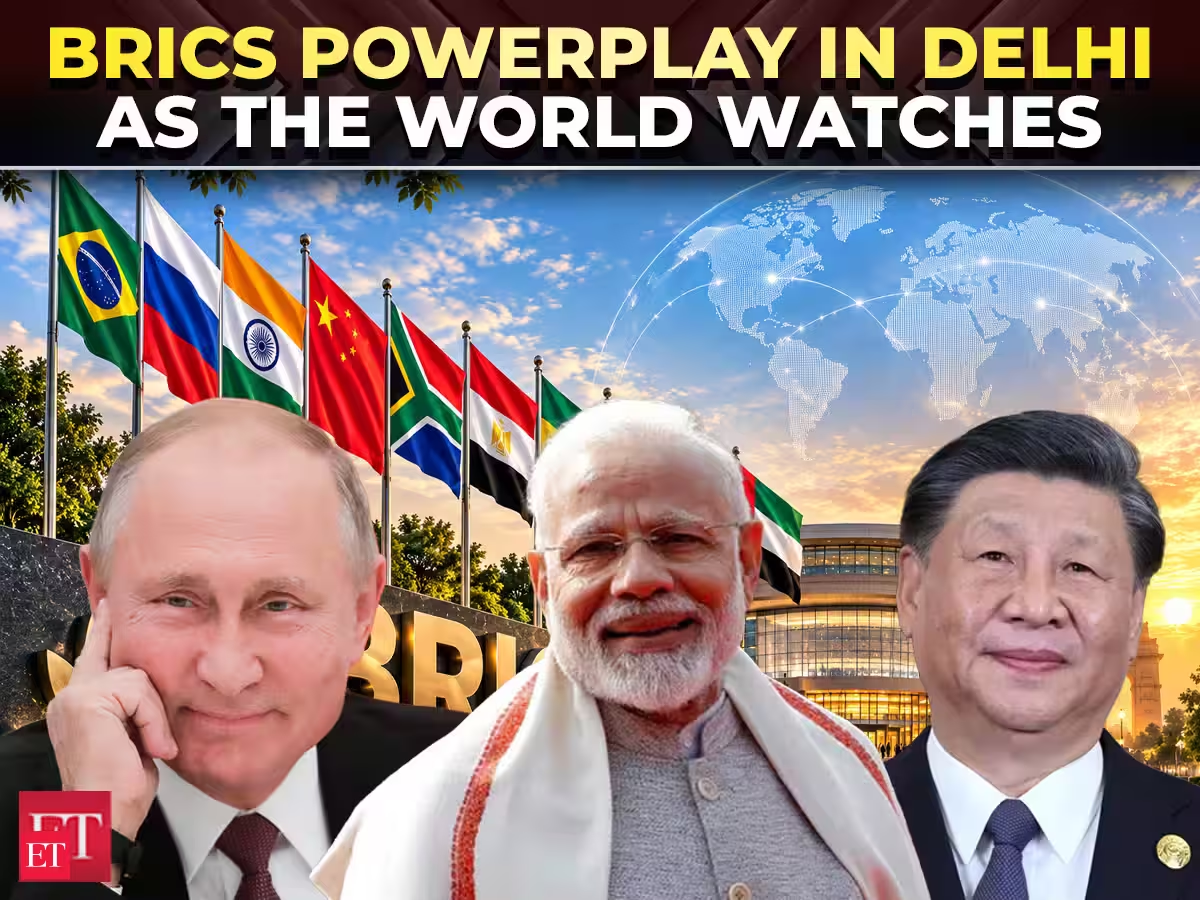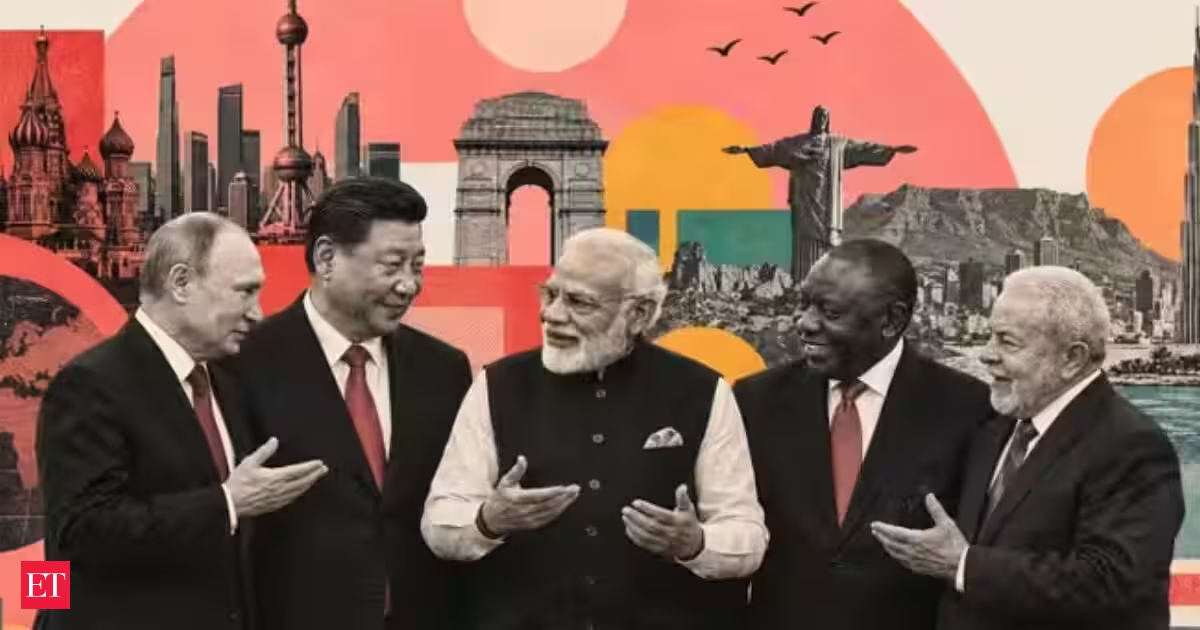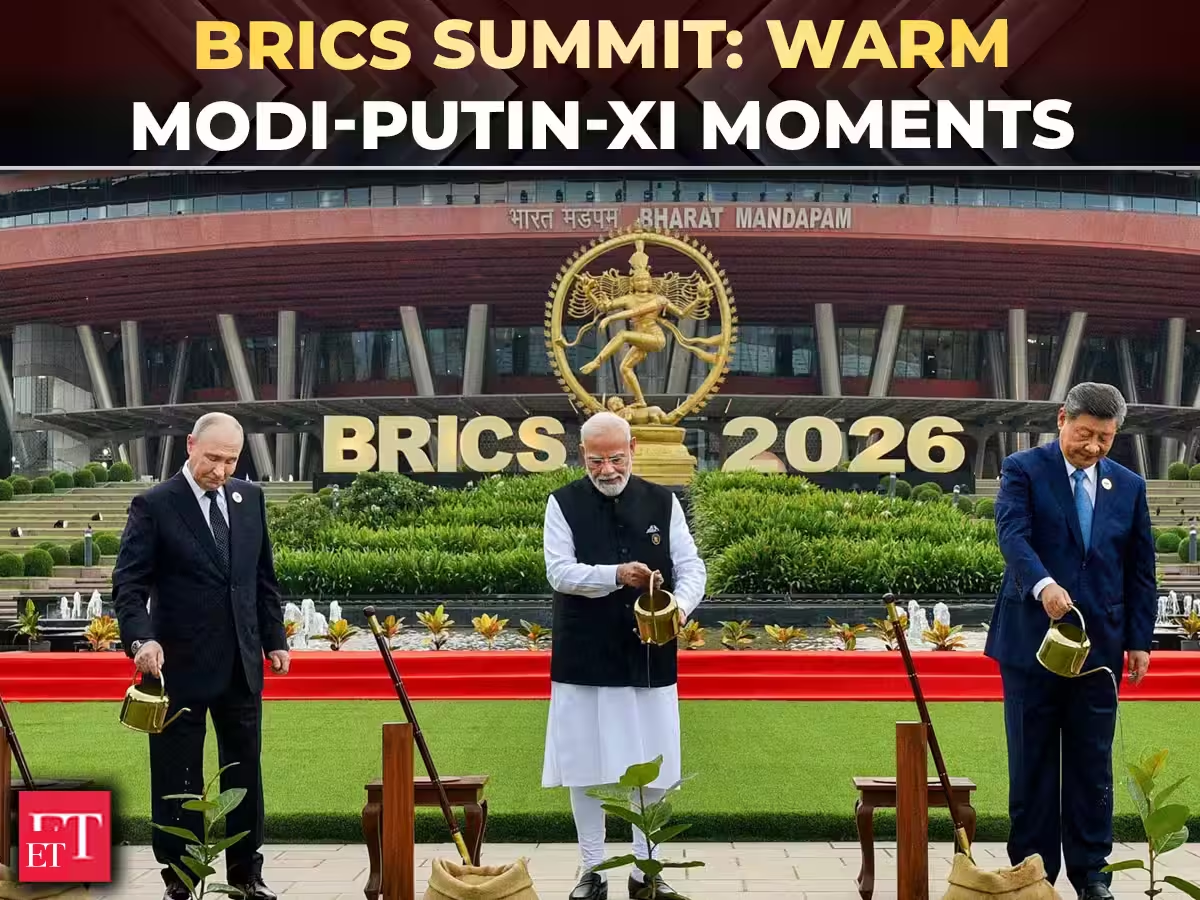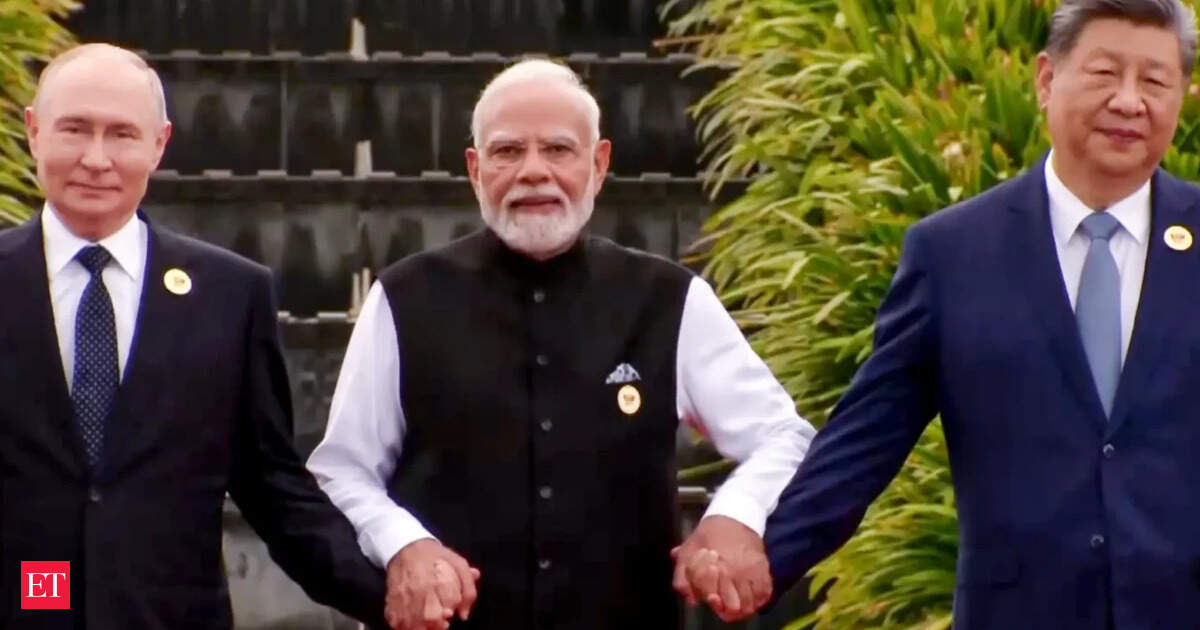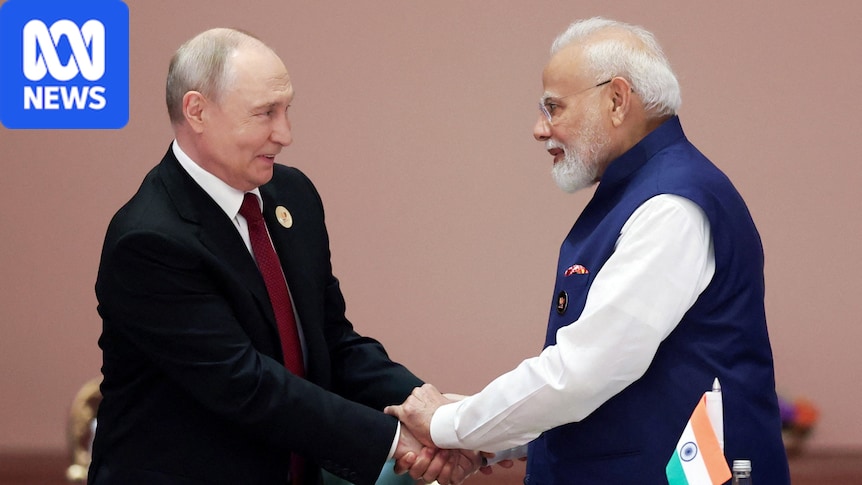
Xi Jingping, Vladimir Putin and Narendra Modi squeezing each other's hands and beaming at one another at this year's BRICS Summit is a powerful image.But it was another photograph, on the sidelines of the meeting, that hinted at the growing influence of BRICS.To understand why, it helps to understand what BRICS is.It's a group of 11 major emerging economies originally made up of Brazil, Russia, India and China in 2006 when they came together on the sidelines of the G20. South Africa joined a few years later, and additional members Iran, the UAE, Egypt, Ethiopia, Saudi Arabia and Indonesia were added about two years ago.The group wants the Global South to have more of a say in traditional western institutions that shape the global economy like the IMF, the World Bank and the WTO.But it has no underlying ideological foundation like NATO and the G7 do, and it's frequently criticised by experts for its internal division — particularly now in the context of the war in the Middle East; Iran has attacked the UAE and Saudi Arabia has been targeted by Iran-backed forces, including the Houthis late last week.Posters of leaders in attendance of the BRICS summit line the streets of New Delhi. (Reuters: Francis Mascarenhas)Chietigj Bajpaee, a senior research fellow for South Asia at Chatham House, also said "there are fissures and fault lines" in the group with Brazil and India wanting it to be an economic initiative, while Russia and China "see it as more of a a geopolitical initiative".Modi and Xi among the biggest winnersThe division is why India's Prime Minister Narendra Modi has walked away with quite a win: achieving unanimous agreement on a 140-point joint declaration.With the event held in New Delhi, Narendra Modi was the BRICS host. (Reuters: Press Information Bureau)China's Xi Jinping walked away with a win too, with the declaration explicitly acknowledging China's decision to extend zero-tariff treatment to more than 50 African countries, which reinforced Beijing's desire to be the go-to for economic relations and trade in the Global South.It's good timing for Xi who is days away from meeting President Donald Trump in Washington."But I often see that the real actions are happening on the sidelines of the BRICS Summit," Dr Bajpee said.Before the summit began, Russian President Vladimir Putin made a speech at the BRICS business forum. He argued the world was undergoing economic change and criticised US and European sanctions and economic pressure over the war in Ukraine.It was received with roaring applause and whistles from the crowd, allowing Putin to show the west that Russia is not isolated and maintains strong diplomatic ties.Iran's Pezeshkian also used the business forum to push Iran's agenda when he accused the US and Israel of being bullies and terrorists when they target civilians and civilian infrastructure.Vladimir Putin's speech at BRICS received a roaring applause. (AP: Alexander Kazakov)The sidelines are also where the future power of BRICS may lie, too, and it's where that other photograph comes in.Iran's chance to communicateIt wasn't one of Xi, Putin and Modi. It was of Iranian President Masoud Pezeshkian sitting face to face with Abu Dhabi Crown Prince Sheikh Khaled bin Mohamed bin Zayed — two leaders that are on opposing sides of the US-Israel war with Iran.It was the two countries' highest-level engagement since the Middle East conflict began in February.Masoud Pezeshkian meets with Sheikh Khaled bin Mohamed bin Zayed Al Nahyan at BRICS. (Reuters: West Asia News Agency)The meeting wasn't listed on the formal BRICS agenda and was reportedly frosty, but the optics of a photo showing both leaders side-by-side, right before the joint declaration was published calling for "maximum restraint" in the Middle East is a powerful show of diplomacy."It alludes to the real strength in some ways of the BRICS, which is in its convening power," Dr Bajpaee said."I think organisations like BRICS play a pivotal role in terms of facilitating confidence, building it at a senior leadership level."BRICS may have no clearly defined rules about what it is and is not, and it will continue to be criticised for its internal divisions.But the group's loose structure arguably allows it to bring governments with fiercely competing national interests into one space, where they can identify the small areas in which their interests overlap.And with the Middle East conflict escalating over the weekend when Houthi revels took control of key shipping lanes in the Red Sea, even limited alignment on shared interests is surely a step in the right direction.
Putin, Modi and Xi meet at BRICS 2026. Here's what you need to know
This year's meeting of leaders from Brazil, Russia, India and China resulted in some major trade wins, a chance to negotiate on the Middle East war and an image that hints at the summit's growing global influence.
747 words~3 min read