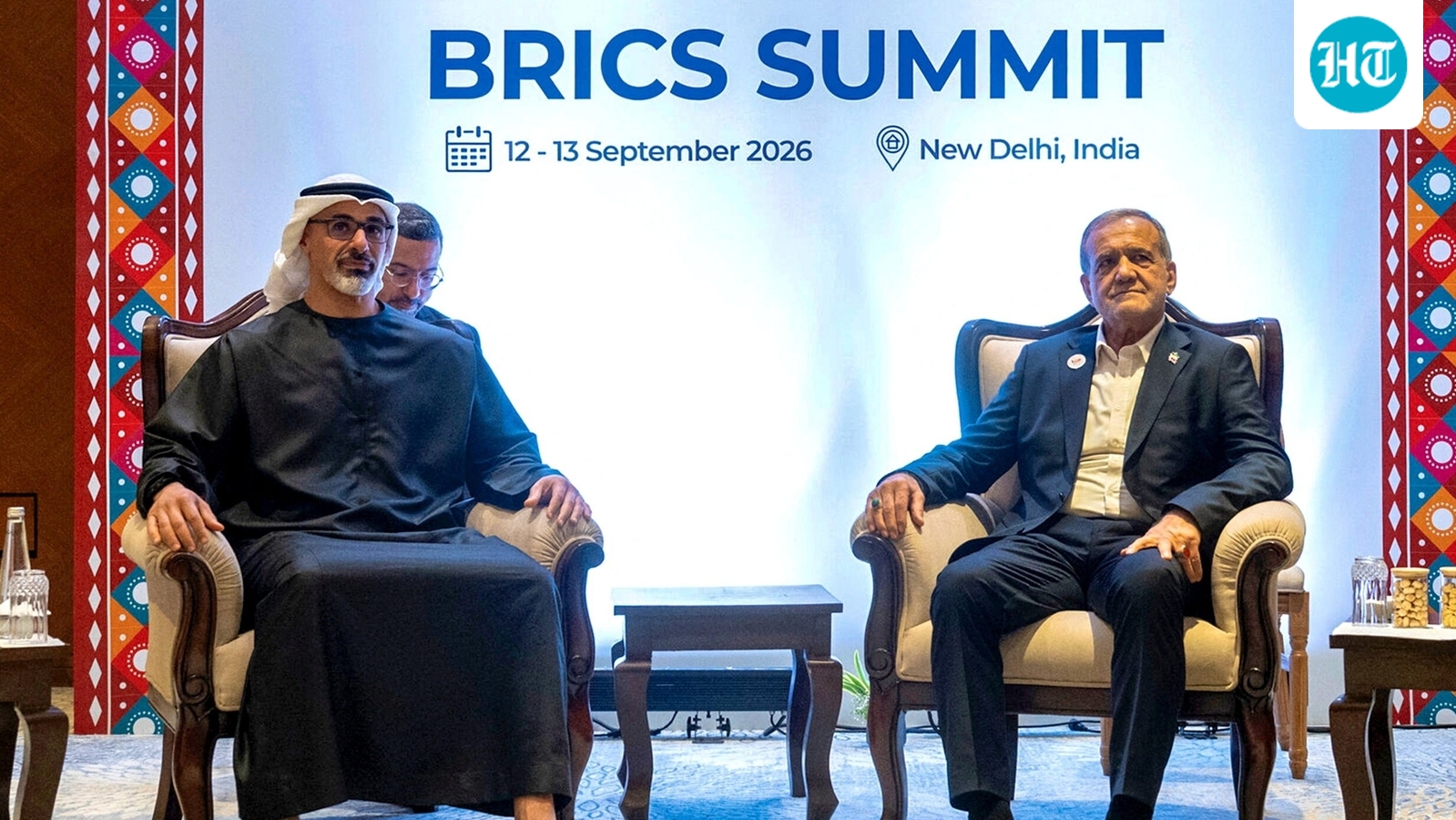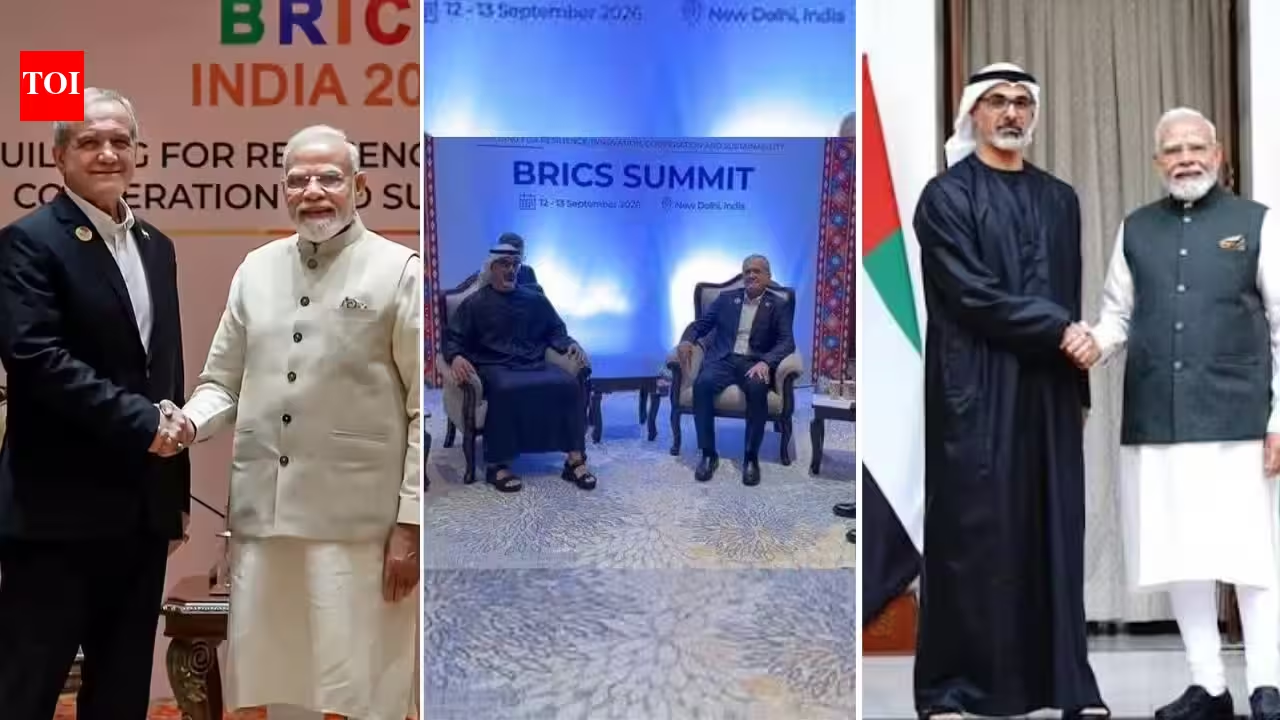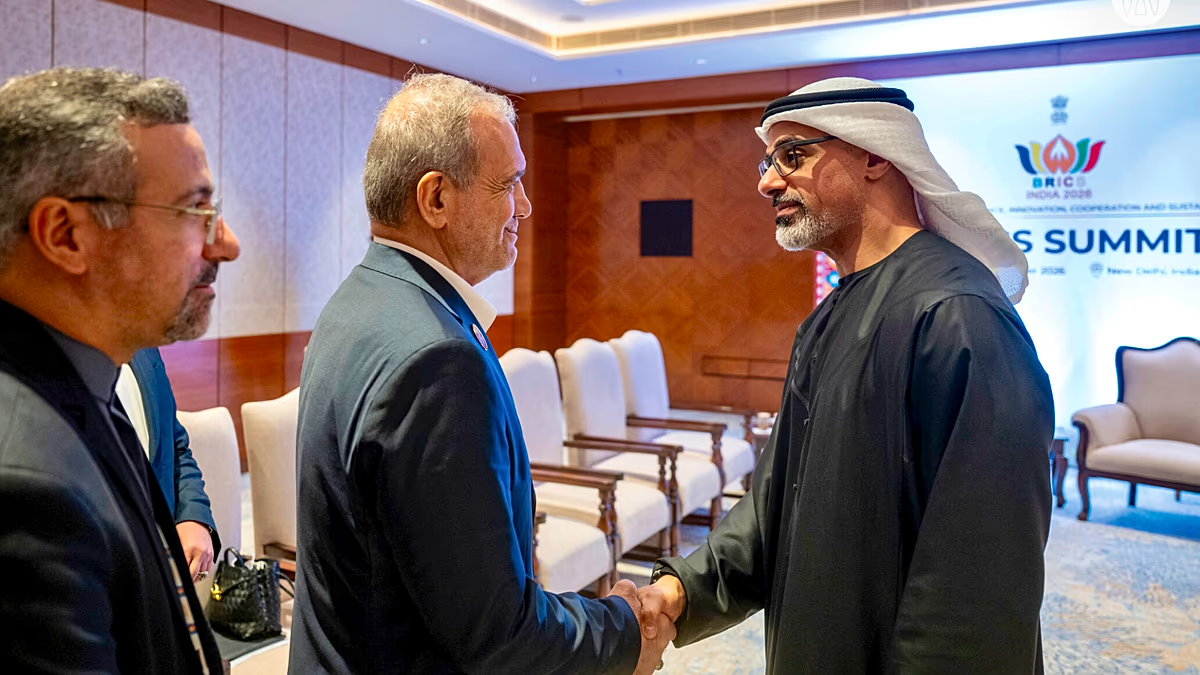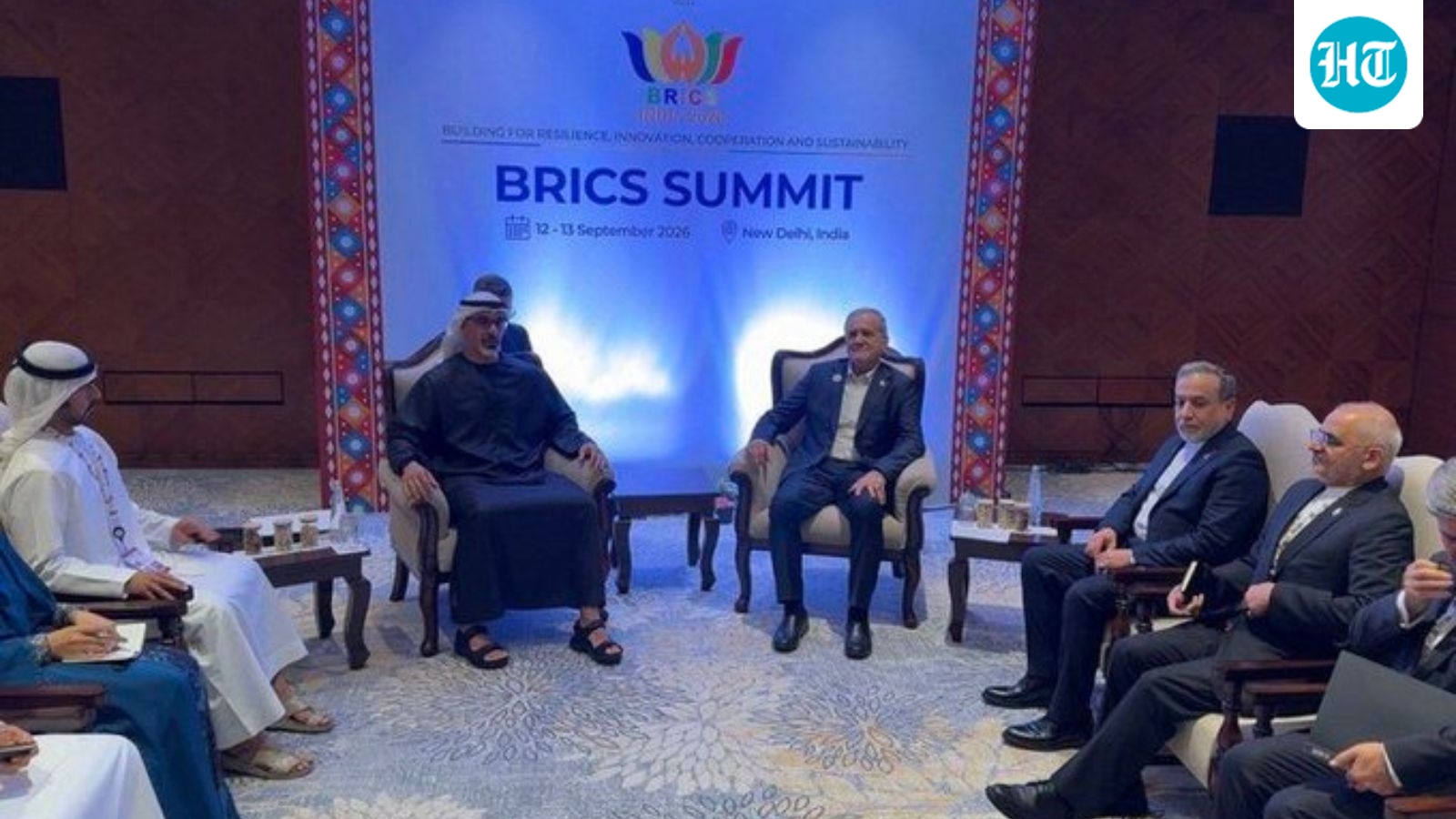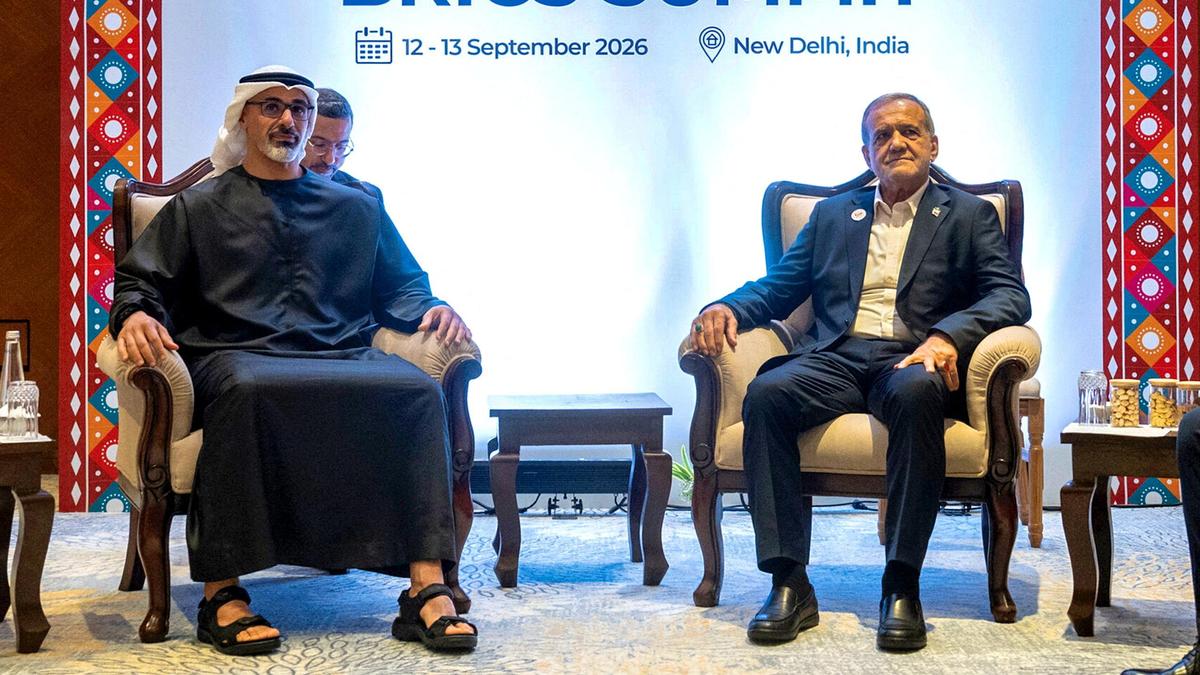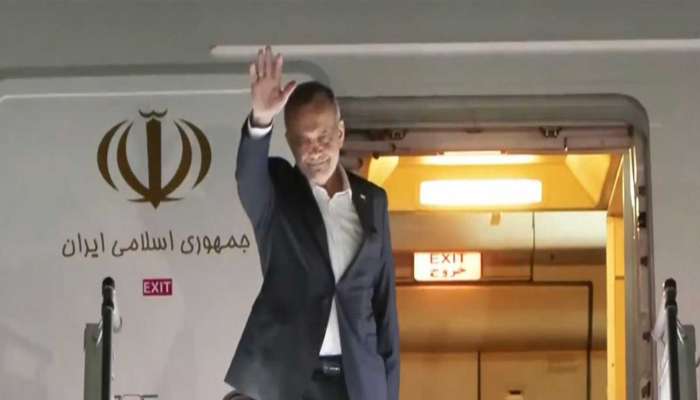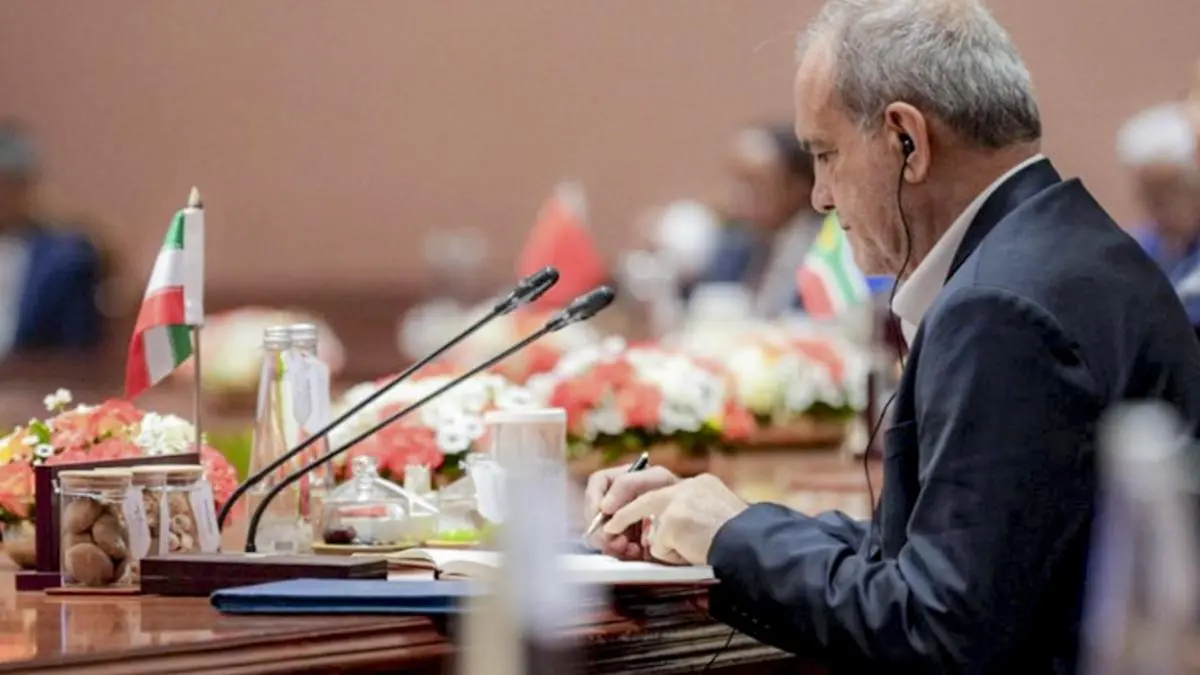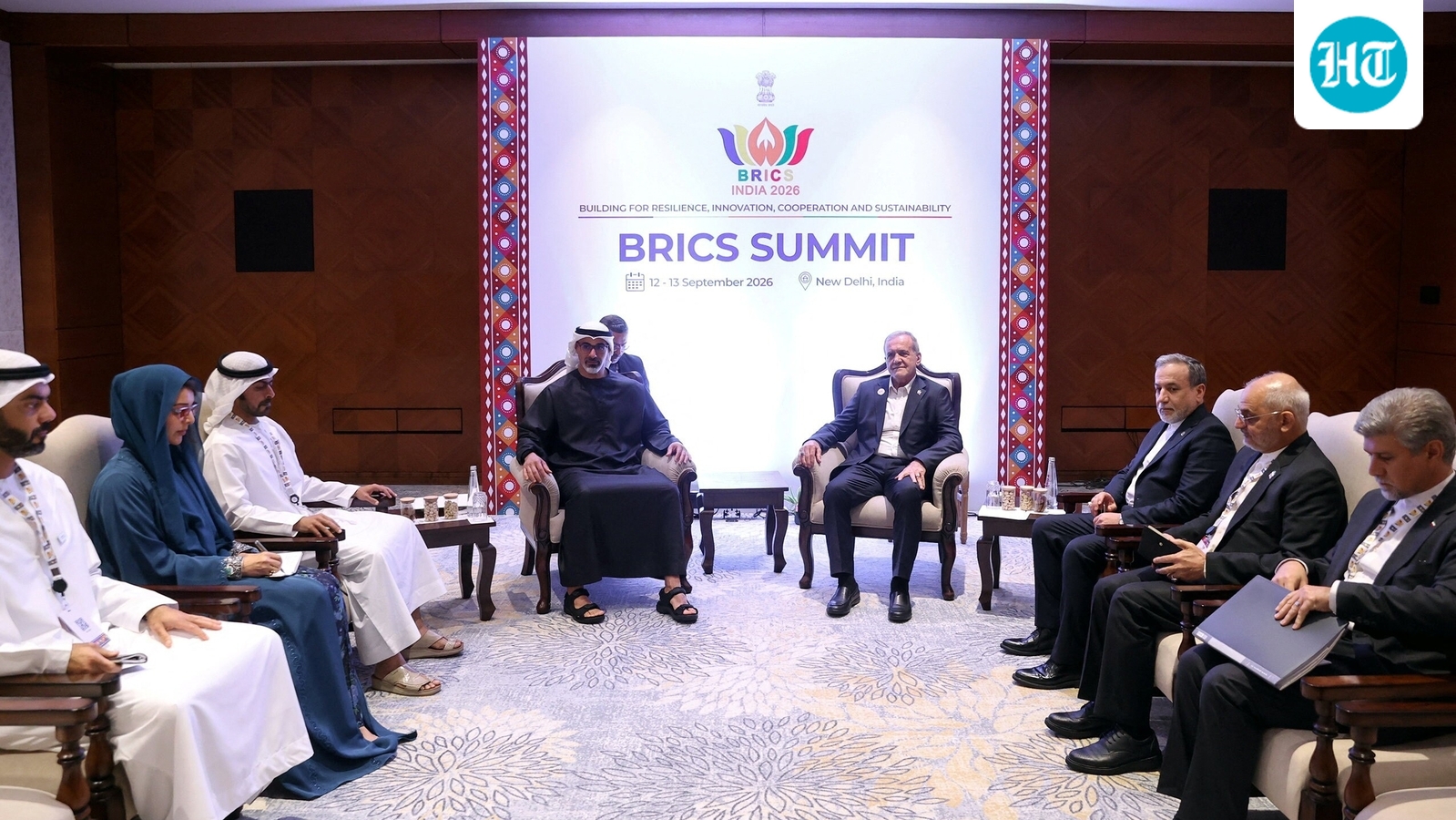
Iran wants to make a fresh start with the United Arab Emirates (UAE) and look to the future, Iranian President Masoud Pezeshkian said on Sunday, a day after his surprise meeting with Abu Dhabi Crown Prince Khaled bin Mohamed on the margins of the Brics Summit in New Delhi.Iranian President Masoud Pezeshkian meets with Crown Prince of Abu Dhabi Sheikh Khaled bin Mohamed bin Zayed Al Nahyan on the sidelines of the BRICS summit in New Delhi. (REUTERS)The meeting was held even as Iran and the UAE set aside their differences over the West Asia conflict to facilitate a joint declaration at the Brics Summit on Saturday. Few details have emerged about the meeting, held ahead of a planned gathering of Iranian officials with their counterparts from Gulf states and Iraq in Oman on September 14 to discuss an agreement on the Strait of Hormuz.ALSO READ | Iran wants to ‘turn the page’ with UAE, says Pezeshkian day after meeting Crown Prince during BRICS Summit“We had a good conversation with the Crown Prince of Abu Dhabi, and agreed to put the past behind us and look to the future,” Pezeshkian told Iranian reporters after the conclusion of the Brics Summit. He didn't provide further details.Iran’s foreign ministry said in a statement on Friday that the meeting in Oman on September 14 is meant to “promote better understanding among the countries of the region and help strengthen shared regional security”.However, Bahrain, a member of the Gulf Cooperation Council (GCC) that has borne the brunt of Iranian attacks, said it will not participate in the meeting.Pezeshkian also told the Iranian media that the Brics members have condemned attacks on Iran’s nuclear facilities and civilian infrastructure and stressed the need for restraint and respect for the sovereignty and territorial integrity of Middle Eastern countries.The joint declaration adopted at the summit reflected opposition to such attacks, and broader concern over unilateralism and violations of international law, Pezeshkian said. Opposition to unilateral sanctions and coercive measures was another shared position at the summit, and many leaders spoke of the need to to expand trade in national currencies, he said.Earlier on Sunday, Pezeshkian said Brics must expand trade in national currencies and work for an inclusive global economic framework as excessive dependence on existing financial and trade systems has made emerging economies vulnerable to political shocks.Pezeshkian’s comments, made while addressing the outreach session of the Brics Summit, were a reiteration of his remarks at the Brics business forum on Friday, when he had railed against the “increasing use of economic instruments to exert political pressure”. The comments also came against the backdrop of widening US sanctions on Iran amid a conflict between the two countries.Hitting out at Western powers, Pezeshkian said “unilateral sanctions” are directly impacting global food security and people’s welfare. In these circumstances, Brics must play a larger role in building a more balanced, inclusive and just global order, and resilience, cooperation and sustainability should be translated into practical action, he said.The excessive dependence on limited financial and trade systems has made economies vulnerable to political shocks, he said, while calling for expanded trade in national currencies and strengthening the New Development Bank to enhance the economic resilience of Brics member states.Economic resilience cannot be sustained without security, he said, referring to the military aggression of the US and Israel against Iran. The attacks on Iran's economic, energy and development infrastructure can have consequences beyond national borders, leading to regional and global repercussions, he pointed out.Pezeshkian said the Iranian people had already paid a heavy price, with civilians killed and infrastructure built over decades damaged. The international community has a responsibility to protect civilians and prevent the “normalisation of attacks on civilian targets”, he said.He also thanked India for hosting a summit with the theme of “Resilience, Cooperation and Sustainability” as this reflects fundamental global needs at a time when the destinies of nations are increasingly interconnected. The world community's challenge is not merely managing crises, but building a system that strengthens nations against future crises and creates a fairer world, he said.Referring to the situation in Gaza and Lebanon, Pezeshkian said the people of the region continue to face the consequences of “crimes and genocide”. He urged BRICS to play a more effective role in defending national sovereignty and territorial integrity and prohibiting the use of force.No country can address global challenges on its own and the capacities of the Global South should be transformed into shared capabilities, Pezeshkian said. He highlighted Iran’s geopolitical position and energy and transit capacities, and said these factors can contribute to the development of trade and energy corridors among Brics states.Pezeshkian also flagged concerns over the environmental consequences of war, and said damage to energy and industrial infrastructure can affect natural resources beyond economic losses. He identified knowledge and innovation as key elements of the Brics agenda, and said artificial intelligence and emerging technologies should serve as tools for empowering nations rather than instruments of domination.
'Put past behind us': Iran, UAE's bonhomie ahead of key meeting with Gulf states over Hormuz
The meeting was held even as Iran and the UAE set aside their differences over the West Asia conflict to facilitate a joint declaration at the Brics Summit. | World News
829 words~4 min read