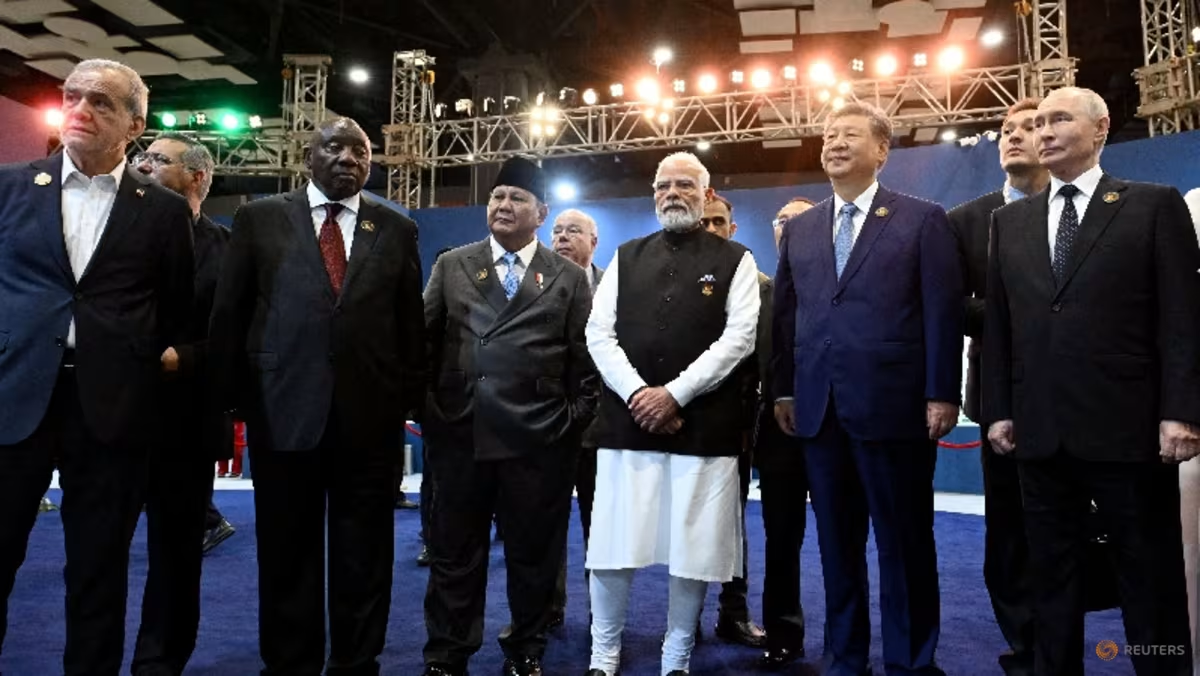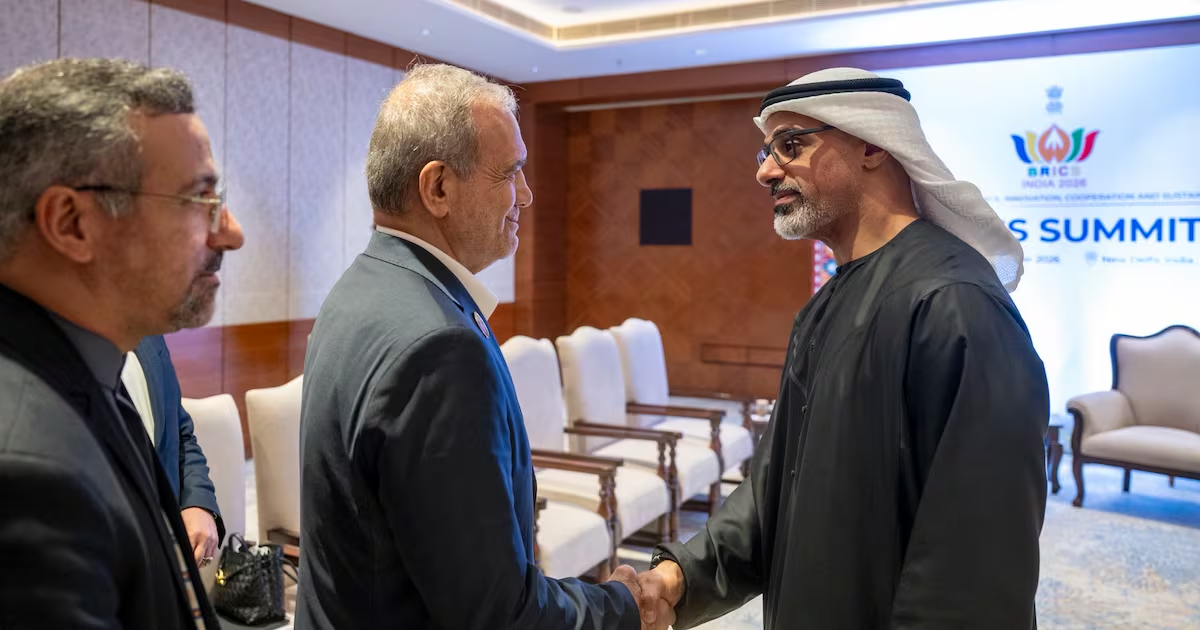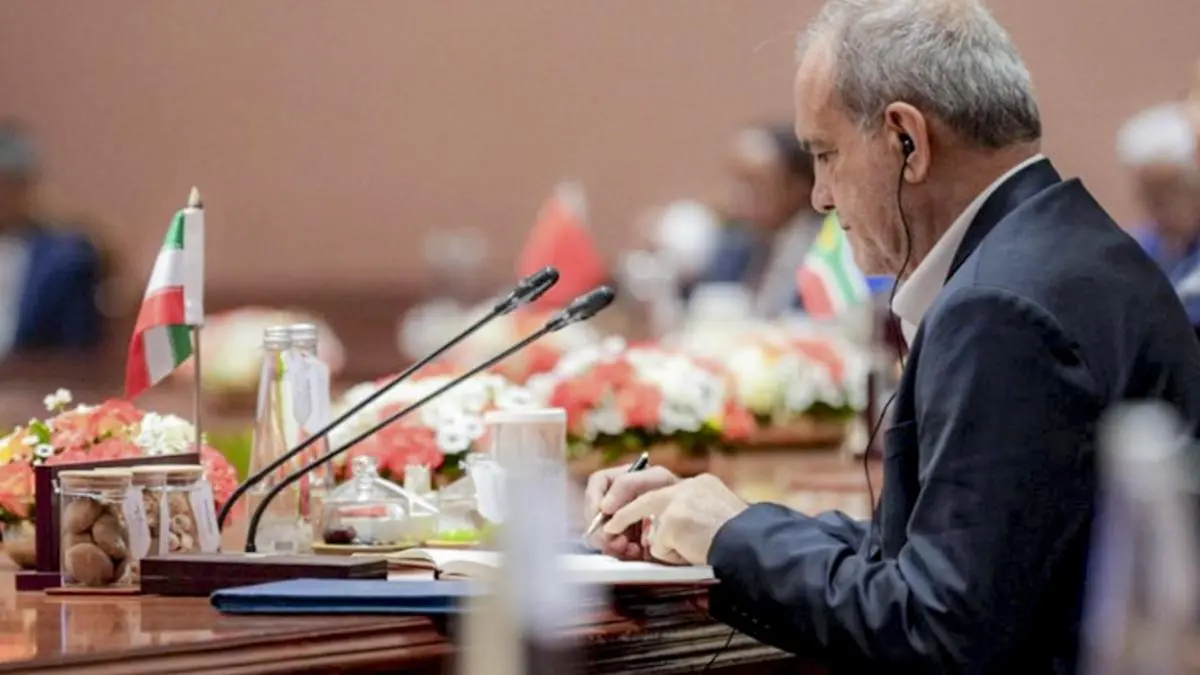
Iranian President Masoud Pezeshkian attends a meeting of BRICS leaders during the 18th BRICS Summit, in New Delhi.
In a significant diplomatic breakthrough, Iranian President Masoud Pezeshkian held a meeting with Abu Dhabi Crown Prince Sheikh Khaled bin Mohamed bin Zayed Al Nahyan on the sidelines of the BRICS Summit on Saturday.“ Masoud Pezeshkian, President of the Islamic Republci of Iran, held a meeting and talks with Sheikh Mohamed bin Zayed Al Nahyan, President of the United Arab Emirates, on the sidelines of the BRICS Summit,” Iran’s embassy in Delhi said in a post.Pezeshkian, who has met religious leaders in Delhi besides having a bilateral meeting with Prime Minister Narendra Modi and President Droupadi Murmu besides other BRICS delegates, has also used the platform to strongly condemned using some territories to launch attack on neighbours, a reference to the US’s use of Gulf states for its defence bases and mounting strikes on Iran.Model of security“Sustainable security depends on full respect for national sovereignty and rejecting the model of security for some and insecurity for others. Preventing the misuse of countries’ territories to threaten their neighbours is an inviolable principle. BRICS must stand against normalisation of attacks on civilian infrastructure and peaceful nuclear facilities,” Pezeshkian told the BRICS delegates.The New Delhi Declaration 2026, adopted by BRICS delegates also expresses concern over the continuing escalation in West Asia and has called on all sides to exercise maximum restraint. The declaration stresses the need to protect civilians and civilian infrastructure, respect national sovereignty and territorial integrity, and pursue dialogue and diplomacy to achieve lasting peace and stability.The BRICS developments assume importance in the context of Iran’s multiple strikes on Abu Dhabi, a critical emirate in the UAE that hosts US Air Force’s 380thAir Expeditionary Wing and the Al Dhafra Base among others, following the US-Israeli offensive against Iran in February.Abu Dhabi has repeatedly called the attacks a “flagrant violation of national sovereignty” and, alongside five other Gulf states, issued a joint condemnation of Iran; the UAE also revoked residency permits for Iranian nationals and shut Iranian schools. A ceasefire took effect on 8 April 2026, though sporadic strikes and reported retaliatory UAE strikes on Iranian targets continued around that date.Published on September 12, 2026