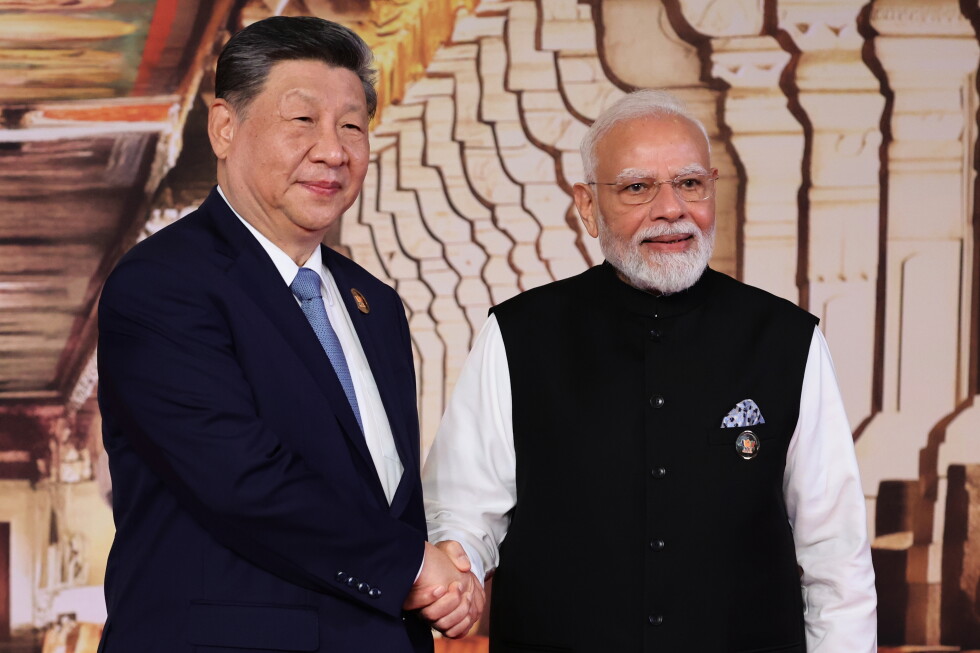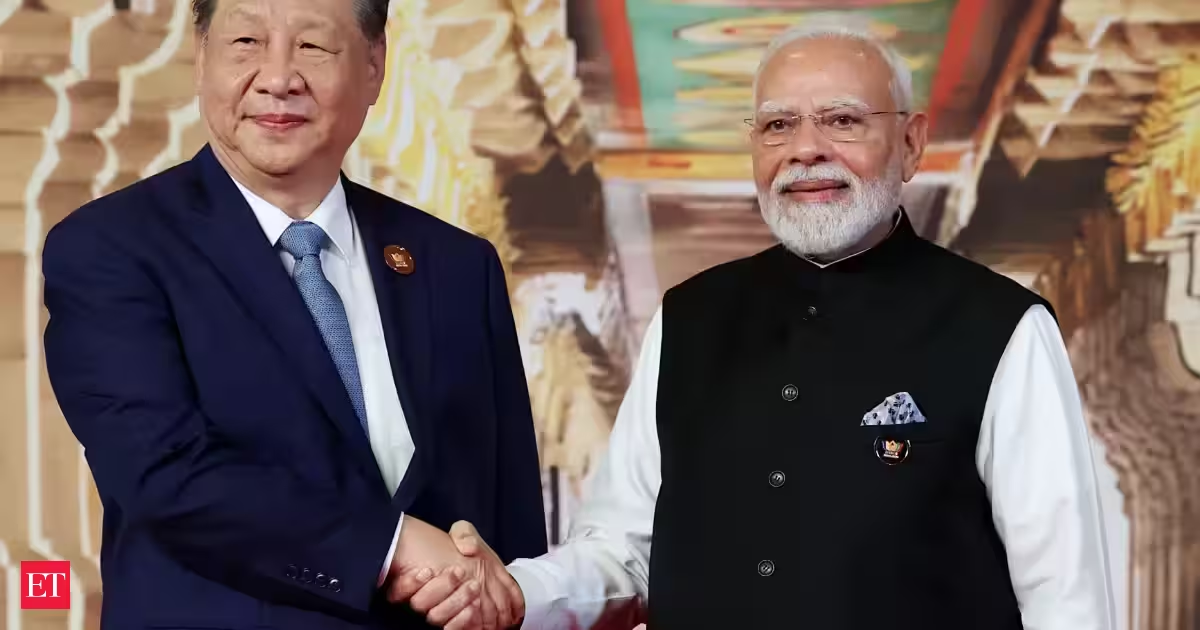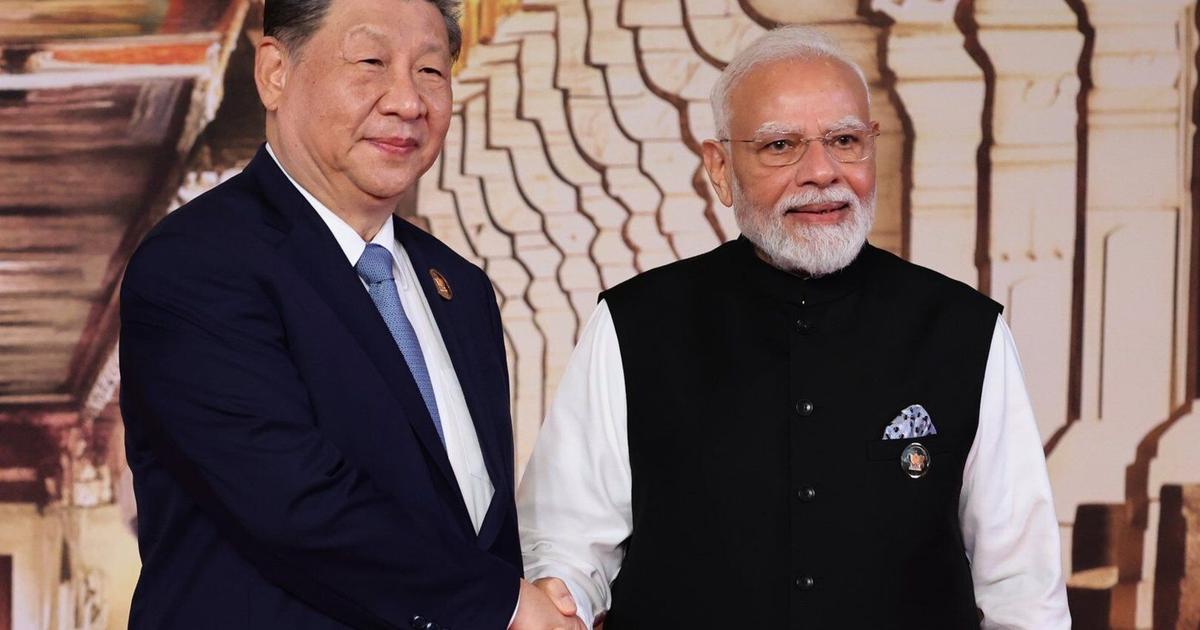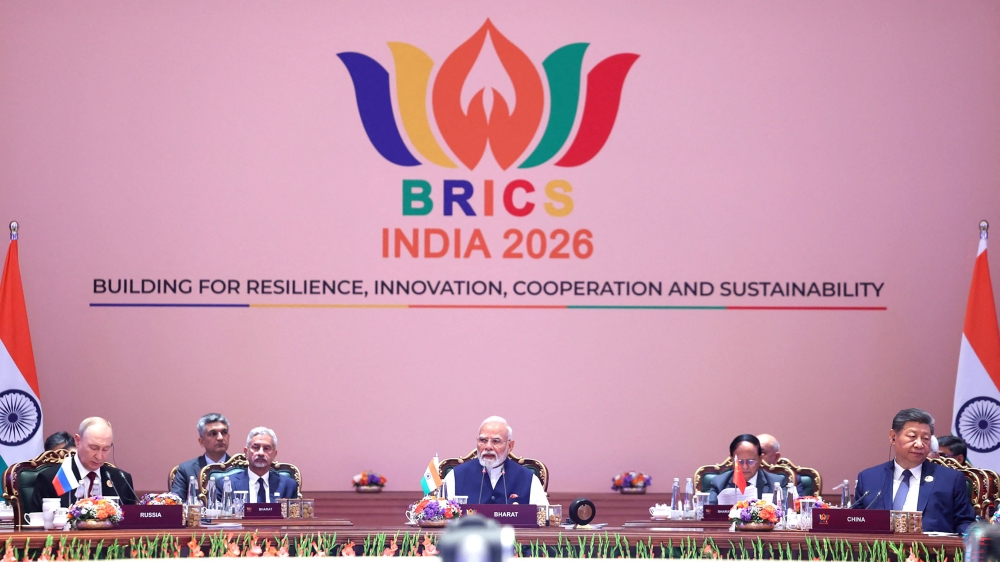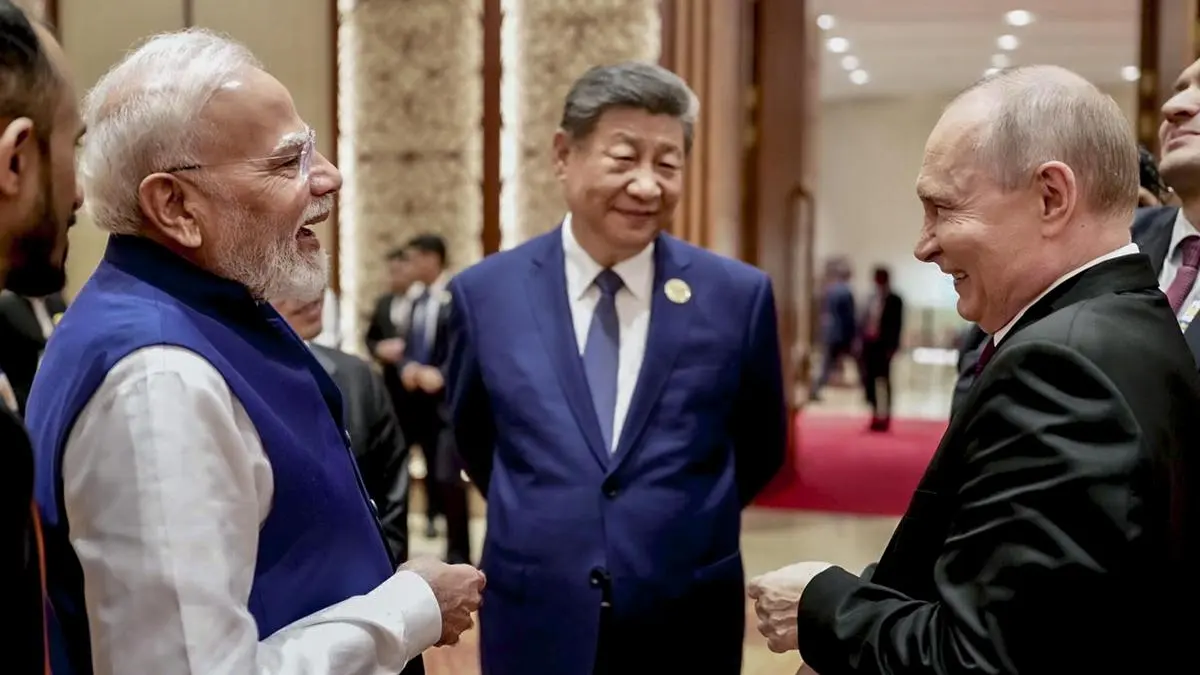
Prime Minister Narendra Modi with Russian President Vladimir Putin and Chinese President Xi Jinping on the sidelines of the 18th BRICS Summit, in New Delhi.
| Photo Credit:
@narendramodi/X via PTI Photo
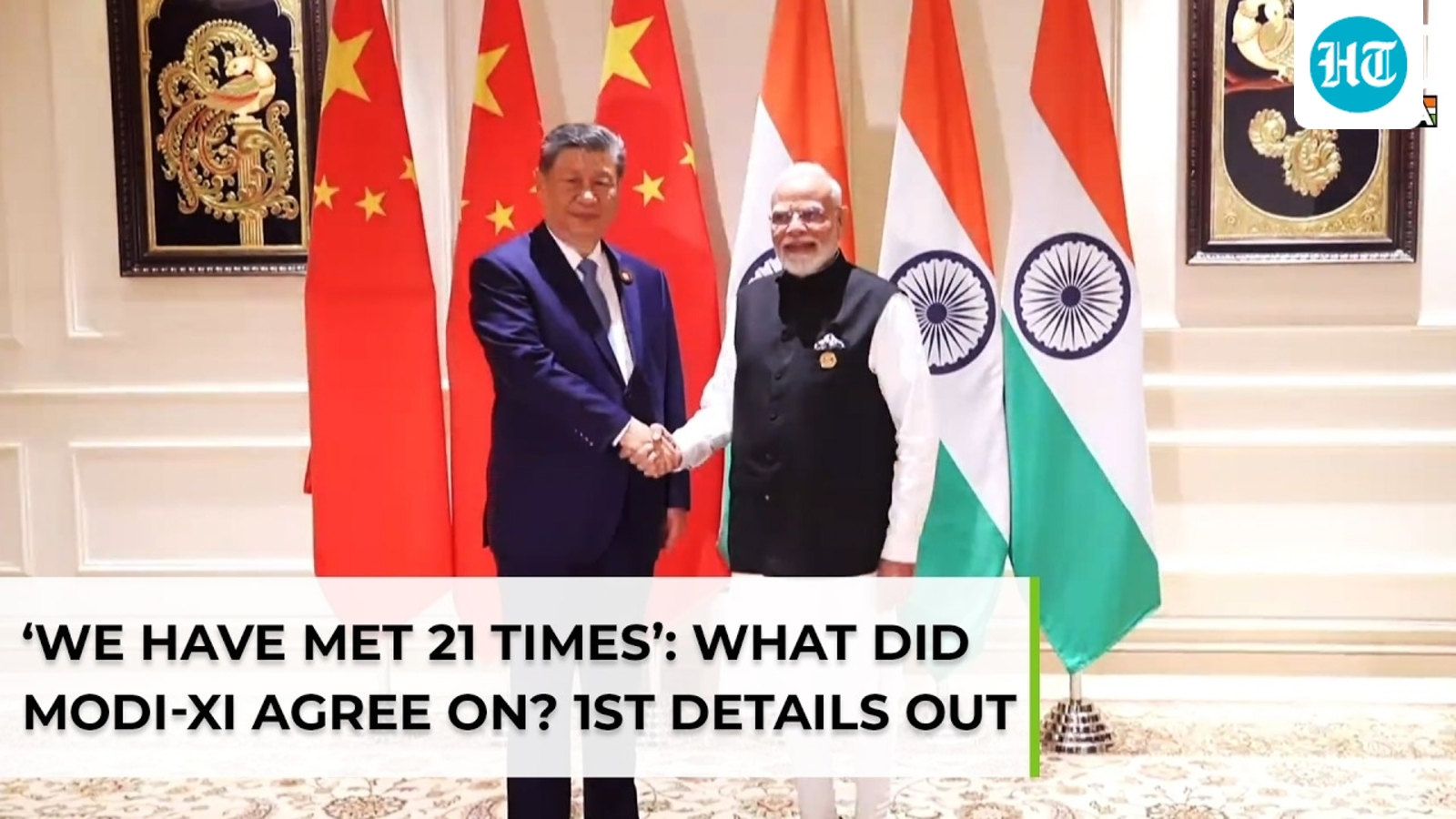
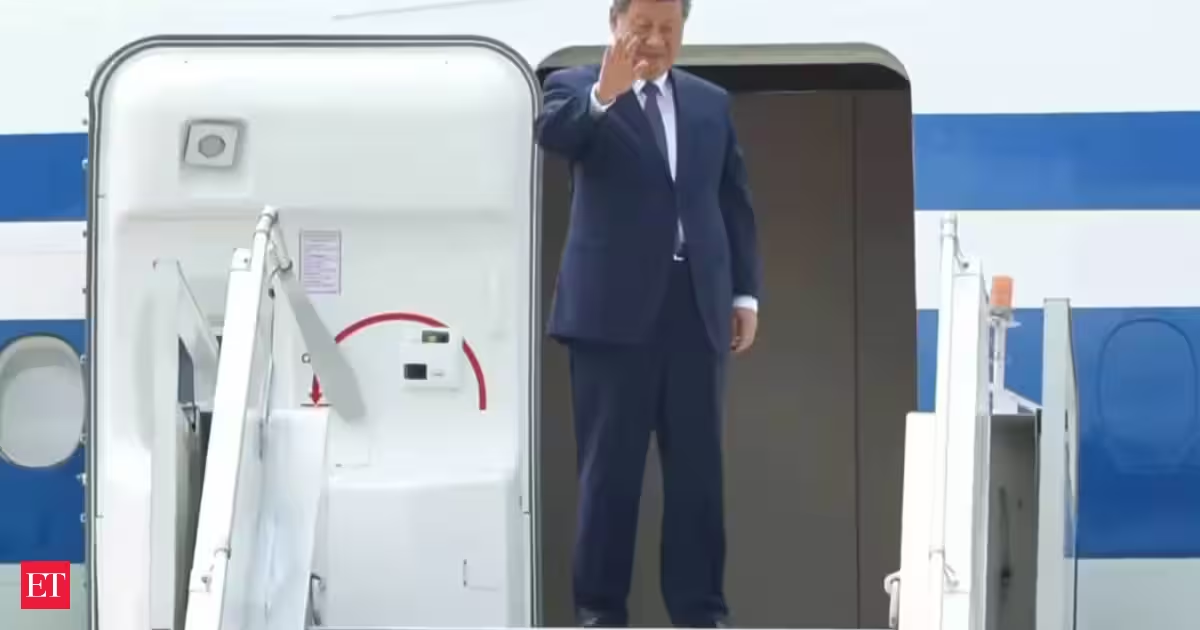
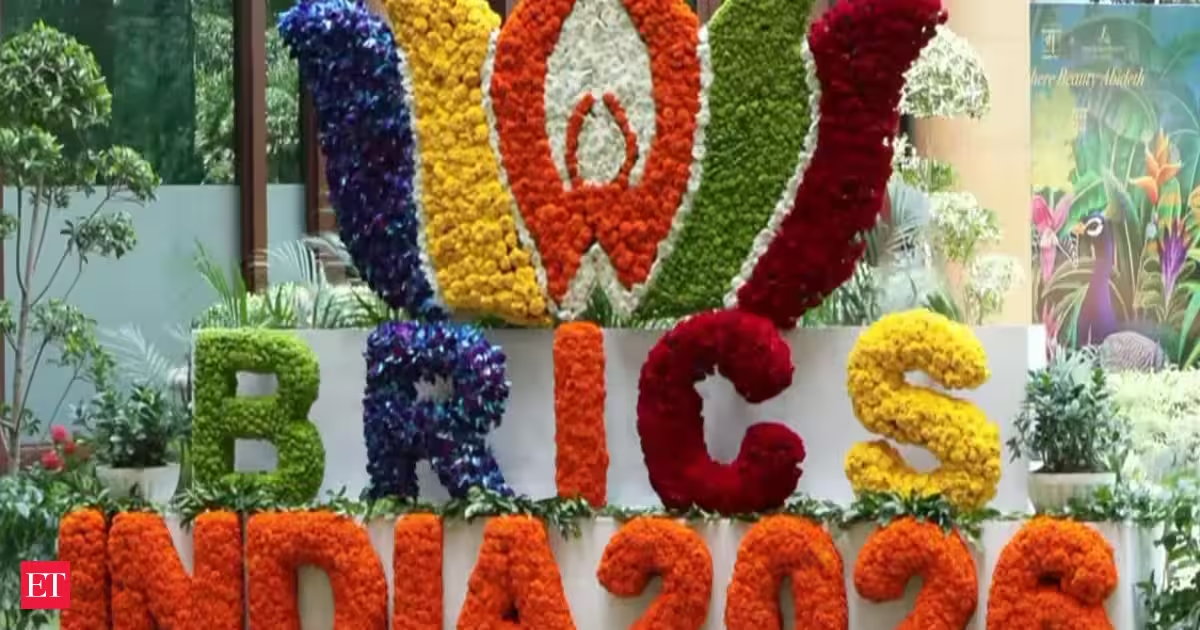
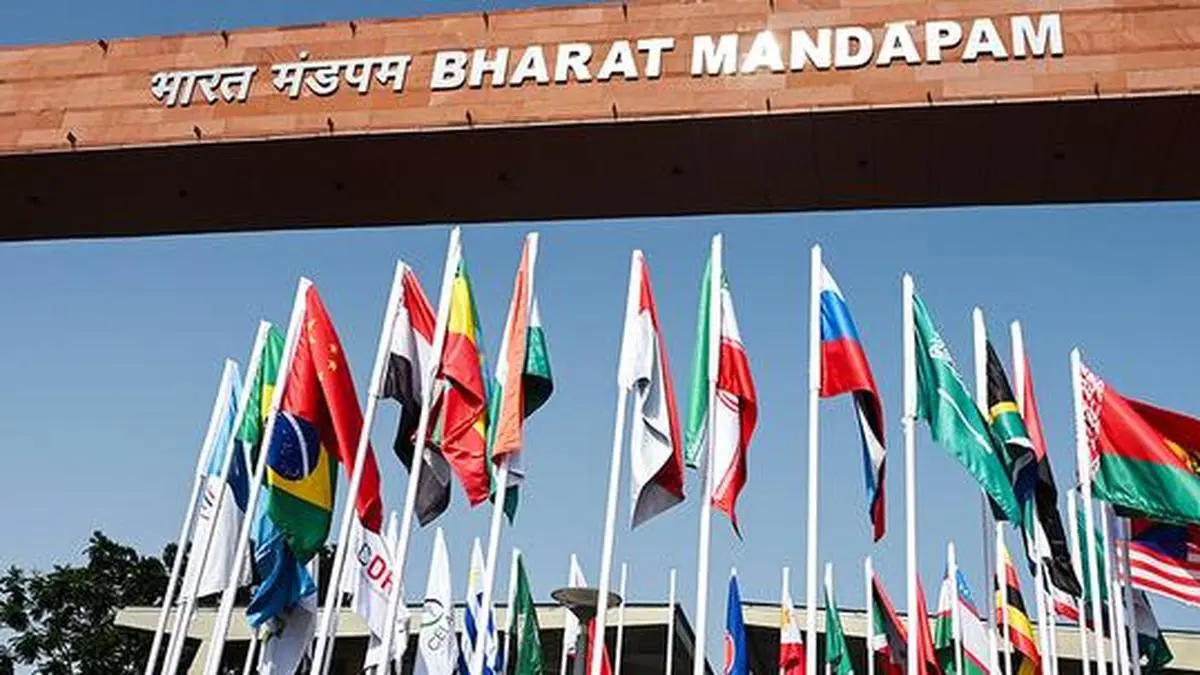
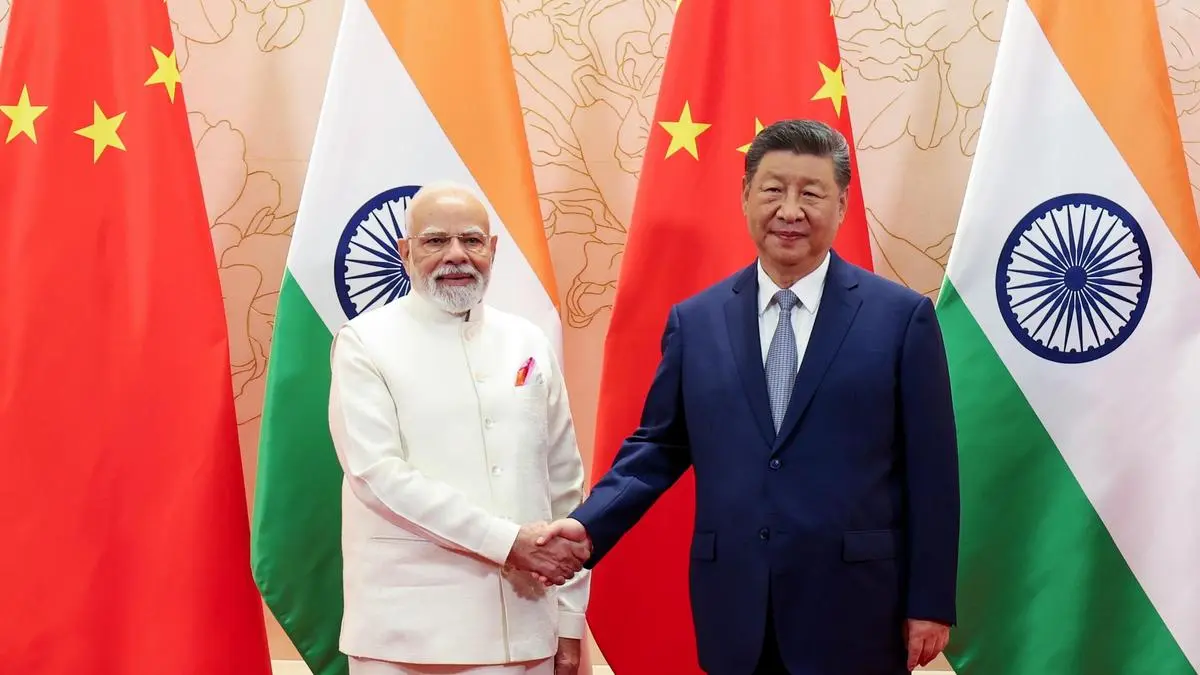
Chinese President Xi Jinping, in his two-day visit to New Delhi for the BRICS summit on September 12-13, sought to project India-China relations as a partnership rather than rivalry and a development opportunity rather than threat, calling for greater economic cooperation as well as joint shouldering of responsibility towards the Global South amid international turbulence.With Beijing taking over chairship of the forum next year, Xi pitched for a stronger BRICS role in countering unilateralism, tariff measures and growing geopolitical conflicts while supporting multilateralism and the WTO.On the border issue, the Chinese formulation differed subtly from India’s emphasis. Xi called for “parallel, mutually reinforcing progress” in advancing bilateral relations and resolving the boundary question while maintaining peace and tranquillity along the border. Prime Minister Narendra Modi, in contrast, stressed that peace and tranquillity in the border areas was an “essential basis” for the continued development of bilateral relations.“China and India are partners rather than rivals, and development opportunities rather than threats to each other. This is a strategic judgment made based on the development stage and international environment of the two countries, and one that conforms to the common interests of the two countries and the two peoples … help each other succeed in the spirit of win-win cooperation,” Xi said at his bilateral meet with Modi on Saturday, per a statement issued by the Chinese Ministry of Foreign Affairs.The emphasis on economic ties comes amid bilateral trade touching a record $151 billion in FY26, though the balance remains heavily skewed in China’s favour, with imports from China to India at $131.6 billion.Xi, who visited India after seven years following the border tensions in Galwan in 2020, said the recent resumption of institutional exchanges and expansion of the cooperation list had not come easily and should be “cherished.”He also linked closer India-China ties to their larger role in the Global South, saying the two most populous countries and major developing economies had an important responsibility amid a “changing and turbulent international landscape.”The comments come as the US tariff regime and continuing conflicts in West Asia and Ukraine have disrupted trade, supply chains and energy security.In his BRICS address, Xi made a broader case against rising unilateralism and power politics, saying these were undermining multilateralism and the international order. He called on BRICS to support the multilateral trading system with the World Trade Organisation at its core, advance WTO reform, oppose the abuse of tariffs and reject protectionism.“Today, changes unseen in a century are accelerating across the world. The Global South is gaining strength, and the trend toward a multipolar world is unstoppable. At the same time, unilateralism and power politics are surging against the tide, lashing at multilateralism and the international order,” Xi said.The BRICS New Delhi Declaration stitched together by New Delhi also expressed concern over unilateral tariffs and trade restrictions, underscoring the bloc’s opposition to measures that undermine the multilateral trading system.Xi urged BRICS to play a role in resolving conflicts, particularly in the Middle East. Without mincing words, the Chinese President called for a permanent and comprehensive ceasefire, political settlement and a new regional security architecture, while reiterating China’s support for a two-state solution to the Palestine question.To promote technology and trade within the grouping, Xi proposed a BRICS initiative on AI-enabled new industrialisation and warned that “decoupling” and supply-chain restrictions would not stop development.With China set to take over the BRICS chair next year, Xi called for the grouping to become a stronger voice of the Global South and for India and China to coordinate more closely in the UN, SCO and G20.More Like ThisPublished on September 13, 2026