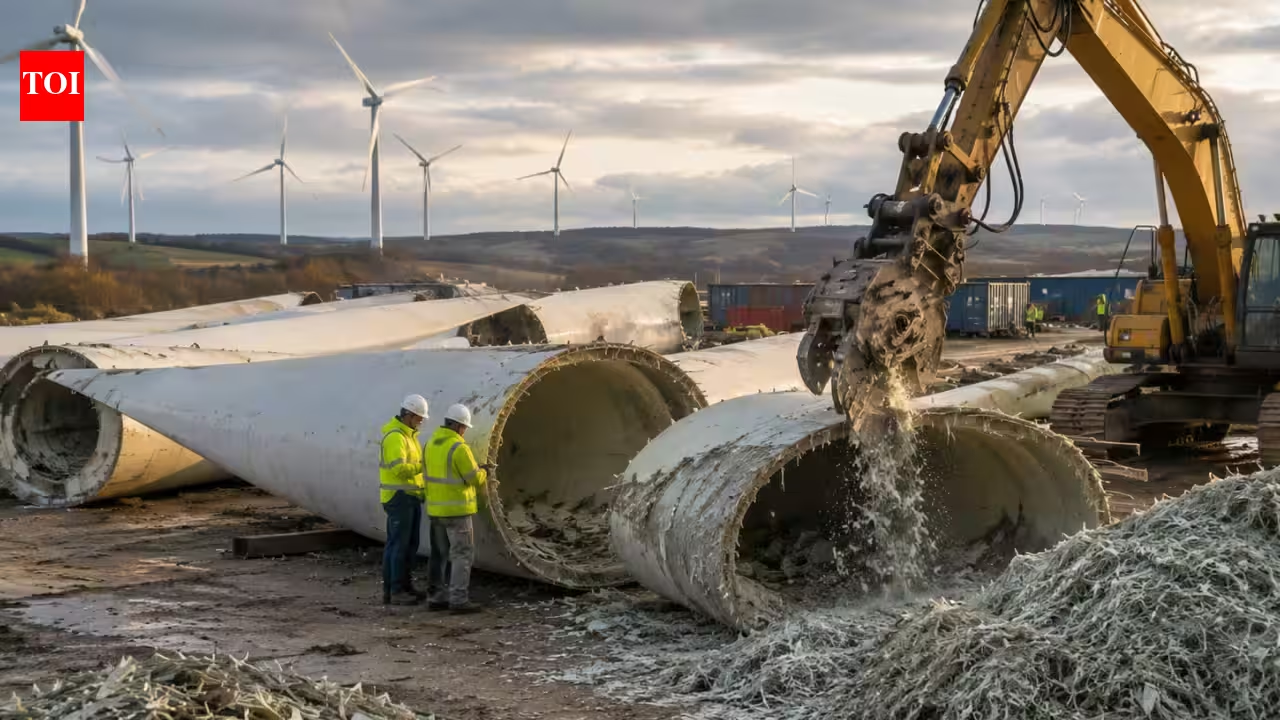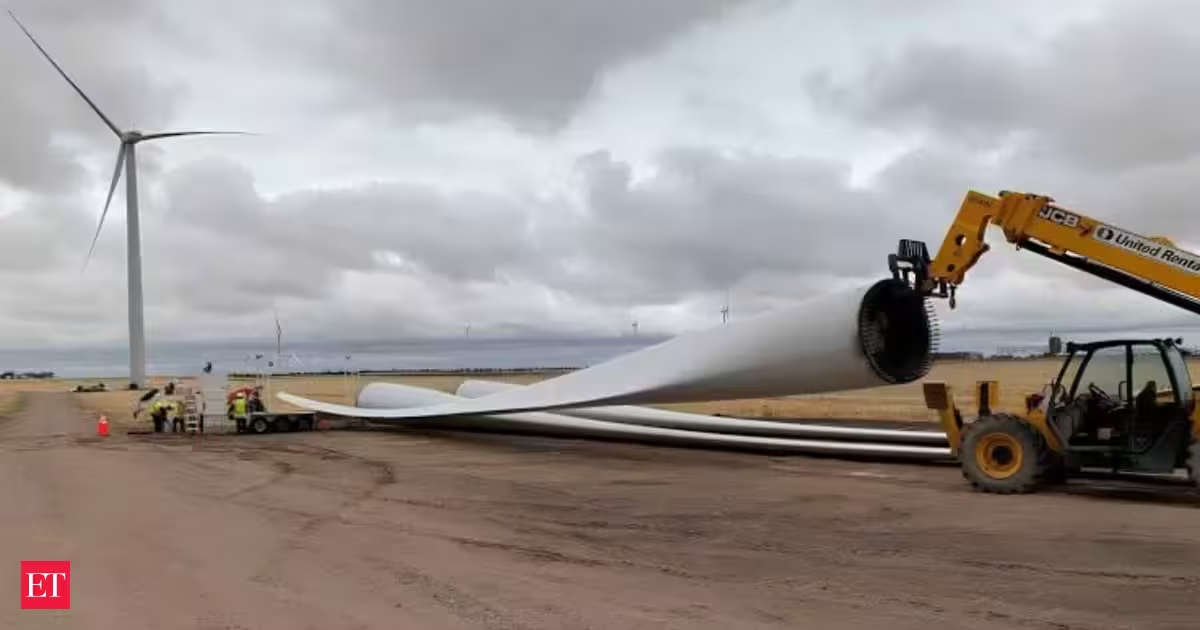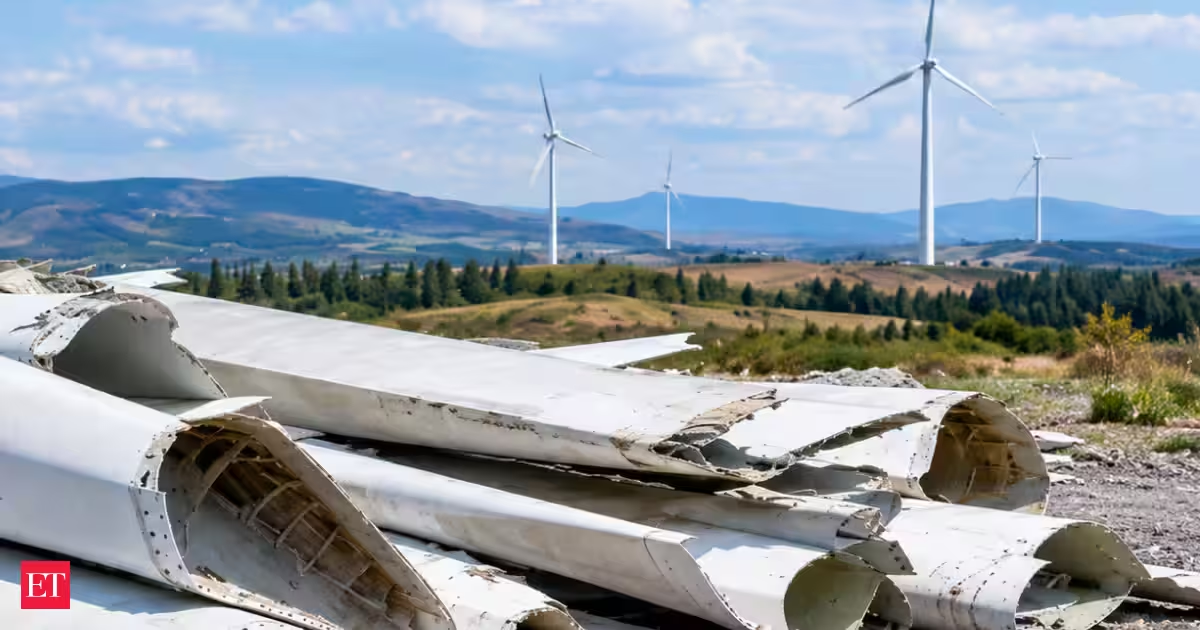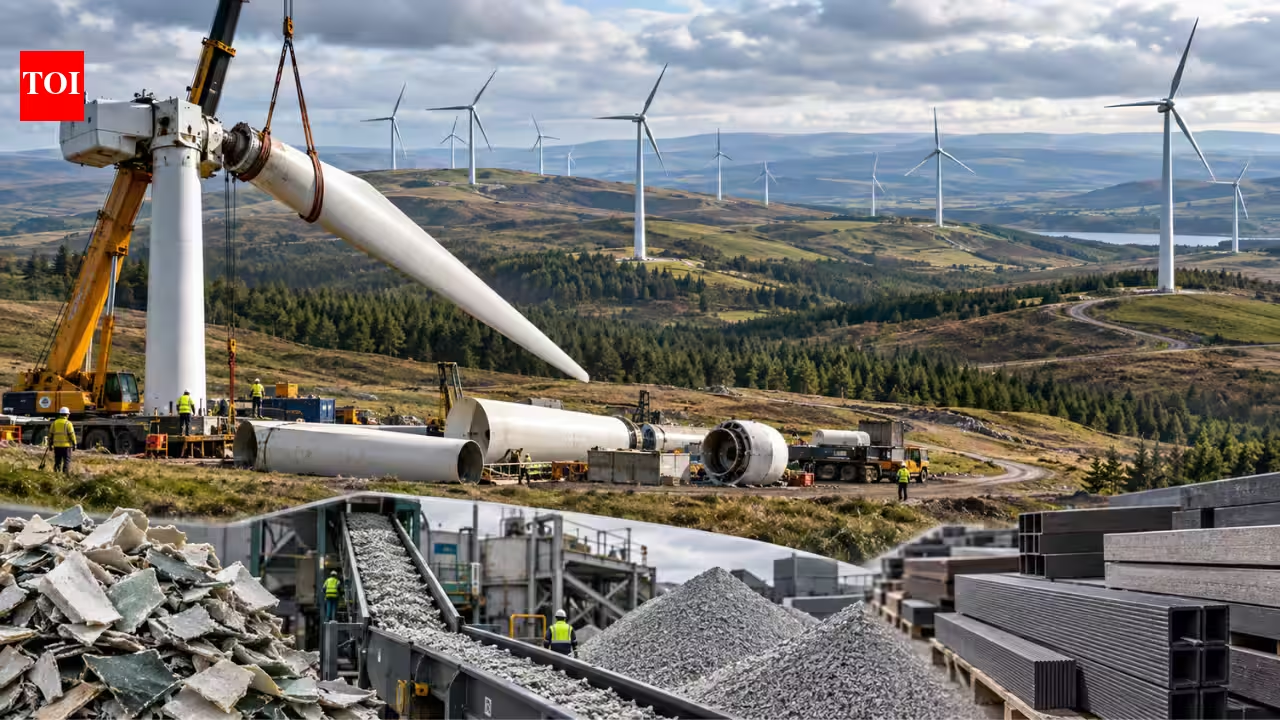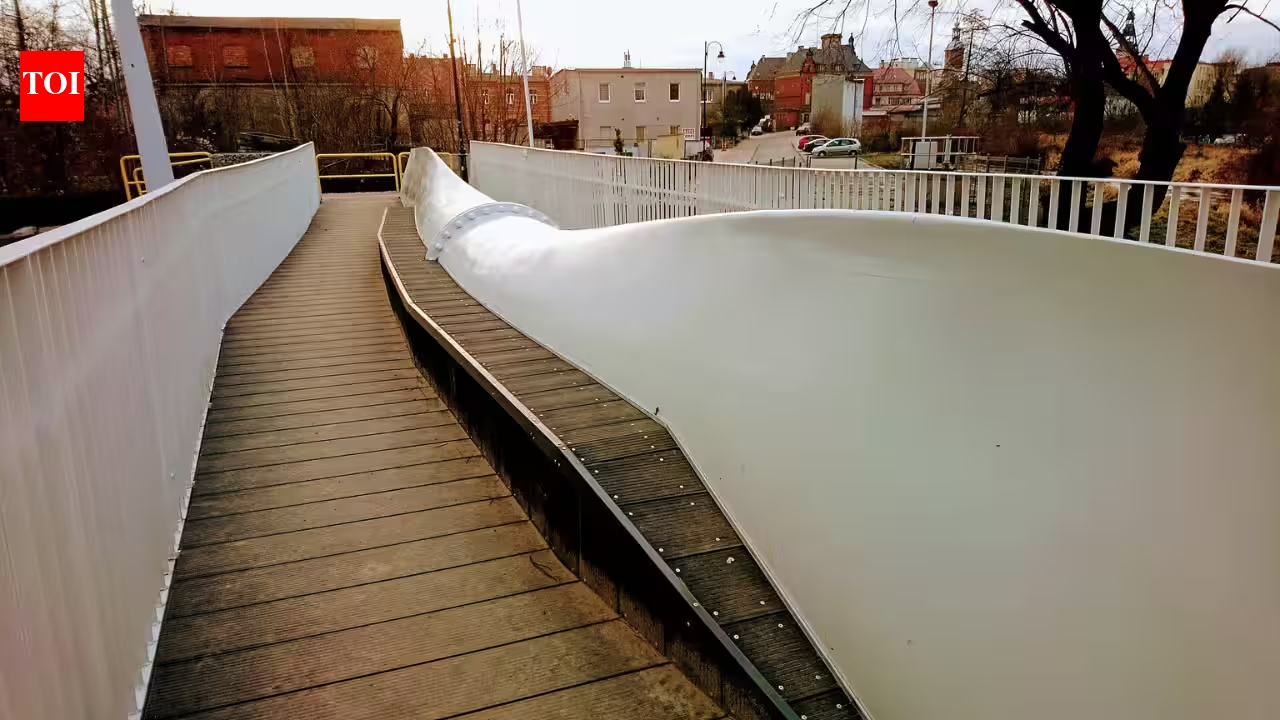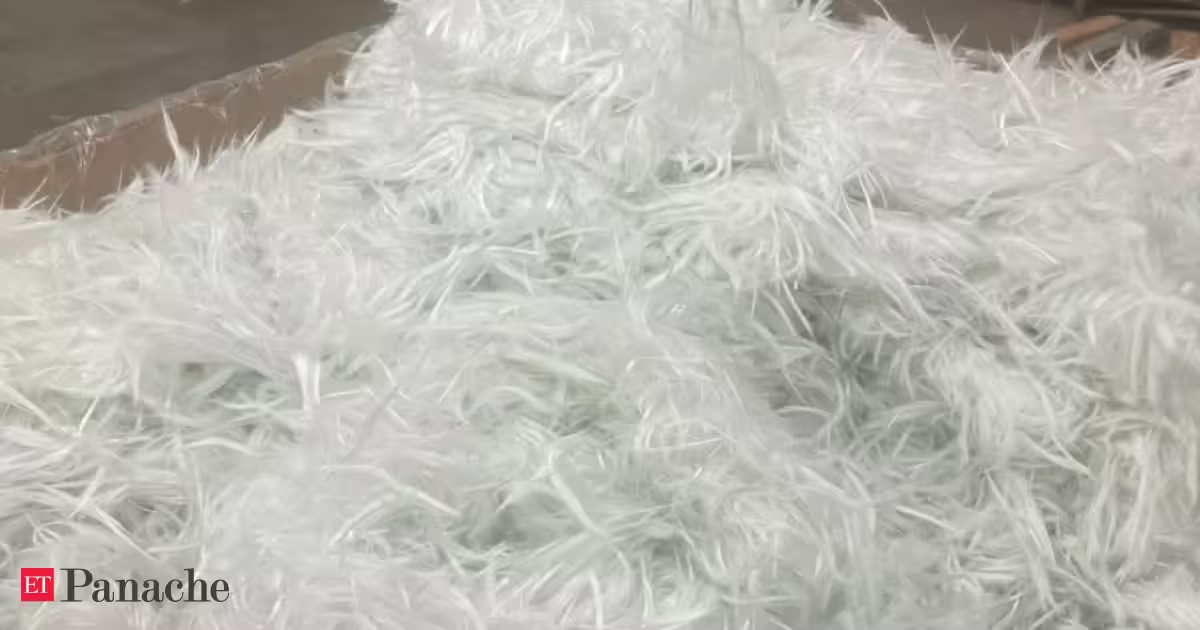
Wind turbines are built to produce clean energy for years, but what happens when their giant blades reach the end of their life? A company in Tennessee is working on an answer. Instead of sending old turbine blades to landfills, Carbon Rivers has developed a process that can recover the valuable glass fibre inside them and turn it into material for new products.Why are old wind turbine blades difficult to recycle?Most parts of a wind turbine can already be recycled. The blades, however, are much harder to deal with because they are made from strong composite materials. According to the US Department of Energy (DOE), around 85% to 90% of a wind turbine's mass can already be commercially recycled. Most of the remaining material comes from fibre-reinforced composites such as fibreglass and carbon fibre, which are commonly used in blades. This creates a growing waste problem as older wind turbines are retired. A 2025 DOE report said that blades, generators and nacelle covers are among the components likely to be more difficult to recycle.Tennessee company found a way to recover the glass fibreCarbon Rivers, based in Tennessee, has developed a process called pyrolysis. It uses intense heat without oxygen to break down the resin and other organic materials holding the blade together. What remains is the glass fibre, which can then be cleaned and reused. The company has reported achieving 99.9% purity in its recovered glass fibre. The material can potentially be used in new composite products, construction materials, automotive parts and even 3D-printing filament. The company's work was supported by the US Department of Energy and the University of Tennessee, Knoxville.More than 100 tonnes of blades already reusedThe technology has already moved beyond the laboratory stage. According to the DOE, Carbon Rivers had upcycled more than 100 tons of wind turbine blades by 2022. The company was also working towards a much larger facility capable of processing thousands of blades every year. The DOE described the project as an important step towards building a recycling system for wind energy. Mike Derby, then wind technology programme manager at the DOE's Wind Energy Technologies Office, said the investment could “dramatically” improve turbine recycling at a scale that could transform the renewable energy industry.Old blades could become new productsThe recovered glass fibre is not simply waste in another form. It can be made into non-woven materials, textile products and plastic pellets. It can also be used in construction and other composite products. Carbon Rivers has also adapted the technology for waste from industries including automobiles, boats and construction. The idea is to keep the material in use instead of throwing it away.The US is looking for more recycling solutionsThe problem is not limited to one company. The DOE estimates that existing US infrastructure could process 90% of the mass of decommissioned wind turbines, but new solutions are still needed for the remaining 10%. The agency has also identified better blade designs and easier-to-recycle materials as part of the long-term solution.For wind energy to become more circular, the challenge is no longer only about producing electricity from the wind. It is also about finding useful lives for the machines once they stop turning. Carbon Rivers' approach offers one possible answer: break down the old blade, recover the material and use it again.
Tennessee turned 100 tonnes of old wind turbine blades into material for new products for automobiles, boats and construction
Based in Tennessee, Carbon Rivers has crafted an innovative technique for recycling obsolete wind turbine blades. This novel approach utilizes high temperatures without oxygen to decompose composite materials, recovering valuable glass fibre for incorporation into new products. Carbon Rivers has reclaimed more than 100 tons of blades, showcasing the effectiveness of its method. This development marks a significant stride towards tackling waste in wind energy and promoting a circular economy.
549 words~2 min read