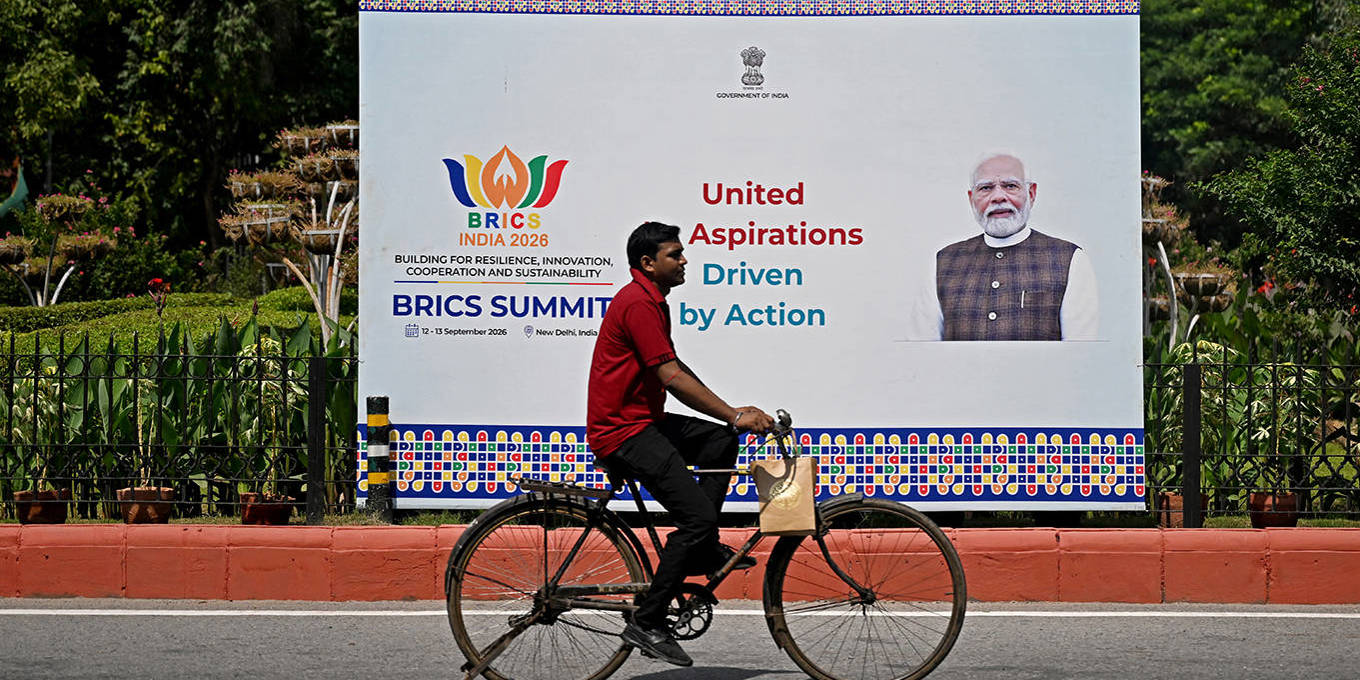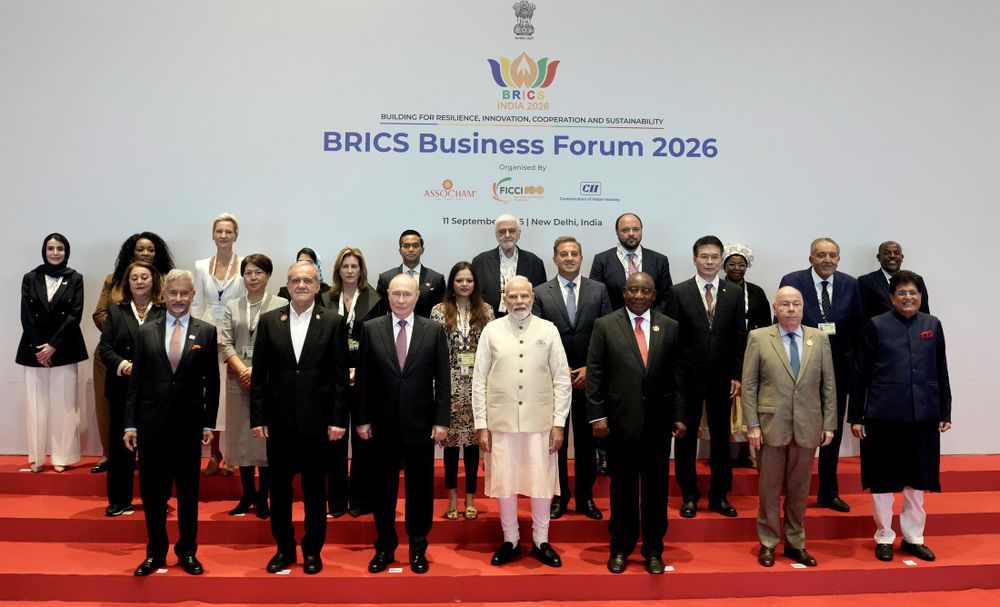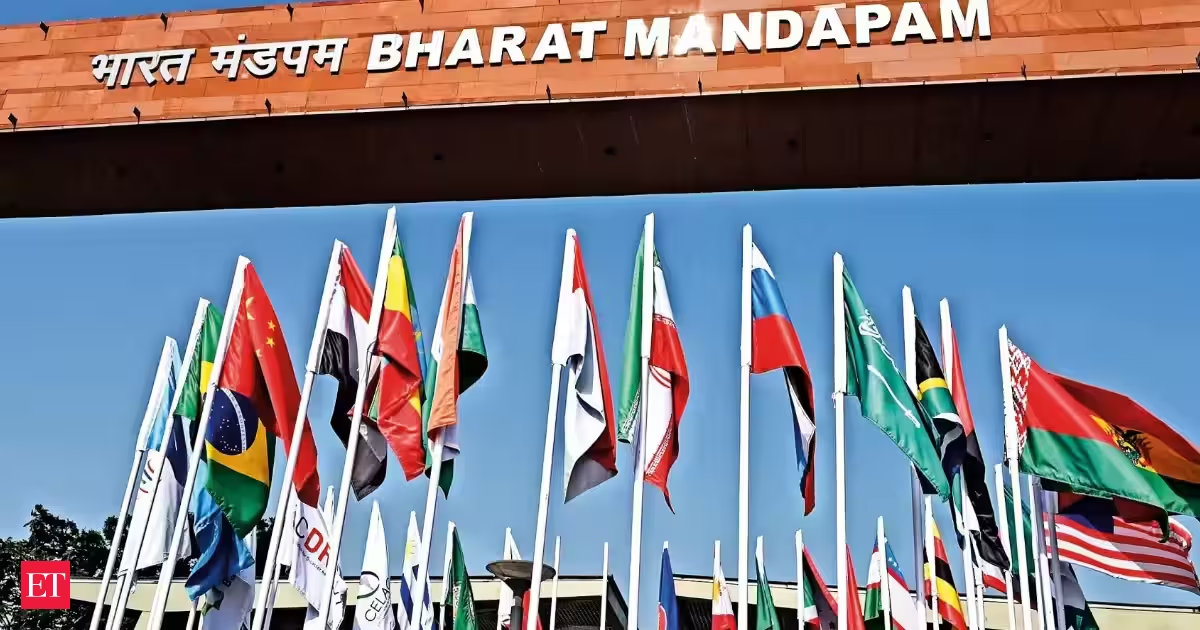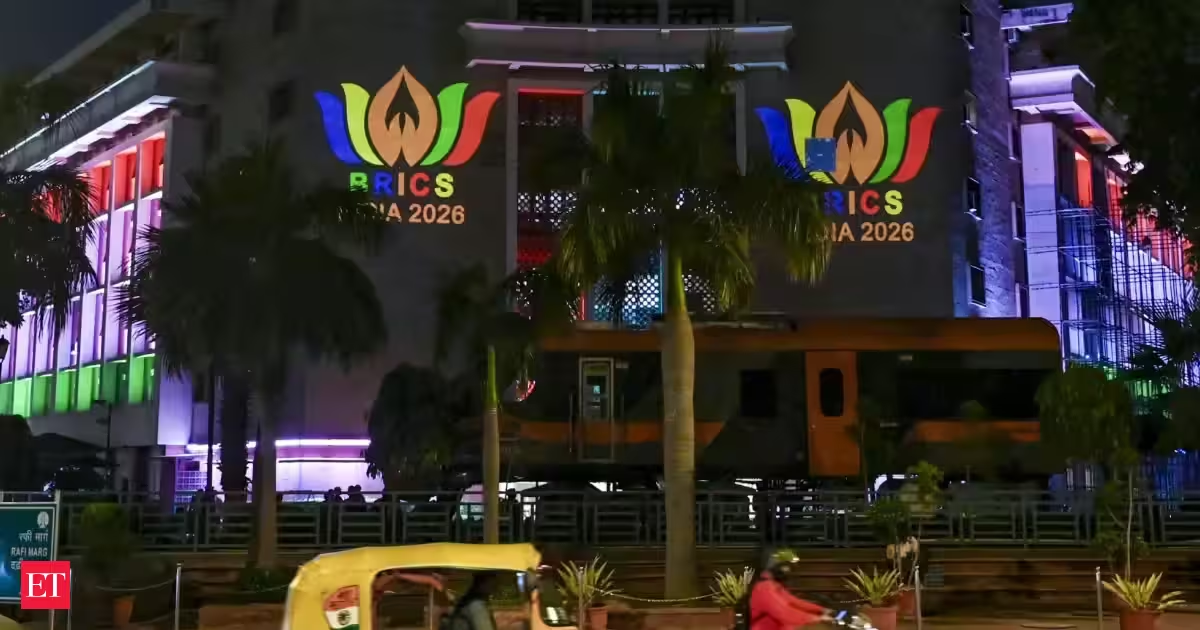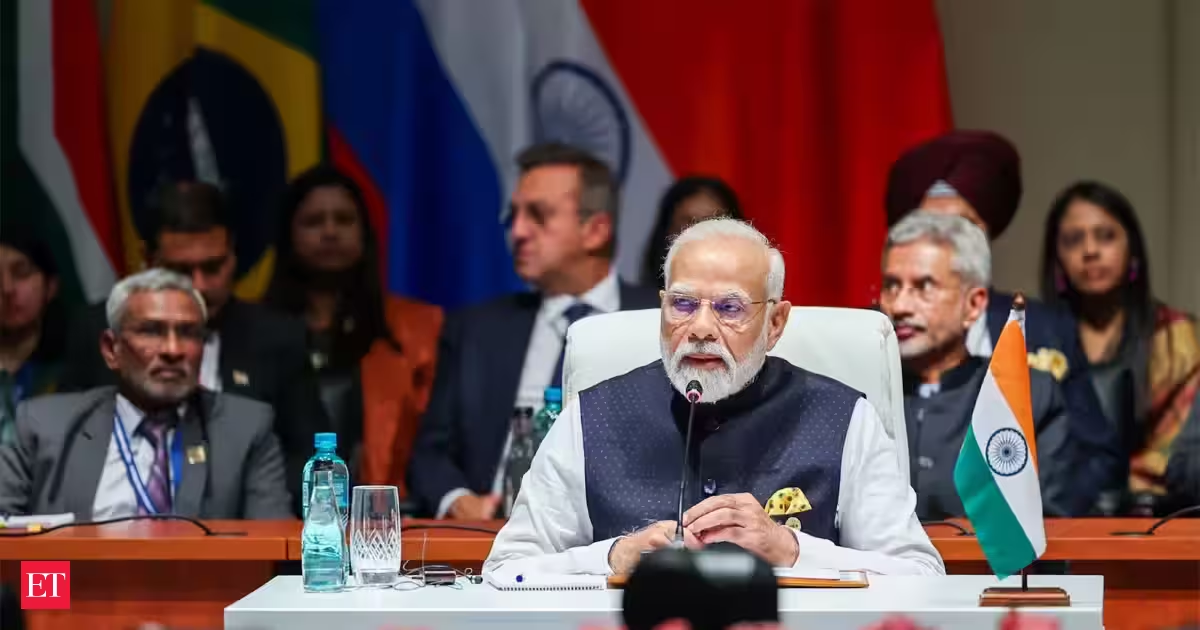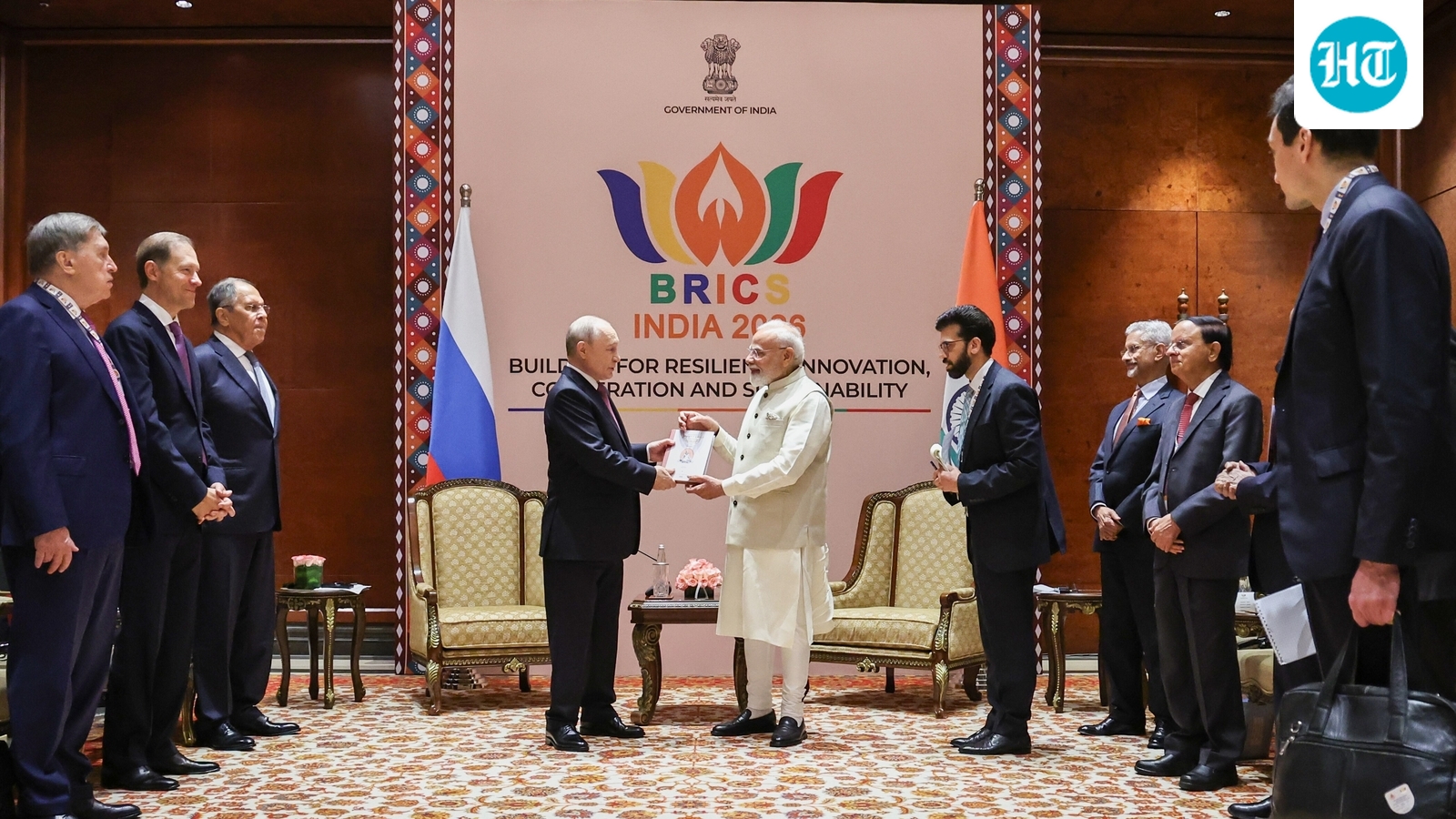
BRICS India 2026 is a much-awaited global forum. It brings together some of the world’s largest emerging economies and reflects the aspirations of billions of people. Collectively, BRICS represents a significant share of global population, economic growth and trade. From being a relatively unknown entity, BRICS has come a long way to become one of the most sought-after forums for the Global South, increasingly shaping how emerging economies do business with one another.Russian President Vladimir Putin, center left, and Indian Prime Minister Narendra Modi, center right, talk to each other during their meeting on the sidelines of the BRICS Summit in New Delhi, India, on Friday, Sept. 11, 2026. (Alexander Kazakov/Pool Sputnik K)The relevance of BRICS is higher than ever. It offers a gateway to shared growth, a way to navigate technological disruption, and a framework to address supply-chain pressures and challenges that affect millions. In this context, India’s theme, Building for Resilience, Innovation, Cooperation and Sustainability, sets the right agenda and reflects the people-centric, humanity-first approach articulated by Prime Minister Narendra Modi at the 2025 Rio Summit.Today, BRICS represents 49.5% of the world’s population, 40% of global GDP and 26% of world trade. At this scale, the next opportunity is to make these economic relationships more accessible to the people who drive them. India’s chairmanship in 2026 has brought this people-centric dimension into sharper focus.Every BRICS nation has its own strengths and areas of excellence. Across the bloc, countries are using technology to transform everyday life and public services. India’s DPI and UPI demonstrate how digital infrastructure can support financial inclusion and seamless services. Brazil’s Pix has made instant digital payments accessible at massive scale, while the UAE’s UAE Pass shows how a single digital identity can simplify access to government and private-sector services. India has also proposed a BRICS Digital Public Infrastructure Repository and pilot implementations. For businesses, such initiatives can reduce friction in cross-border payments, enable smoother identity verification and create opportunities across fintech, logistics and e-commerce.BRICS destinations are already seeing strong growth in travel and tourism. India recorded 20.22 million international tourist arrivals in 2025, while 32.83 million Indians travelled abroad, a 6.3% increase over the previous year. Indonesia recorded a 10% rise in visitors, while China has seen growing Russian travel following easier entry requirements. Indian arrivals in Moscow also rose 40% year-on-year in the first half of 2025. The scale of movement within BRICS is significant: in 2023, nearly 80 lakh Indians travelled to BRICS countries, while 4.14 lakh visitors from BRICS nations travelled to India. Business and leisure travel are rising together, showing that people are ready to move when BRICS nations open their doors to one another. India’s 2026 BRICS tourism agenda has also identified tourism exchanges and seamless travel facilitation as key areas of cooperation. The opportunity now is to build the connectivity and systems that can make this movement easier, more seamless and better connected.Mobility is a quiet engine of international trade. When people can move more easily and business leaders meet face-to-face, economic partnerships become stronger and more meaningful.BRICS trade has expanded dramatically over the past two decades. By 2024, merchandise trade among members had reached $1.17 trillion, more than 13 times its 2003 level. India is also becoming a stronger trading partner within the bloc, with merchandise exports to BRICS countries estimated at $82 billion in FY2025–26, while services exports stood at $31.3 billion in 2024. These numbers underline the growing strength of trade and commercial ties across BRICS.Put these developments together, trade growing 13-fold, tourism rising strongly, digital payments expanding across countries, the development bank stepping up funding, and a growing calendar of cultural events, forums and sports and the picture is clear.BRICS has structured its 2026 architecture around three pillars -political and security, economy and finance, and culture and people-to-people exchange. This places human connection alongside economic and political cooperation.India’s Humanity First chairmanship comes at the right moment. BRICS is no longer just about its economic potential; it is increasingly about creating stronger connections between its people. The growing movement of people, trade and digital payments shows that this connection is already taking shape. The next step is to build on this momentum. A more coordinated BRICS mobility framework could make travel easier, create more direct flight connections and enable smoother digital travel and payments. Just as UPI has made payments more seamless, BRICS can work towards making movement across its countries simpler, easier and more connected.(The views expressed are personal)This article is authored by Shikhar Aggarwal, joint managing director, BLS International.
BRICS: Bringing people and economies together
This article is authored by Shikhar Aggarwal, joint managing director, BLS International.
756 words~3 min read