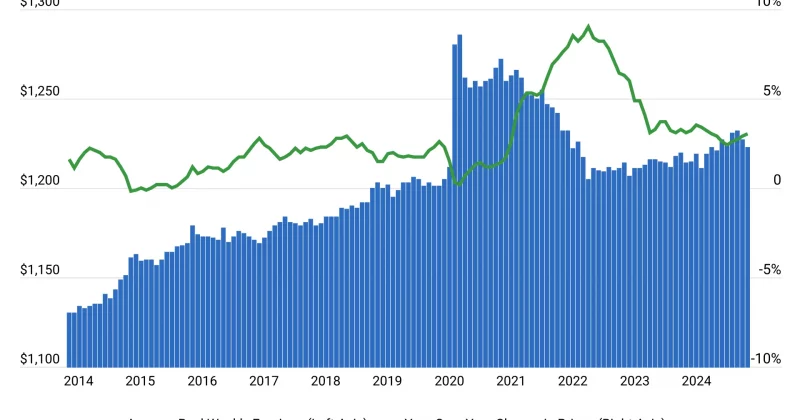
Wages are up — but not as much as inflation. The U.S. Bureau of Labor Statistics reported that over the past 12 months, the average American’s real hourly earnings — which take wage gains and inflation into account — actually declined by 0.3%.The economy is still humming along, powered by consumer spending, despite the fact that real hourly pay has been on a downward trend for a while. “So, you have real hourly pay that’s either been flat or falling, at this point about five straight months now, from April through now,” said Breyon Williams, chief economist at progressive think tank Groundwork Collaborative.Some consumers are trying to make up for that by showing up more at work. The average workweek increased 0.6% in the 12 months leading up to August. Williams said that if the extra hours on the job aren’t enough, workers have to dip into their savings to get by. At the beginning of last year, the savings rate was 4.6%.“We’re now at 3%,” Williams said.More and more 20-somethings are trying to save by living with mom and dad, according to Sara Estep, an economist at the Center for American Progress.“That number reached nearly 50% this year,” she said.Estep is also worried about apps that offer cash advances — kind of like payday loans — and the possible fees and fines that come with them.“It’s not really clear up front … if you’re late on the payment, how that’s going to affect you,” she said.Estep said consumers of all ages are borrowing more to get by, using buy now, pay later or credit cards. Aditya Bhave, head of U.S. economic research at Bank of America Global Research, has been watching credit card payments that are 90 days late or more. “This number has been generally trending up since late 2022,” Bhave said, “so for about four years now.”But Bhave thinks delinquencies have reached their peak and will now stay steady or even fall. He thinks consumers will be OK. They’re incredibly resilient, he said. Still, he has his eye on gas prices. If they edge up toward $5 a gallon, he’ll be more concerned.
Inflation has devoured pay gains over the past year
The average real hourly wage, accounting for raises and inflation, went down by 0.3% over the past 12 months.
356 words~2 min read