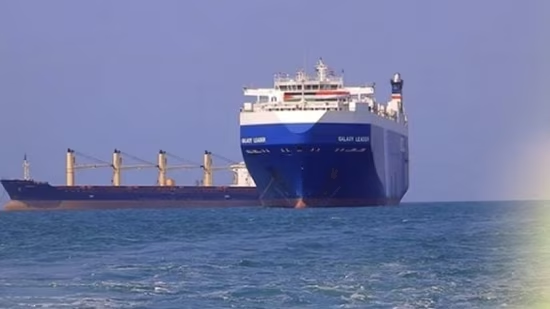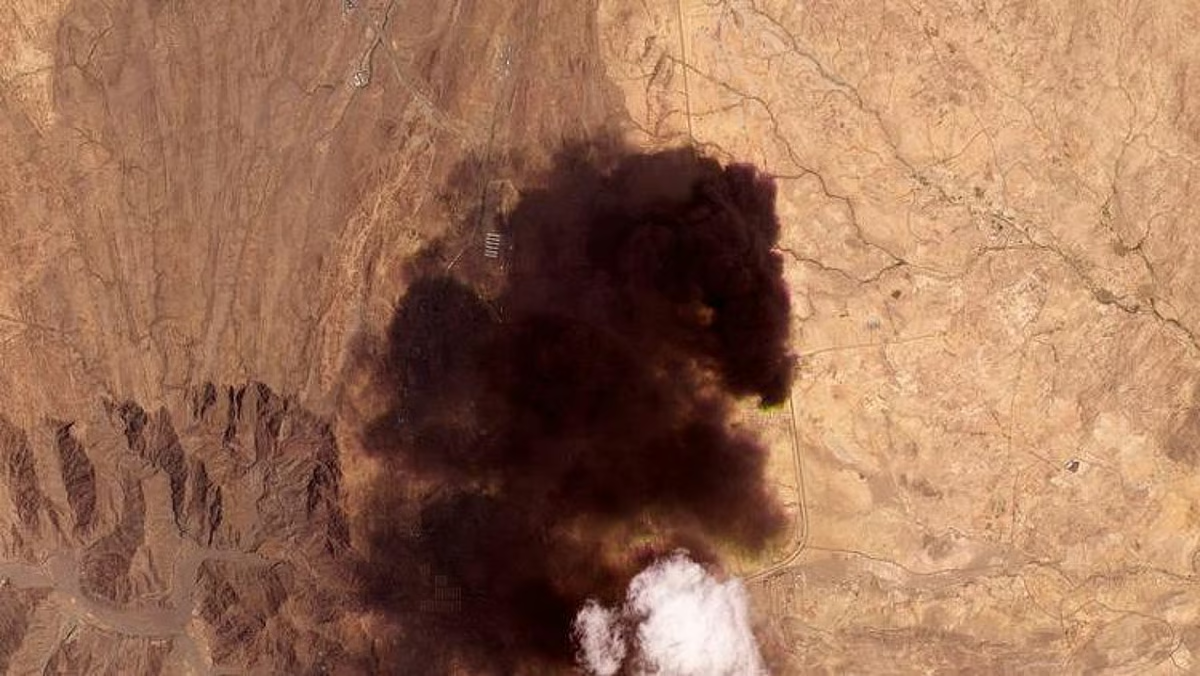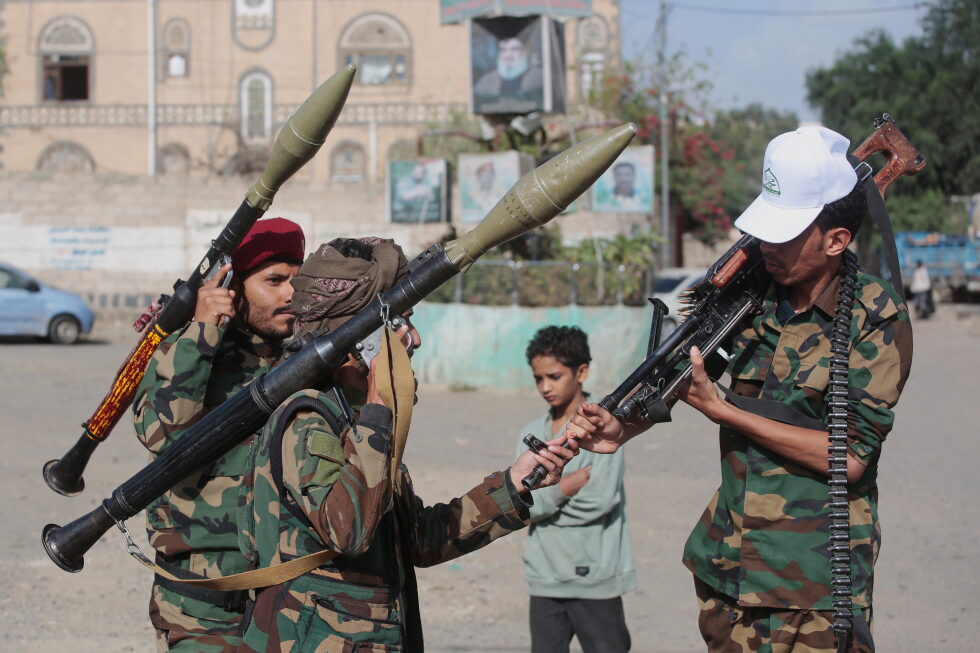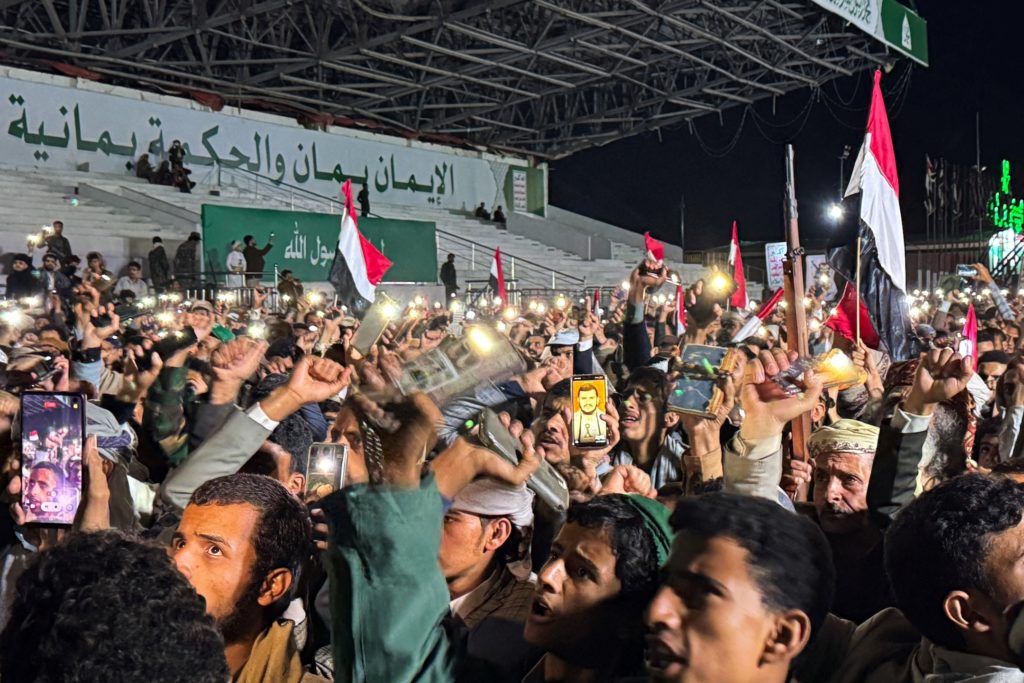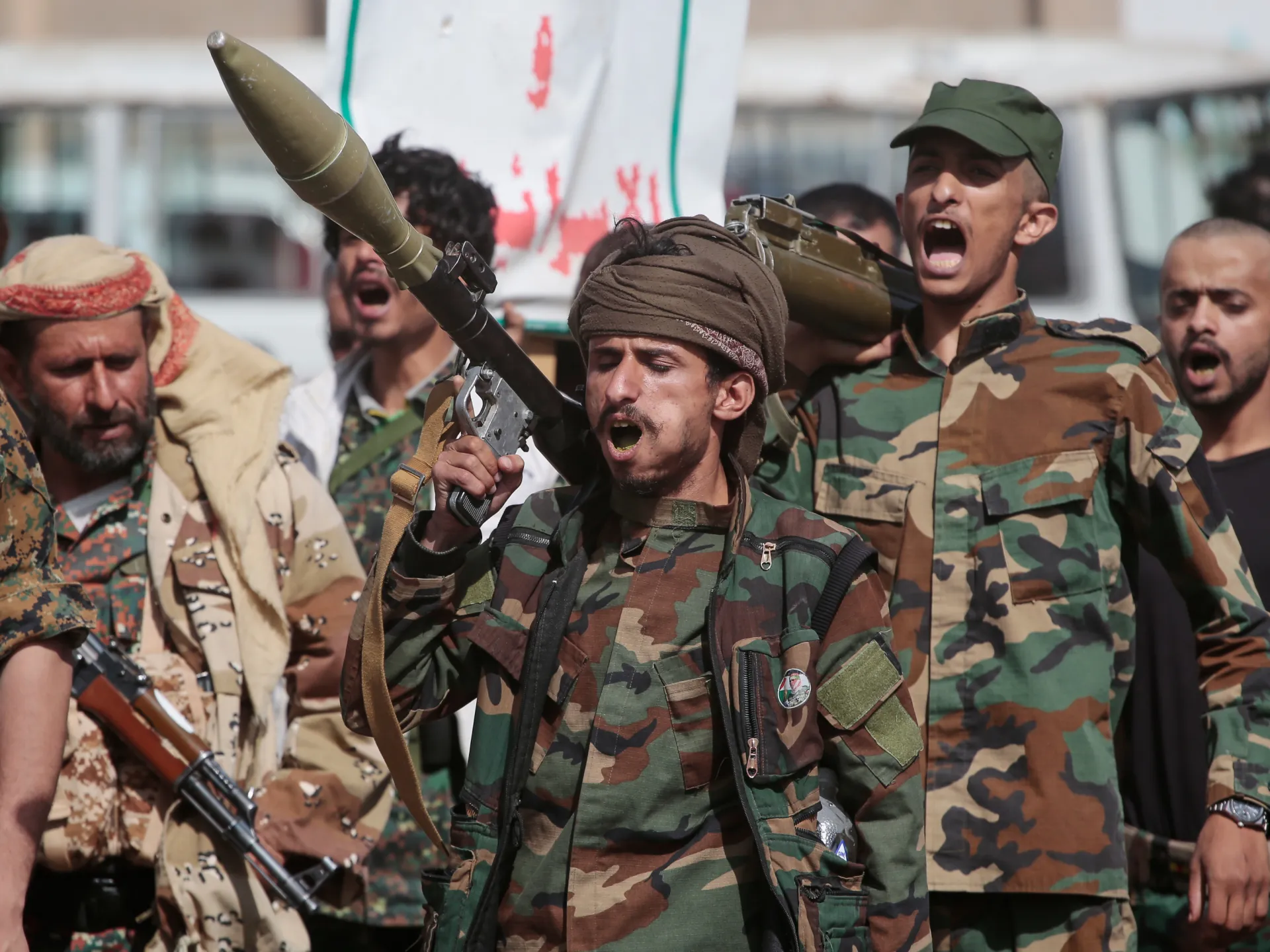
WorldAlmost three years after the Houthis first garnered international attention by attacking ships off Yemen, the rebels have only increased their violent influence in the Middle East. Here's a primer on the group that could push the price of global oil even higher.Yemeni rebels threatening to take control of a key chokepoint in the Middle EastJohn Mazerolle · CBC News · Posted: Sep 11, 2026 2:09 PM EDT | Last Updated: 3 hours agoListen to this articleEstimated 6 minutesThe audio version of this article is generated by AI-based technology. Mispronunciations can occur. We are working with our partners to continually review and improve the results.Yemen's Houthi rebels march during a mobilization campaign in Sanaa, Yemen, on Sept. 10. (STR/The Associated Press)Almost three years after the Houthis garnered international media attention for attacking commercial ships off Yemen, the rebels have only increased their violent influence in the Middle East.Here's a primer on the group that has been a thorn in the side of Israel, Saudi Arabia, the U.S. and international shipping routes, and whose grievances could push the price of global oil even higher. Who are the Houthis?The Houthis are a group on one side of a Yemeni civil war that killed more than 100,000 people before entering a fragile ceasefire in 2022. On the other: the internationally recognized government backed by a Saudi-led coalition.The Houthi movement began in the 1990s, when the Houthi family in far-north Yemen set up a religious revival movement for the Zaydi sect of Shia Islam, which had ruled much of Yemen for about 1,000 years, but whose northern heartland had become impoverished and marginalized since that ended in 1962.The civil war in Yemen began in 2014 when the Houthis rose up against the government and took control of the country's capital, Sanaa.By early 2015, Saudi Arabia, along with other Gulf states and with U.S. support, was launching airstrikes against the Houthis, who are backed by Iran.The proxy war was devastating for the already poor Arab country, with the direct death toll at around 150,000, not including hundreds of thousands more affected by malnutrition and other ripple effects. The United Nations considers it one of the world's worst humanitarian crises.Saudi airstrikes hit Yemen's rebel-held Mokha airport as Houthis capture strategic islandSunni, Shia conflict rooted in dispute over Prophet's successorViolence slowed considerably after a UN-brokered ceasefire in April 2022, but the Houthis trained their fire on Israel and Red Sea shipping routes after Hamas’s Oct. 7, 2023, attack on Israel triggered the war in Gaza. Those attacks on Red Sea shipping sank two vessels out of more than 100 attacked and killed four sailors by the end of 2024. The Houthi attacks have subsided during each Gaza ceasefire, and nearly two months of U.S. airstrikes led to a pause in attacks on American ships.What's been happening lately?The 2022 truce is collapsing. It could mean civil war for Yemen, and is another warning sign for the prices of commodities worldwide.The ceasefire’s fragile calm held until July, when the Houthis resumed their attacks on Saudi Arabia in response to a Saudi airstrike on Sanaa’s international airport. The rebels said the attack prevented the landing of a flight carrying Houthi leaders from Iranian leader Ali Khamenei's funeral.WATCH | A look at the Houthis, from 2024:How the Houthis became major Middle East disruptorsFebruary 7, 2024|Duration 6:51The Houthis already objected to the Saudis’ backing of Yemeni government forces, which the rebels say have been pounding them this week with dozens of airstrikes. The rebels had first attacked several oil facilities and utilities in Saudi Arabia on Tuesday, wounding dozens of people. The Houthi offensive has reached the strategic island of Perim in the Bab al-Mandab Strait, four Yemeni government sources told Reuters Friday. The Houthis for years have sought to exert control over the narrow corridor between Yemen and Africa.The strait is one of the busiest global shipping lanes, on the other side of the Arabian Peninsula from the Strait of Hormuz, which Iran and the U.S. continue to struggle over. Iran said on Wednesday it had attacked 10 ships near the Strait of Hormuz after the U.S. sank five Iranian oil tankers."Disrupting traffic in the Red Sea through Houthi control over the Bab al-Mandab would enable Iran to attempt to drive further concessions from the United States and regional Gulf allies by disrupting energy and shipping flows and imposing economic costs on Gulf countries," the Washington, D.C.-based Institute for the Study of War said in an update on Iran Thursday.Saudi Arabia, the world's largest oil exporter, has relied on the Red Sea route since the Iran conflict effectively closed Hormuz, through which a fifth of global oil used to flow.What are the Houthis' goals?The Houthis view themselves as a coequal partner to Iran rather than as an Iranian proxy, the Institute for the Study of War says. The Houthis have followed their own path when it suits them, ultimately hoping to control all of Yemen under a strict Shia theocracy."Both Iran and the Houthis aim to decrease U.S. influence in the region to impose their own vision of a regional order," the ISW researchers write. "Iran has long viewed the Houthis as a partner that can help implement Iran’s vision, even though the Houthis sometimes have divergent aims."What are the economic repercussions?The cost of shipping oil in the largest tankers hit record highs this week due to the wave of attacks, while global oil prices were on track to end the week above $100 US a barrel for the first time since July.The Suez Canal shipping route is one of the world's most important routes for global seaborne commodity shipments, particularly crude oil and fuel from the Gulf bound for the Mediterranean, as well as commodities bound for Asia, including Russian oil.Renewed U.S.-Iran exchanges send oil price back over $100 US for first time in several weeksIran-backed Houthis attack Saudi oil facilities, injuring dozensTwelve to 15 per cent of the world's trade passes through the Red Sea annually.Europe-bound ships that don't use the Suez Canal must take the much longer route around Africa.What might happen next?Saudi Crown Prince Mohammed bin Salman sought assistance from U.S. President Donald Trump on Thursday to help fight the Houthis, two sources familiar with the matter told Reuters on Friday, as the Houthis stepped up their threat to the Red Sea.Trump held at least two phone conversations with the Saudi leader on Thursday, sources said. In the end, Washington told Riyadh that it was not willing to take direct military action for now but would help with intelligence sharing and targeting, the two sources said.Iran may hope to close the Bab al-Mandab Strait to put more pressure on the U.S., but the Houthis may decide on a less severe approach to avoid retaliation, the ISW reports.A Houthi military spokesperson said on Telegram that maritime navigation remained safe for all shipping except Saudi vessels subject to a previously announced ban.With files from The Associated Press and Reuters
houthi explainer | CBC News
Almost three years after the Houthis first garnered international attention by attacking ships off Yemen, the rebels have only increased their violent influence in the Middle East. Here's a primer on the group that could push the price of global oil even higher.
1,160 words~5 min read