Whitehall has scattered science, AI, and digital government across a thicket of competing ministerial portfolios
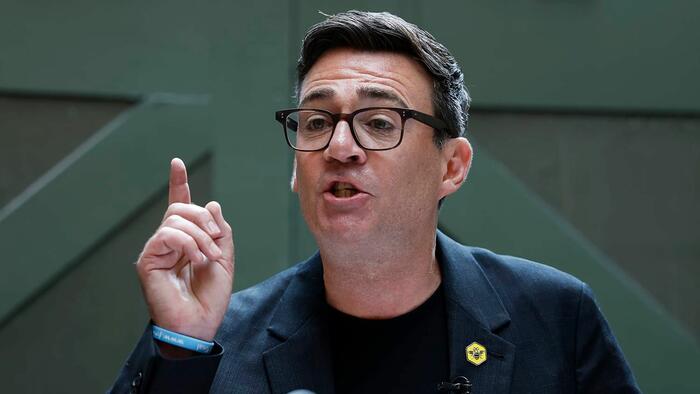
OPINION "Where do we put digital government? You know, all those billions we spend on consultants and legacy systems?""Oh, that! Put it with sports and tourism. And something we're calling 'place'."It might be a fictional conversation between a SpAd* and a mandarin**, but in reality, the outcome is more or less the same. With the arrival of Andy Burnham as UK prime minister came a shake-up of responsibilities in Whitehall, leaving responsibility for science, technology, and government tech scattered across several departments and eliminating the dedicated technology ministerial role.
Shortly after the changes were announced in July, Dame Chi Onwurah, chair of the House of Commons Science, Innovation and Technology Committee, wrote to the government asking for an explanation. The government had yet to confirm what the new roles and responsibilities meant in practice, and there was no news on ministerial portfolios, she said.
Now a joint letter from the ministers leading three departments attempts to answer Onwurah's questions. It brings clarity only by laying bare the government's confused thinking and lack of credibility.Take space, for example. The letter says BIST aims to "support companies from breakthrough ideas and research excellence through to commercialization, scaling and exporting, and to fortify the UK's global leadership in this space." When it comes to literal space, however, responsibility falls to Baroness Lloyd of Effra.A law and history graduate, Lloyd worked in Tony Blair's policy unit before becoming his deputy chief of staff. She will fit responsibility for the UK's public and private space sectors between her cyber, regulatory reform, corporate governance, and Insolvency Service duties. She will work across two departments: the Department for Business, Innovation, Science and Trade (BIST) and the Department for Digital, Culture, Media and Sport (DCMS).We're sure the role will afford plenty of time to help oversee the £7.8 billion of cross-government spending brought together under the new space strategy intended to cover orbital collision warnings, low Earth orbit communications, military intelligence, launch capabilities, and space science.The question is, where did technology go? Isn't space related to technology? Technology was in the Department for Science, Innovation and Technology. But that T is now Trade. The D that stood for Department in DSIT is gone; in DCMS, it stands for Digital. (The DWP and DHSC still keep their D for Department, for those wishing to understand that no rules apply here.)But what is digital? It underpins everything. "The technologies shaping our economy are also transforming how people create, communicate, learn, participate and access public services. By expanding DCMS's remit to include responsibility for tech sector oversight and digital, including: digital skills, digital infrastructure and connectivity, cyber security, and the delivery of a modern digital government, we are enabling DCMS to lead the transformation of public services while strengthening and growing the digital, cyber and information foundations on which our economy and society depend."OK, but why is the technology sector separated from science? If digital underpins everything, then it is also worryingly vague. Is it really closer to culture and media? A photographer might want to use Photoshop, but they don't need to know how the software works.The development of computer hardware and software has gone hand in hand with wider research. The World Wide Web and DeepMind both came out of university projects, not to mention one of the early modern computers, the Manchester Mark 1, developed at the University of Manchester with input from WWII code breaker Alan Turing.