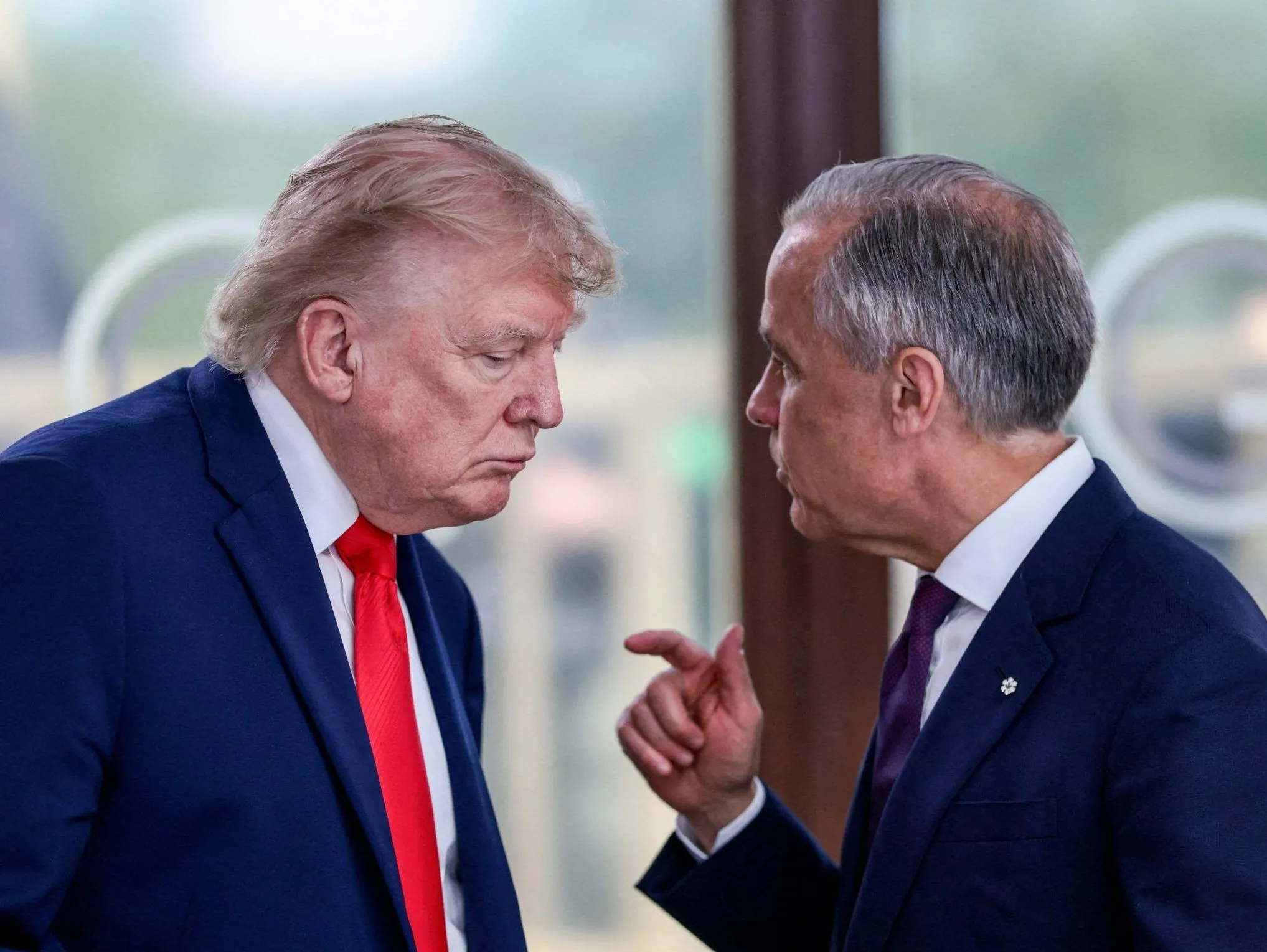
Skip to Content News Archives Economy Energy Oil & Gas Renewables Electric Vehicles Mining Commodities Agriculture Real Estate Mortgages Mortgage Rates Finance Banking Insurance Fintech Cryptocurrency Work Wealth Smart Money Wealth Management Investor Personal Finance Family Finance Retirement Taxes High Net Worth FP Comment Executive Women Puzzmo Newsletters Financial Times Business Essentials More Innovation Information Technology FP500 Podcasts Small Business Lives Told Tails Told Shopping Financial Post Store Obituaries Place a Notice Advertising Advertising With Us Advertising Solutions Postmedia Ad Manager Sponsorship Requests Classifieds Place a Classifieds ad Working Profile Settings My Subscriptions My Offers Newsletters Customer Service FAQ News Economy Energy Mining Real Estate Finance Work Wealth Investor FP Comment Executive Women Puzzmo Newsletters Financial Times Business Essentials HomeCommoditiesEconomy‘We’re just a victim of it’: Nova Scotia businesses brace for prolonged trade warTariffs are disrupting a manufacturing ecosystem built around the free flow of materials across the borderPrime Minister Mark Carney, left, and U.S. President Donald Trump are pictured together in this file photo. Trade tensions between Canada and the United States continue to escalate. Photo by Files/PostmediaFor a small Nova Scotia manufacturer like Ace Machining Ltd., the Canada-U.S. trade war is already affecting decisions that once seemed straightforward, including where to buy the equipment needed to keep the business running.Subscribe now to read the latest news in your city and across Canada.Exclusive articles from Barbara Shecter, Joe O'Connor, Gabriel Friedman, and others.Daily content from Financial Times, the world's leading global business publication.Unlimited online access to read articles from Financial Post, National Post and 15 news sites across Canada with one account.National Post ePaper, an electronic replica of the print edition to view on any device, share and comment on.Daily puzzles, including the New York Times Crossword.Subscribe now to read the latest news in your city and across Canada.Exclusive articles from Barbara Shecter, Joe O'Connor, Gabriel Friedman and others.Daily content from Financial Times, the world's leading global business publication.Unlimited online access to read articles from Financial Post, National Post and 15 news sites across Canada with one account.National Post ePaper, an electronic replica of the print edition to view on any device, share and comment on.Daily puzzles, including the New York Times Crossword.Create an account or sign in to continue with your reading experience.Access articles from across Canada with one account.Share your thoughts and join the conversation in the comments.Enjoy additional articles per month.Get email updates from your favourite authors.Create an account or sign in to continue with your reading experience.Access articles from across Canada with one accountShare your thoughts and join the conversation in the commentsEnjoy additional articles per monthGet email updates from your favourite authorsSign In or Create an AccountorWhen Ace president Ron Wallace needed a new piece of equipment for his Dartmouth, N.S., shop, he knew for certain it wouldn’t be coming from the United States.“Trade wars have real consequences, affecting the jobs and livelihoods of hard-working people on both sides of the border,” Wallace said during a recent federal funding announcement. “When the first round of U.S. tariffs was introduced, we decided to remove American suppliers from consideration during our equipment procurement process.”Ace, which manufactures parts and products for clients in industries including defence and marine sectors, received $442,000 in federal support to purchase an automated computer numerical control milling machine.The funding was part of the Regional Tariff Response Initiative, the $1.5-billion program designed to help Canadian businesses deal with the effects of U.S. trade policy. Ace Machining Ltd. recently acquired the Matsuura MX420, an automated CNC milling machine. Ace Machining received over $400,000 to purchase and install the new machine. Photo by Government of CanadaThe support comes as U.S. President Donald Trump’s tariffs and erratic economic policies become increasingly difficult for manufacturers to navigate.The trade dispute has already affected Wallace’s business, with steel and aluminum prices becoming increasingly volatile over the past year.Multiple steel and aluminum products are now subject to a 50 per cent tariff, up from the current 25 per cent rate. The affected products include steel rods, bars and sheets, as well as prefabricated goods such as bridges, towers, scaffolding, and door and window frames.“The trade policies that are being rolled out, it just doesn’t make sense,” Wallace said.“I can pack all my equipment out and move down to the States and open up shop. They’ll let me do that, but my staff can’t go. They have the same issues in America that we do. There are no machinists. None of these highly-skilled tradesmen are available to hire.”For Wallace, the problem goes beyond the price of any one shipment. His concern is that tariffs are disrupting a manufacturing ecosystem built around the free flow of materials across the border.He pointed to the North American automotive industry as an example of the interdependence that tariffs can disrupt.“An alternator, for example, is made here in Canada and then it moves to America, gets put on an engine. The engine comes back and Canada puts it in the car. There’s a partnership,” Wallace said.“In our case, in Canada, we get aluminum. It goes to the States, goes through a rolling mill and is turned into shapes and then brought back to Canada.“There’s always been this back and forth between Canada and the U.S. and has gone on for 100 years and we have a good relationship. As a whole, we work well together.” Nova Scotia Premier Tim Houston listens to a question in the chamber at Province House in Halifax during the start of the fall session on Tuesday. Photo by Tim KrochakBut businesses like his, Wallace said, are largely powerless over trade policies negotiated by governments.“The policy that gets negotiated in Washington or Ottawa, we’re just a victim of it,” he said.“It will work out at some point; someday there’ll be a trade deal.”In the meantime, uncertainty remains.On Tuesday, the Canadian government imposed reciprocal tariffs in response to Trump, who placed new 50 per cent tariffs in August on nearly $28-billion worth of Canadian products.Nova Scotia Premier Tim Houston says his government is listening to local businesses like Wallace’s affected by the trade dispute to determine where and how the province can help.“We were just having discussions with them about direct impacts on their supply chain, on their customer base, and what the impact would then be on their employment base,” Houston told reporters following the opening day of the fall session of the Nova Scotia legislature.For some owners, Houston said, the uncertainty is about more than balance sheets.“It would be hard to properly articulate how stressful this is for business owners,” he said.“Some of these are small, medium-sized businesses that have been in the family for generations. This is not of their doing, it’s something happening to them. We just need to make sure that we’re listening carefully. We need to be mindful of that.”Canada’s retaliatory tariffs on American goods include a 25 per cent tariff on softwood, including pine, fir and spruce, and a 50 per cent tariff on a variety of American dairy products such as milk and cream.The Trump administration retaliated by banning certain Canadian products, including motorcycles, some dairy products and a wide range of alcoholic beverages. It also imposed a new 50 per cent tariff on Canadian products such as golf carts, desks and mattresses.Privateers Harley-Davidson, a Halifax motorcycle dealership that sells new and used Harley-Davidson motorcycles, parts and clothing, directed media inquiries to its owners, Hickman Automotive Group. An email message to Hickman Automotive was not returned.Quebec-based Agropur, Canada’s largest dairy co-operative, has 2,700 members based in Quebec, New Brunswick and Nova Scotia. It is one of the leading suppliers of dairy products to the retail, food-service and industrial sectors in North America. Agropur, with 2,700 members based in Quebec, New Brunswick and Nova Scotia, is one of the leading suppliers of dairy products in the retail, food-service and industrial sectors in North America. Photo by Glenn MacDonaldThe co-operative generated $8.9 billion in revenues in 2025 and processed 6.7 billion litres of milk.Agropur employs more than 400 people at a plant in Bedford, N.S., and an ice cream and frozen novelties plant in Truro. In April, the company announced it was expanding its Bedford facility into a major dairy ingredient processing hub.But Agropur’s footprint extends well beyond Canada. Eleven of its 29 plants are located in the U.S., where the company first entered the market in 2002 and has since grown to become the fifth-largest producer of cheese and dairy ingredients.In April, Agropur spokesperson Guillaume Berube said the company processes its products in Canada for the domestic market and does not export to the U.S.“There’s very limited exportation between both countries, so the tariffs are not affecting us significantly,” Berube said at the time.Less than five months later, with the two countries embroiled in a trade war, the tenor has shifted.“We are currently assessing the potential impacts of tariffs and retaliatory tariffs on our operations, investment projects, and supply chain,” Berube said in an email.“At this stage, we have no further comments to provide.”For Houston, the biggest concern may be the duration of the standoff.“I believe there is a risk that the situation could be there as long as Donald Trump is there,” Houston said.The province, he added, will do what it can to help, but government support has limits.“The government will do what it can, but the government has limitations because the government is only so big. There’s only so many taxpayers, and the economy is very large,” he said.“I am worried about a significant impact.” Production is seen at Nixon Honey Farm east of Innisfail, Alta. The business is just one of many affected by the increase in tariffs with the U.S. Photo by Nixon HenryAt Ace, Wallace is also trying to prepare his 54 employees for an uncertain economic environment. He has told them to exercise caution when making big-ticket purchases during the trade dispute.“I have conversations with my staff and I tell them nobody knows where the tariffs are going to go,” Wallace said.“If they’re thinking of making big purchases, I recommend them to hold on to their money in case things get really bad. If you’re thinking about that car, don’t.”Wallace has also tried to reassure his employees that he intends to do everything he can to protect their jobs.“I also told my staff that I’ll do my best and will work to make sure we all have jobs when this is over.” Join the Conversation This website uses cookies to personalize your content (including ads), and allows us to analyze our traffic. Read more about cookies here. By continuing to use our site, you agree to our Terms of Use and Privacy Policy.
‘We’re just a victim of it’: Nova Scotia businesses brace for prolonged trade war
U.S. President Donald Trump’s tariffs, erratic economic policies become increasingly difficult for small Canadian manufacturers to navigate
1,772 words~8 min read