The European Central Bank just raised interest rates again, and it’s already hinting that it might not be done. After the ECB hiked its deposit facility rate by 25 basis points to 2.50% on September 10, financial markets began pricing in meaningful odds that another increase could land at the October 28-29 meeting.
The culprit, as usual, is inflation that refuses to cooperate. Rising energy prices, fueled by ongoing conflict in the Middle East, have kept price growth stubbornly above the ECB’s 2% target. Oil prices recently pushed past $100 per barrel, and the central bank’s own revised projections now see inflation averaging 3.0% in 2026, 2.5% in 2027, and 2.1% in 2028.
What the ECB actually said
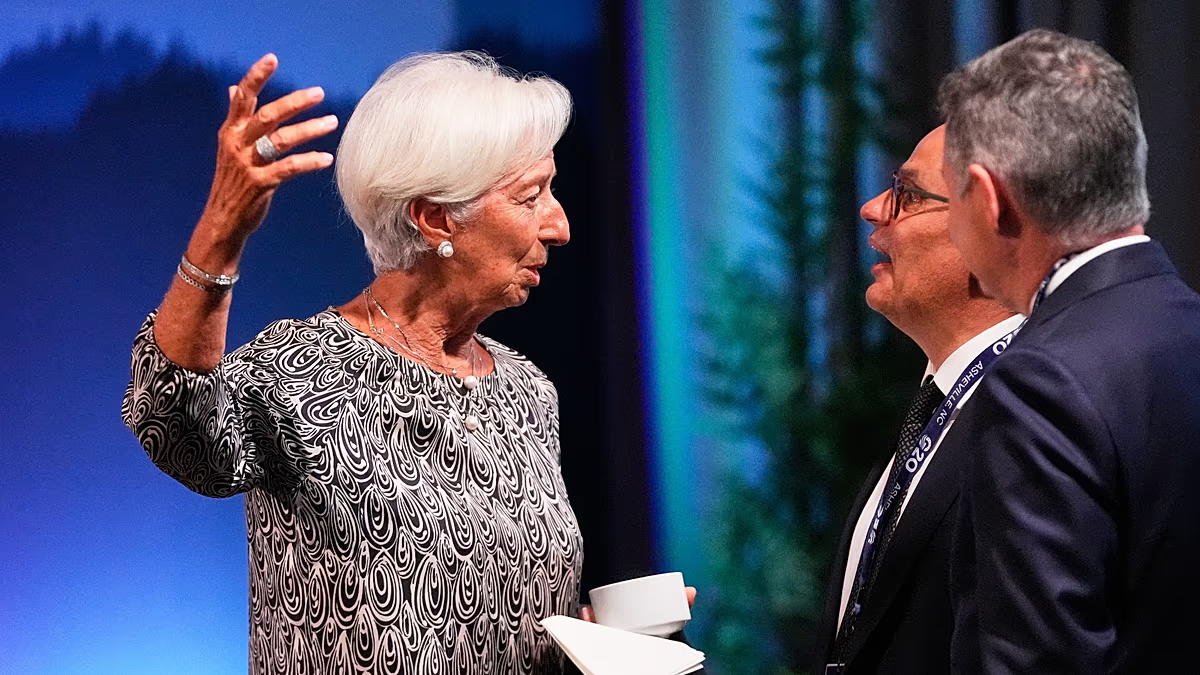
The September meeting’s post-decision statement struck a notably hawkish tone. President Christine Lagarde leaned heavily on the phrase “data-dependent” during her press conference, indicating the ECB will let incoming economic numbers dictate its next move rather than committing to a fixed path.
The revised inflation forecasts tell the story more clearly. By bumping up its projections for both 2027 and 2028, the ECB signaled that it views current inflationary pressures as more persistent than previously assumed. The new rate of 2.50%, effective September 16, marks the latest step in a tightening cycle that has reshaped the eurozone’s monetary landscape.