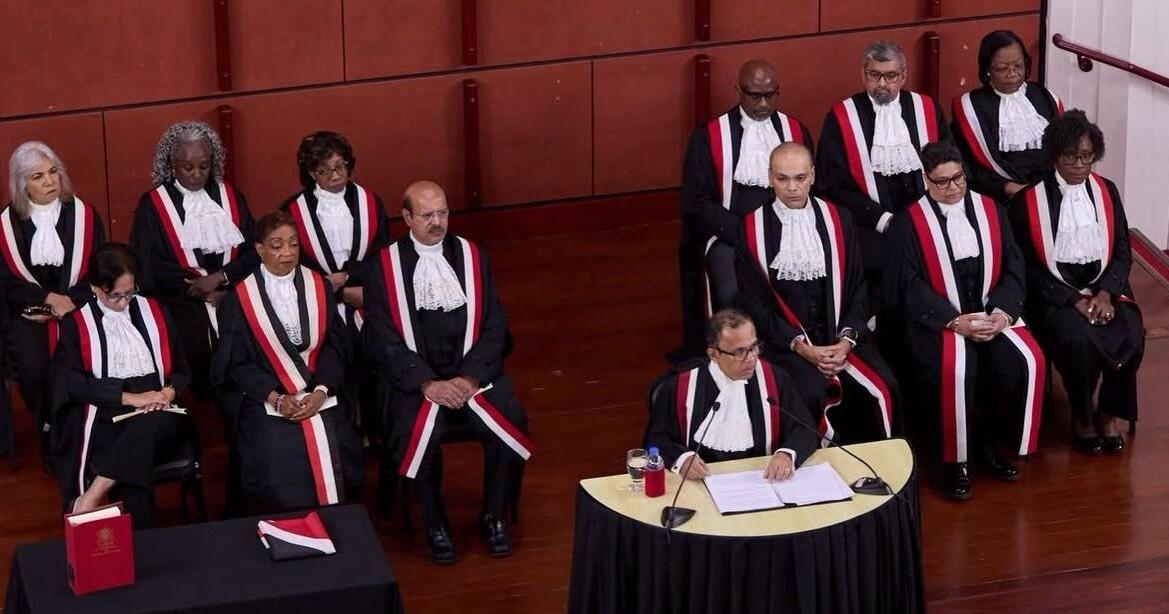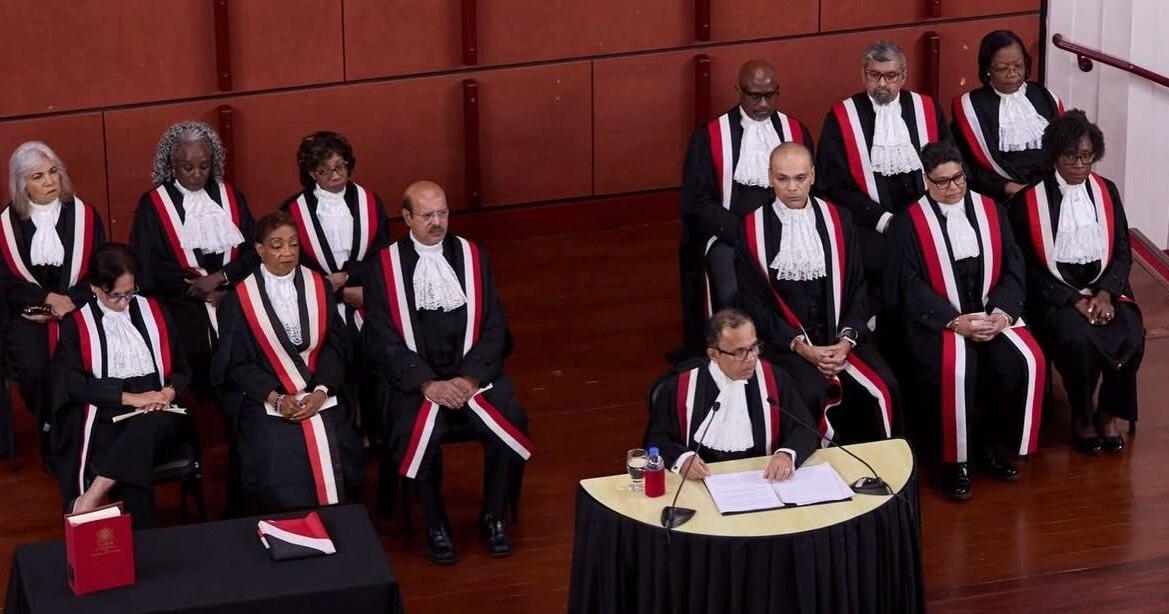
GOVERNMENT is committed to unequivocally supporting the Judiciary as it pursues faster and more accessible justice, says Prime Minister Kamla Persad-Bissessar.She further outlined a series of legislative and administrative reforms that have been achieved since her administration took office in April 2025.In a message commemorating the opening of the 2026-2027 law term, Persad-Bissessar pointed to the digitisation of the country’s laws, the establishment of a dedicated Civil Division, reforms to the bail system, modernised sentencing and rehabilitation measures, and the reopening of magistrates’ courts as evidence of her Government’s drive to transform the justice system.
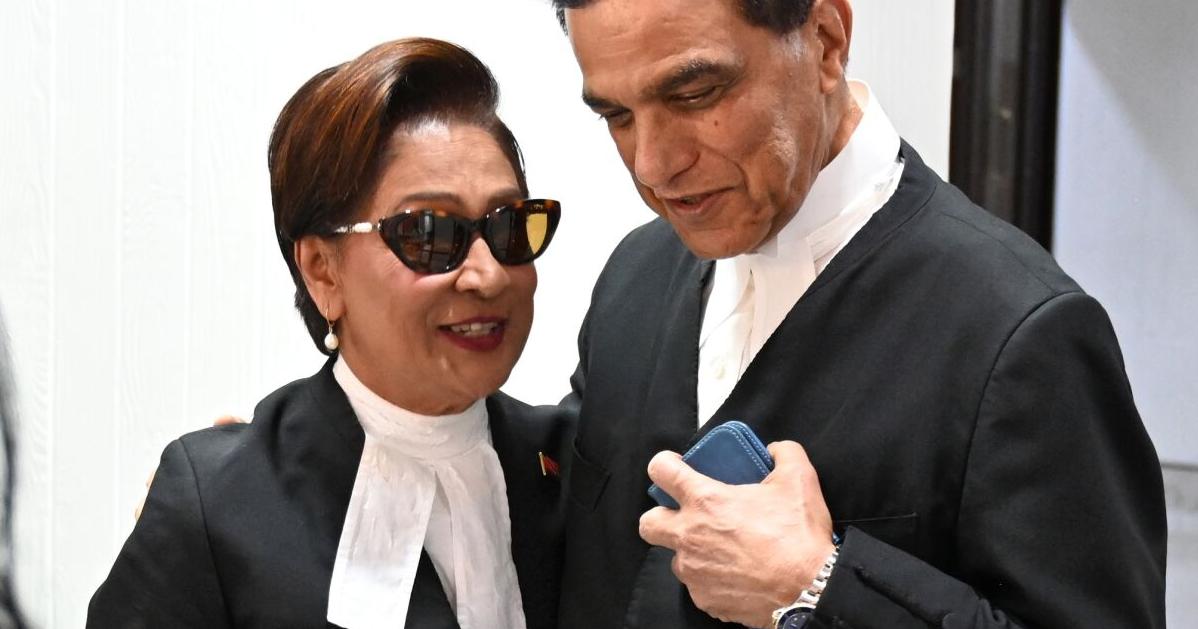
‘Government support’: Prime Minister Kamla Persad-Bissessar stands with Chief Justice Ronnie Boodoosingh, right, and Attorney General John Jeremie outside the Hall of Justice, Port of Spain, following yesterday’s ceremonial opening of the new law term. —Photo: CURTIS CHASE
She said the Executive was prepared to provide the Judiciary with the resources necessary to improve efficiency and ensure citizens, regardless of where they live, have meaningful access to justice.“I wish to state unequivocally that the Executive stands ready to support initiatives that advance the delivery of swift, efficient and accessible justice to every citizen of Trinidad and Tobago,” she stated.Persad-Bissessar, who was present at the ceremony for the opening of the law term in Port of Spain, said she listened closely to the address delivered by Chief Justice Ronnie Boodoosingh and the vision he outlined for the administration and delivery of justice. She stressed that justice must remain within reach of ordinary citizens.“Justice must never be distant from the people. It must never be beyond the reach of the ordinary citizen. It must be accessible, efficient and fair, and our citizens must have confidence that the institutions established to protect their rights will work for them,” she said.Meaningful change Persad-Bissessar said when her administration assumed office in April 2025, it recognised that several systems had become stagnant, outdated, or were not operating as effectively as citizens deserved.“We did not waste time. We got to work,” she said.She said the Government subsequently engaged stakeholders across the justice system to identify obstacles to efficiency and improve service delivery, while embarking upon what she described as an ambitious programme to modernise Legal Affairs and reform the civil and criminal justice systems.“And in a remarkably short period, we have begun delivering meaningful change,” she said.Among the accomplishments highlighted was legislation facilitating the digitisation of the laws of Trinidad and Tobago, allowing citizens to eventually access the country’s laws through a single online portal.Persad-Bissessar described the initiative as going far beyond technological advancement.“This is more than technological progress. It is the democratisation of the law,” she said.She added that greater access to the country’s laws would help close the distance between citizens and the justice system while strengthening public confidence and respect for the rule of law.The Prime Minister also highlighted the passage of the Civil Division Act, No 5 of 2026, saying the legislation responded to long-standing calls from the Judiciary for the Executive to provide the legislative framework required to restructure civil justice through a dedicated Civil Division.Persad-Bissessar said the legislation was designed to address systemic weaknesses, including staffing and administrative challenges, while tackling delays and backlogs, establishing specialised subdivisions and improving operational efficiency.Bail Bill Turning to crime and the bail system, Persad-Bissessar pointed to the Bail (Amendment) Act 2026, No 10 of 2026, which introduced Bail Source Hearings.She said the measure empowers the courts to determine whether cash or real property being used to post or secure bail was derived from legitimate sources. “The justice system must never become an avenue through which the proceeds of criminal activity can be legitimised,” she said.Persad-Bissessar said increased transparency and judicial oversight of the bail process would support the wider fight against organised crime, money laundering and other serious criminal activity.The PM also noted the amendments to the Probation of Offenders Act, saying her administration had modernised legislation dating back to 1947 and expanded the Judiciary’s ability to utilise split sentencing.Under the reforms, periods of incarceration can be combined with supervised probation in the community, including electronic monitoring, curfews, community service and vocational training.Persad-Bissessar said the approach sought to balance accountability with rehabilitation and reintegration.“Justice must protect society and punish wrongdoing, but a modern justice system must also recognise that where rehabilitation is possible, people should have a meaningful opportunity to rebuild their lives and become productive members of society,” she said.She said these measures represented only part of the Government’s legislative programme and pledged continued resources for the Judiciary.Access to justice Persad-Bissessar also welcomed the Judiciary’s decision to reopen magistrates’ courts throughout Trinidad and Tobago, saying her Government had provided the necessary resources to facilitate the move. She said that access to justice should not be determined by geography.“A citizen in Mayaro deserves the same access to justice and essential court services as a citizen in Port of Spain, San Fernando, Tobago, or anywhere else in our Republic,” she said.Persad-Bissessar specifically pointed to the difficulties previously faced by citizens in Mayaro who required the services of probation officers.She said people could be required to travel to San Fernando because probation officers no longer had access to designated working spaces within magistrates’ courts in their respective jurisdictions.“That was inefficient. It was burdensome. And it needed to change,” she said.Following meetings between the Probation Division and the Judiciary, Persad-Bissessar said the Government had ensured probation officers would once again be able to operate from courts within their respective areas as magistrates’ courts reopen.“That is what meaningful reform is about—not simply changing laws on paper, but improving the everyday experience of citizens who depend upon the State,” she said.