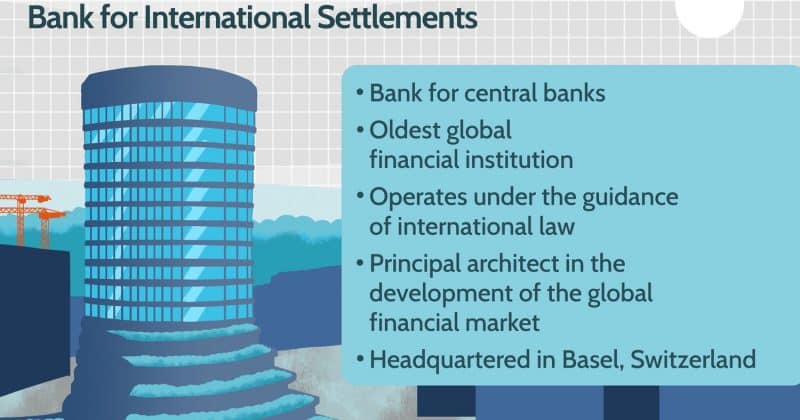
1 hr ago2 min readBank for International Settlements (BIS) chief stopped short of predicting an AI bubble. BIS Basel, Switzerland headquarters. (BIS/Press)SummaryBank for International Settlements chief Pablo Hernandez warned that the rapid growth of debt-financed artificial intelligence investment could threaten financial stability if returns fall short of expectations.The five largest technology companies plan to spend more than $1 trillion on AI projects in 2025 and 2026, while global AI investment could reach $3 trillion to $4 trillion by 2030.Hernandez said a decline in concentrated AI stocks could curb household spending and spread globally, though he emphasized that AI has demonstrated potential to increase productivity.The rapid rise in artificial intelligence (AI) technology investment could pose financial-stability risks if companies fail to generate the returns investors expect, Pablo Hernandez, the head of the Bank for International Settlements (BIS) said on Thursday.Hernandez's said the largest AI companies’ capital spending is increasingly outpacing their cash flows and being financed through debt and private credit, as part of an investment arms race between major firms. He drew an historical comparison to canal mania of the 1830s, the British railway mania of the 1840s, the electrification boom of the 1920s and the dotcom surge of the late 1990s, all of which were based on important technological breakthroughs."All drew in more capital than eventual returns could justify. In each of these cases, the eventual correction that followed had economy-wide implications," Hernandez said.Chipmakers, hyperscalers and AI firms are all linked through financing arrangements that can be opaque and difficult to value, leaving the financial system exposed if expectations of future profits fall short, he added. A reversal in highly concentrated AI stocks could affect household spending, while the weight of U.S. equities in global markets could transmit a correction beyond the U.S.Hernandez said five largest big tech companies alone plan to invest over a trillion dollars on AI-related projects between 2025 and 2026,. with expectations that global AI-related investment will grow from roughly $500 billion today to between $3 trillion and $4 trillion by 2030. Bridgewater Associates recently reported that Microsoft MSFT$488.09, Alphabet GOOG$326.99, Meta META$656.60 and Amazon (AMZ), which have a combined market cap of approximately $12 trillion, expect to spend $650 billion together on AI infrastructure this year alone.Concerns about an AI bubble have been circulating this year, such asCitrini Research's bearish 2028 scenario that unsettled technology stocks in February.“With U.S. stocks accounting for a large share of global equity markets, the effects could propagate globally. In some jurisdictions, windfall gains from rising AI-related exports may also contribute to domestic asset bubbles, further exacerbating financial stability concerns,” he said.“I do not say that this is where the AI boom must lead.But the scale and speed of the current investment boom, and the weight of expected commercial returns, do warrant some caution.”The BIS chief said AI’s promise is real, including evidence of productivity gains in coding, consulting and professional writing,but added that the eventual economic effect will depend on how widely the benefits are shared and whether policymakers invest in skills, infrastructure and competition.AI does not change the mandate of central banks, Hernandez said, although it could make the global economy more difficult to interpret and monitor.Related Stocks12345678910
BIS chief warns AI capex arms race relies on opaque debt, posing systemic risks
Pablo Hernandez cited historical railway and dot-com bubbles to caution that spending driven by hype over actual profits risks broad economic corrections.
TL;DRAI
$1 trillion AI capex (top five firms, 2025-26) relies on opaque debt, warns BIS chief, risking financial stability if expected returns underperform. Tech leaders face rising ROI pressure; a correction could cascade globally, impacting equity valuations and capex allocation.
531 words~2 min read