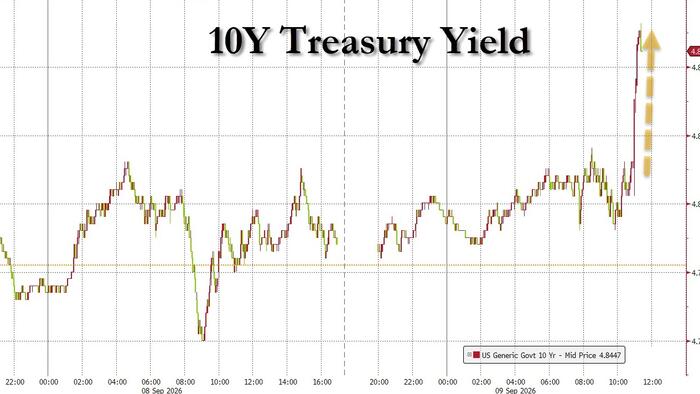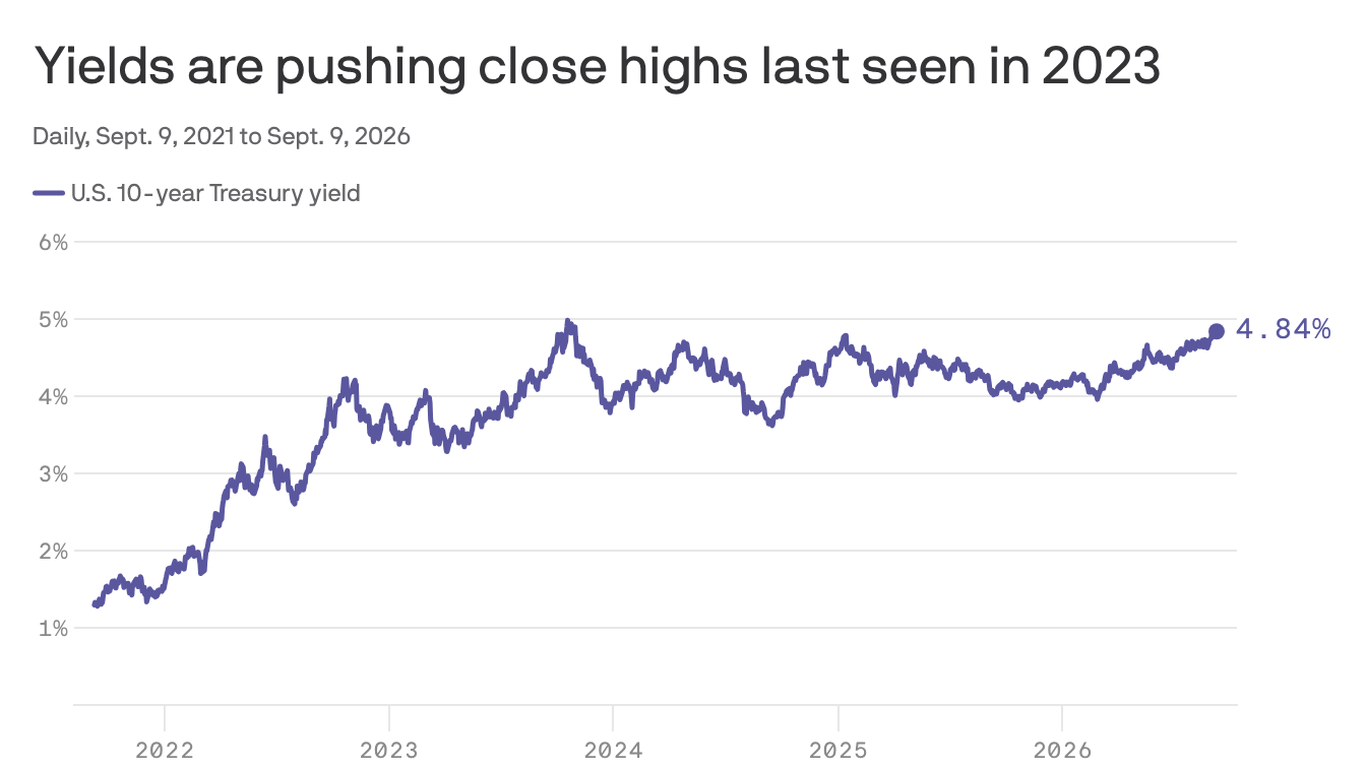
Data: FactSet; Chart: AxiosThe Treasury Department failed to cow the bond market Wednesday with its amped-up buyback announcement, as rates still rose.Why it matters: The reaction suggests that Treasury Secretary Scott Bessent's unusual showdown with the markets could itself add to upward pressure on interest rates — precisely the opposite of what most think he's trying to achieve.Driving the news: The Treasury announced on Wednesday that it would buy back $6 billion — triple what it initially planned — in long-term bonds per operation this quarter, with one of those operations set for Thursday.While the stated reason for the buyback boost was to improve trading conditions in the bond market, traders saw it as an attempt by the Trump administration to try to push long-term bond yields down.So instead of bonds rallying on the news, which would have pushed down yields, the price of U.S. government debt tumbled. (Prices and yields move in opposite directions.) By the numbers: The yield on the 10-year Treasury note — a benchmark for mortgages and business and consumer loans — briefly spiked to 4.85%, the highest since October 2023, before settling at 4.84% Wednesday.Data: FactSet; Chart: AxiosZoom out: When policymakers try to intervene in big markets, they have a very specific modus operandi: Go big or go home. With some $32 trillion or so of Treasury securities being publicly traded, $6 billion seemed unimpressive."If Treasury really wants to make a difference," wrote Ira Jersey, rates strategist at Bloomberg Intelligence, "they'll need to really shock and awe the next size announcement, maybe $10 billion or more per operation."One of Bessent's predecessors at the Treasury, former Goldman Sachs CEO Hank Paulson, tried something similar when asking Congress for unlimited authority to support the troubled mortgage giants Fannie Mae and Freddie Mac during the 2008 financial crisis. "If you have got a bazooka and people know you have got it, you may not have to take it out. You are not likely to take it out," Paulson said at that time.Basically, the idea is that if you can make announcements of huge sums of money or, even better, unspecified amounts seemingly backed by either credit lines from the government or the power of the central bank to print as much money as it needs, investors are dissuaded from pushing in the opposite direction. Reality check: Bessent doesn't have a bazooka.In other words, the Treasury doesn't have unlimited amounts of money to spend, and the markets know it.The Treasury has to fund any bond buying it is doing either by drawing down what is effectively Uncle Sam's bank account, the Treasury General Account, or by borrowing the money by selling shorter-term Treasury securities.Both funding plans have limits. One could easily start to burn through some of the money in the U.S. government's bank account — not a great look for a Treasury secretary. The other could end up boosting levels of short-term debt that are currently trading. And increasing the supply — all else being equal — would raise interest rates, first on short-term debt, and eventually on longer-term debt again.What they're saying: "We view these operations as a mere 'Band-Aid' solution that fails to address the much deeper, structural deficit wound," wrote Guneet Dhingra, head of U.S. rates strategy at BNP Paribas. "Perhaps cutting the budget deficit might help more than tactics such as these," wrote Adam Josephson at Sakonnet Research.After the $6 billion announcement disappointed investors, Steven Zeng, a strategist at Deutsche Bank told Bloomberg, "It's like Treasury created this monster that it now has to keep feeding."
Treasury buyback fails to shock and awe the bond market
Scott Bessent doesn't have a bazooka, and investors know it.
592 words~3 min read