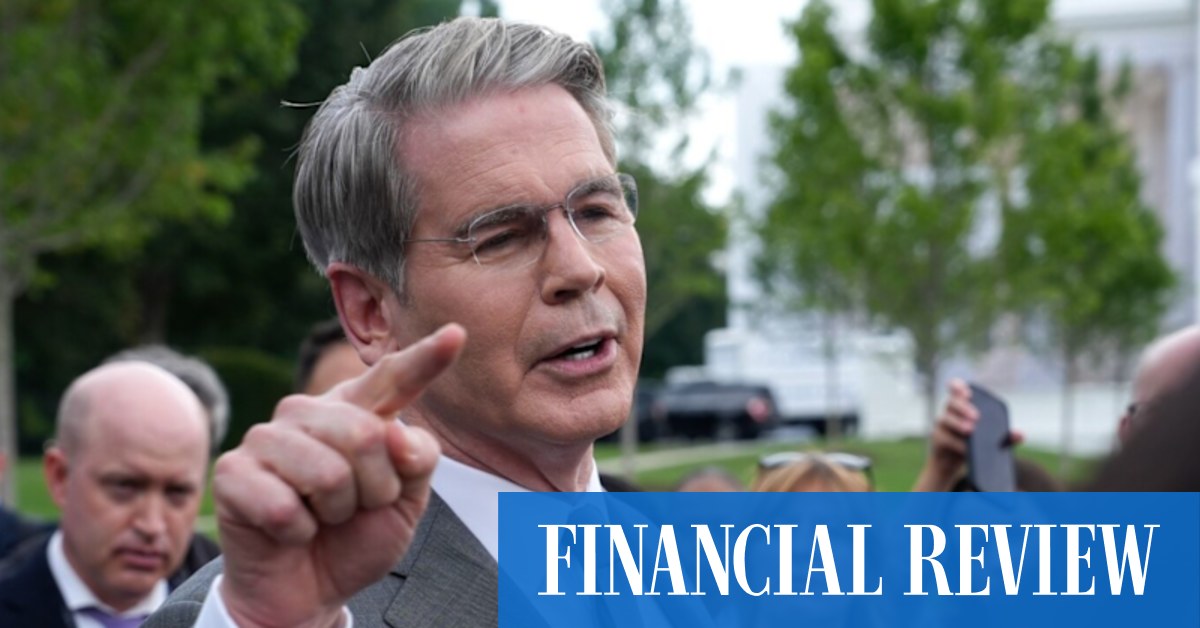
U.S. Treasury Secretary Scott Bessent’s efforts to ease pressure in the government bond market have so far delivered only limited relief, with long-term yields climbing again after an initial decline triggered by increased Treasury purchases, AP reported.The Treasury has expanded its buyback operations in an attempt to improve liquidity and support longer-dated government bonds. However, investors have quickly refocused on the broader forces driving yields higher, including the growing U.S. fiscal deficit, heavy government borrowing and persistent inflation concerns. CNBC reported that the initial market response to the Treasury’s intervention faded as yields rebounded.Bond yields reverse early gainsThe yield on the benchmark 10-year Treasury note moved back toward 4.7%, while the 30-year yield also regained ground after initially falling following the Treasury’s announcement. The reversal suggests that investors remain unconvinced that bond purchases alone can address the factors pushing long-term borrowing costs higher.According to the Associated Press, the Treasury has increased the size of its buyback operations to as much as $4 billion each. While the move represents a significant expansion from earlier operations, analysts say the purchases remain small relative to the enormous size of the U.S. government bond market.The U.S. government is expected to issue hundreds of billions of dollars of debt during the current quarter, adding to the supply that investors must absorb.Read more: US Treasury's Bessent says upsized bond buybacks could increase furtherFiscal concerns remain the bigger problemThe renewed pressure on Treasury yields reflects concerns that go well beyond market liquidity. The U.S. national debt has now crossed the $40 trillion mark, while the federal budget deficit is projected to exceed $2 trillion.Higher borrowing requirements can put upward pressure on bond yields as the government competes with other borrowers for capital. The Associated Press also highlighted growing borrowing needs from technology companies investing heavily in artificial-intelligence infrastructure, creating another source of demand for capital.The combination of large government financing needs and rising private-sector investment could keep upward pressure on long-term interest rates even if the Treasury continues to intervene in the market.Inflation and the Federal Reserve add uncertaintyInflation is another major obstacle. Higher oil prices linked to geopolitical tensions have complicated the outlook for consumer prices, making investors less confident that inflation will quickly return to the Federal Reserve’s 2% target.The market is also watching the Federal Reserve closely as Kevin Warsh begins his tenure as chair. Investors are looking for clearer signals on the future path of monetary policy, particularly whether the central bank will be willing to reduce interest rates while inflation remains above target.The Associated Press noted that uncertainty over the Fed’s policy direction has added to volatility in the Treasury market. Investors are also assessing whether Treasury efforts to influence longer-term borrowing costs could clash with the central bank’s preference for market-driven interest rates.What can Bessent do next?With bond-buyback operations yet to produce a lasting decline in yields, the Treasury could consider additional measures aimed at improving the structure and liquidity of the government bond market. Such steps could include adjusting the maturity mix of new debt issuance, conducting more targeted buybacks or using other tools to manage the supply of longer-dated securities.However, these measures may provide only temporary relief unless investors become more comfortable with the U.S. fiscal outlook.The current market reaction underscores the limits of technical interventions. Investors are increasingly focused on the deeper forces behind elevated yields, including government borrowing, inflation, private-sector capital demand and the future direction of Federal Reserve policy, AP said in the report.For Bessent, the challenge is therefore larger than simply stabilising Treasury trading. A sustained decline in long-term borrowing costs is likely to require stronger confidence in the U.S. fiscal trajectory and the inflation outlook, rather than relying solely on Treasury purchases.(Disclaimer: Recommendations, suggestions, views and opinions given by the experts are their own. These do not represent the views of The Economic Times)
Bessent’s bond market push struggles to bring down US borrowing costs
US Treasury Secretary Scott Bessents bond-buyback push has offered only limited relief, with long-term Treasury yields rising again. Investors remain focused on the wider pressures driving borrowing costs higher, including the growing fiscal deficit, heavy government debt issuance, persistent inflation and uncertainty over Federal Reserve policy.
640 words~3 min read